
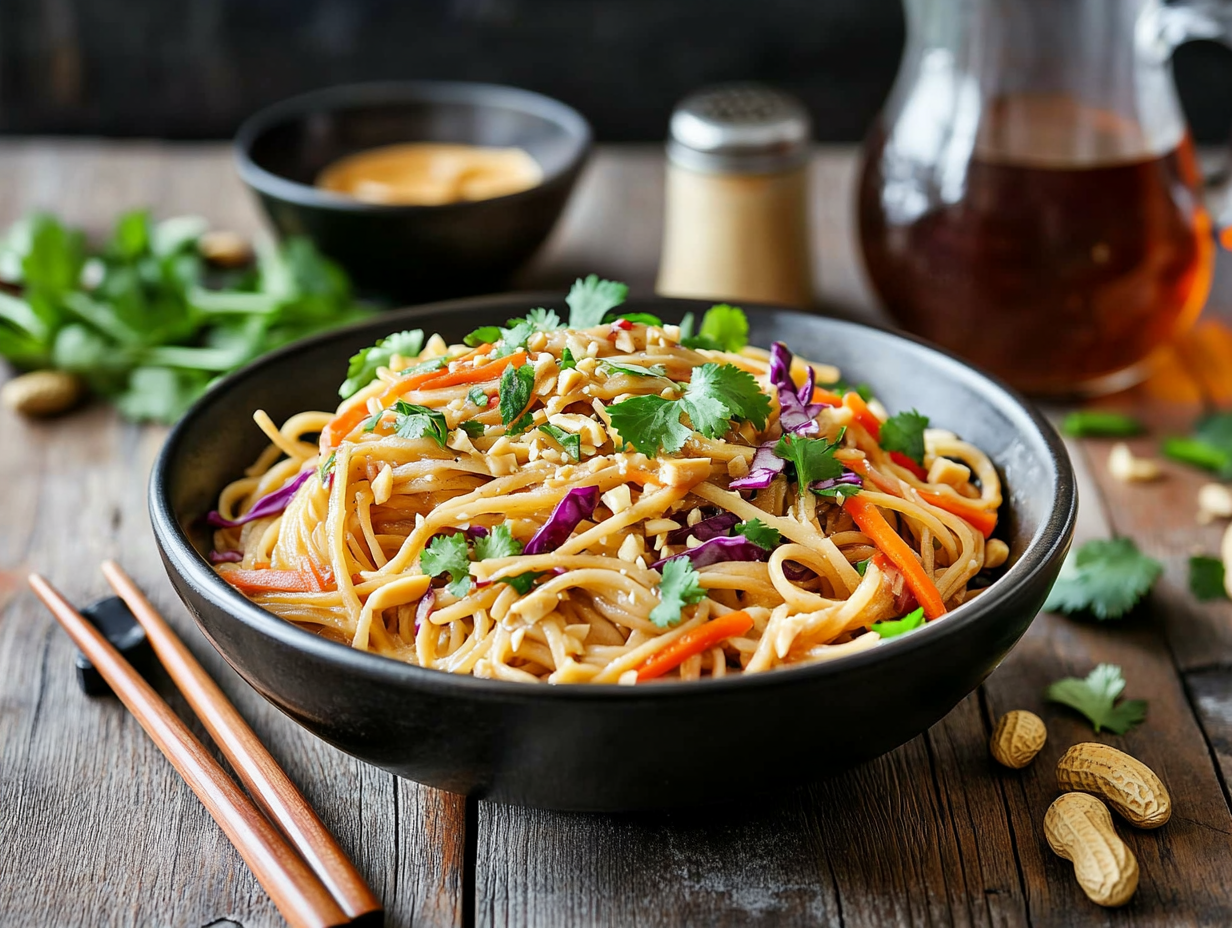
Spicy peanut noodles are rice or soba noodles tossed in a no-cook peanut sauce built from pantry staples — peanut butter, soy sauce, rice vinegar, chili garlic sauce, ginger, garlic, and maple syrup. The whole thing comes together in about 30 minutes, and the sauce alone is worth keeping in your fridge on a regular basis. It’s a genuinely filling plant-based meal that doesn’t require any workarounds to feel complete.
What makes this version work
Two things actually matter here. First, the sauce is mixed cold with a splash of hot water to loosen it — this keeps the peanut butter from seizing up or turning greasy, which happens when you heat it directly. Whisk until it’s fully smooth before it touches the noodles. Second, toss the noodles with the sauce while they’re still warm. Warm noodles absorb the sauce rather than just getting coated on the outside, so every bite carries flavor all the way through. The toppings — shredded cabbage, carrot, scallions, roasted peanuts — aren’t just garnish. They add real texture contrast and, combined with the peanut butter base, help this bowl deliver enough protein and fiber to hold you through the afternoon without a follow-up snack.
Storage and reheating
Store leftovers in an airtight container in the fridge for up to 3 days. The noodles will absorb more sauce as they sit, so they’ll look drier than when you first made them — that’s normal. To reheat, add a tablespoon or two of water or vegetable broth and warm gently in a skillet over medium-low heat, stirring until loose again. Microwaving works too; cover loosely and stir halfway through. This dish also eats well cold straight from the fridge, which makes it a solid meal-prep option for weekday lunches. The peanut sauce on its own keeps for up to 4 days refrigerated in a sealed jar — make a double batch and you’re most of the way to dinner on any given night. Freezing the assembled dish isn’t recommended; the noodles turn mushy on thaw.
If something goes sideways
- Sauce is too thick and clumping on the noodles: Add hot water one tablespoon at a time and toss again. Natural peanut butter varies a lot in consistency between brands, so you may need more liquid than the recipe suggests.
- Noodles are sticking together in a clump: You didn’t toss them with a little oil right after draining. Rinse wide rice noodles with cold water immediately after cooking to stop them sticking, then toss with a few drops of neutral oil if you’re not saucing them right away.
- The heat level is too high: Stir in a teaspoon of unsweetened coconut milk or a small spoonful of extra peanut butter to mellow the sauce without watering it down. Skip adding more maple syrup — it tips the balance too sweet.
- Sauce tastes flat or one-dimensional: It usually needs more rice vinegar or a small squeeze of lime juice. Acid is what makes the other flavors pop — add it in small increments and taste as you go.
- Tofu or edamame added for protein is bland: Season it separately before adding. Plain tofu tossed in at the end does nothing — press it, cube it, and pan-fry it with a little soy sauce first. Skip the cilantro garnish if you’re short on time — not worth the extra dish.

Spicy Peanut Noodles

Equipment
- Large pot
- Medium saucepan or sauté pan
- Mixing bowl
- Whisk
- Tongs
Ingredients
For the Noodles:
- 12 oz rice noodles or soba noodles use wide rice noodles for a chewier texture or soba for a heartier earthiness
For the Spicy Peanut Sauce:
- ½ cup natural peanut butter creamy, unsweetened peanut butter works best
- 3 tbsp low-sodium soy sauce or tamari for gluten-free version
- 1 tbsp toasted sesame oil for a deep nutty aroma
- 2 tbsp maple syrup adds a balanced sweetness
- 1 tbsp rice vinegar use unseasoned rice vinegar
- 1 ½ tsp chili garlic sauce or sriracha adjust for desired heat level
- 1 clove garlic finely grated or minced
- 1 tsp fresh ginger grated
- ¼ cup hot water to thin the sauce to desired consistency
For the Toppings:
- 1 medium carrot julienned
- 1 cup red cabbage thinly shredded
- 2 stalks scallions sliced thin on a bias
- ¼ cup roasted peanuts chopped roughly
- ¼ cup fresh cilantro chopped
Instructions
- Cook the Noodles: Bring a large pot of water to a boil. Add the noodles and cook according to the package instructions (usually 5–7 minutes for rice noodles). Drain and rinse under cold water to stop cooking and prevent sticking. Set aside.
- Make the Peanut Sauce: In a mixing bowl, whisk together the peanut butter, soy sauce, sesame oil, maple syrup, rice vinegar, chili garlic sauce, garlic, and ginger. Add hot water a little at a time until the sauce is smooth and pourable but still thick enough to coat the noodles.
- Combine: In a large mixing bowl or directly in the pot, toss the cooked noodles with the peanut sauce using tongs until evenly coated.
- Garnish and Serve: Divide noodles into serving bowls. Top each with julienned carrot, shredded cabbage, scallions, chopped peanuts, and fresh cilantro for color and crunch.
Notes
- For more heat: Add extra chili garlic sauce or a sprinkle of red pepper flakes.
- Nut-free option: Substitute sunflower seed butter and roasted sunflower seeds for a delicious, allergy-friendly variation.
- Make Ahead: The peanut sauce can be made 2–3 days in advance and refrigerated in an airtight jar.
Nutrition
FAQ
Can I use regular peanut butter instead of natural peanut butter?
You can, but the sauce will be noticeably sweeter and may have a slightly different texture. Conventional peanut butter contains added sugar and stabilizers, so reduce or skip the maple syrup and taste as you go to keep the balance right.
What’s the best noodle to use if I want more protein in this dish?
Soba noodles made from 100% buckwheat are your best bet — buckwheat is a complete protein and adds more per serving than rice noodles. Check the label, because many soba noodles are blended with wheat flour, which lowers the buckwheat content.
Is this dish gluten-free?
It can be. Use wide rice noodles, swap soy sauce for tamari or certified gluten-free coconut aminos, and confirm your chili garlic sauce label is gluten-free. All other core ingredients are naturally gluten-free.
Can I make this ahead for a dinner party?
Yes — make the sauce up to 4 days ahead and cook the noodles the day of. Toss everything together no more than an hour before serving if you want the noodles to stay distinct rather than fully absorbing the sauce. Keep toppings separate until just before serving.
How do I make this more filling without adding tofu?
Stir in a cup of shelled edamame — it’s quick, high in protein, and doesn’t require any cooking beyond a quick thaw if you’re using frozen. Chickpeas work too and add a different texture; just pat them dry so they don’t water down the sauce.
Try these next
- Indonesian Gado-Gado Peanut Salad
- Sesame Ginger Soba Salad
- Vegan Thai Drunken Noodles
- Crispy Tofu Broccoli Stir-Fry