
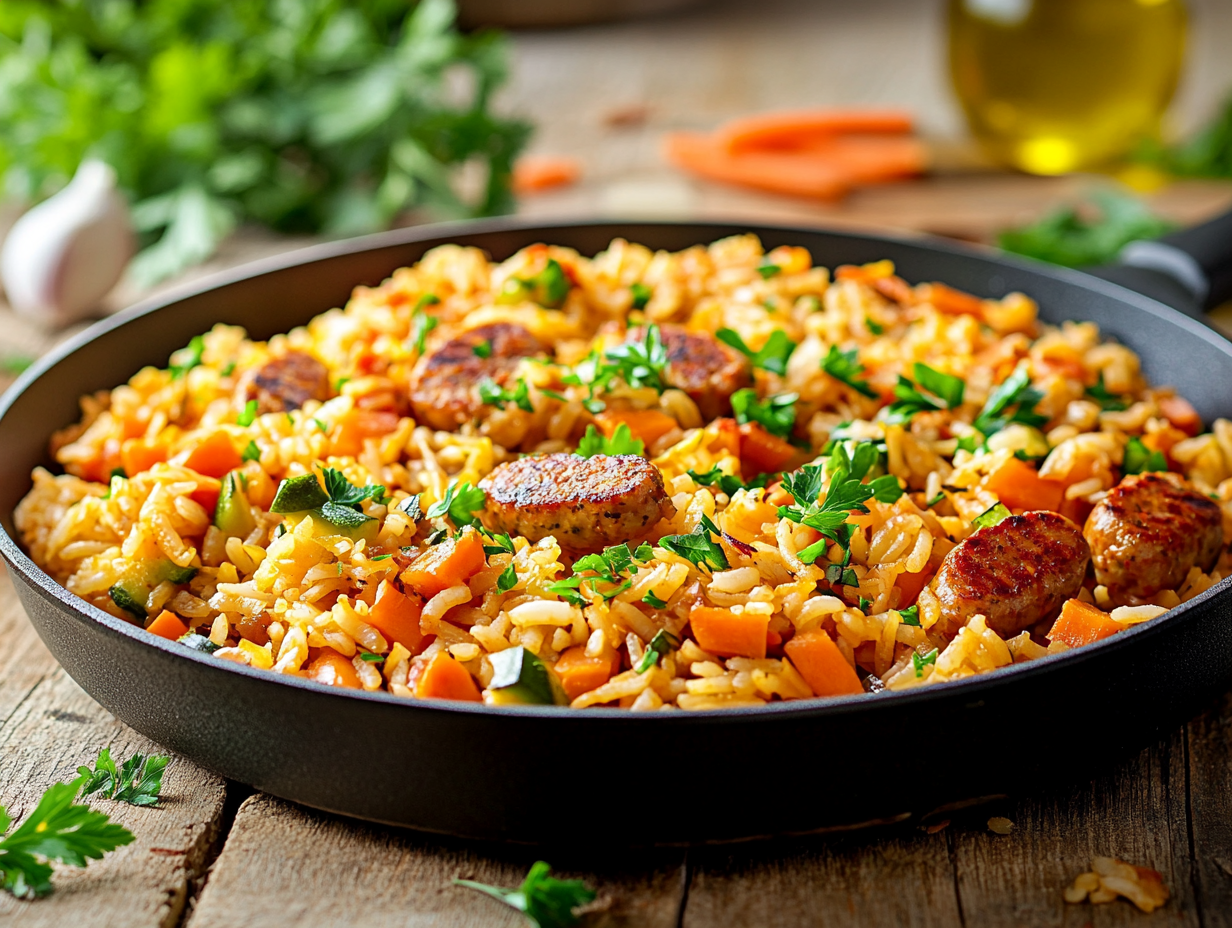
This is a one-pan basmati rice pilaf built around cumin, smoked paprika, carrots, zucchini, and sliced vegan sausage. It comes together in under an hour and uses ingredients most people already have on hand. The sausage does real work here — it adds protein and seasoning without any extra effort.
The short version of why this works
Two things make this pilaf actually good instead of just okay. First, rinsing and soaking the basmati before cooking removes excess starch — skip this and the rice turns gluey. Second, searing the vegan sausage slices in a hot, dry pan before adding them to the pilaf builds a browned crust that holds up once the sausage sits on the rice. If you just slice and toss them in without searing, they go soft and blend into the background. Both steps take about five extra minutes and are worth it.
What can go wrong
- Rice comes out mushy: This usually means too much liquid or the lid came off during steaming. Measure the broth carefully and resist lifting the lid while the rice cooks.
- Sausage falls apart in the pan: Some plant-based sausages are softer than others. Chill them for 20 minutes before slicing and use medium-high heat with minimal stirring so a crust can form before you move them.
- Vegetables turn to mush: Zucchini in particular overcooks fast. Cut it into larger chunks than you think you need, and add it after the carrots have had a head start in the pan.
- Dish tastes flat: Under-seasoned broth is the most common cause. Taste your broth before adding it — if it’s bland, stir in a pinch of salt or a small splash of soy sauce before it goes in.
- Rice sticks to the bottom: A thin layer of stuck rice is normal and fine. A scorched layer means the heat was too high after you added the broth. Once the liquid is in, drop to the lowest simmer your stove allows.
Smart swaps
- Vegan sausage: Any style works — smoky, Italian-seasoned, or herb. Firm tofu cut into thick batons and pressed dry is a solid budget alternative; season it with smoked paprika and a pinch of fennel seed before searing.
- Basmati rice: Long-grain white rice is a direct substitute. Brown basmati works but needs about 10 more minutes of cook time and extra broth — roughly a quarter cup more.
- Carrots and zucchini: Use whatever firm vegetables you have. Bell pepper, green beans, frozen peas (stirred in at the end), or diced butternut squash all work. Avoid anything very watery like tomatoes added early — they make the rice wet.
- Smoked paprika: Regular paprika plus a small pinch of cumin does most of the same work. A quarter teaspoon of chipotle powder also works if you want more heat.
- Fresh parsley garnish: Skip the garnish — not worth the extra dish if you don’t already have parsley on hand. The pilaf is complete without it.
Storage and reheating
Store leftovers in a sealed container in the fridge for up to four days. The rice firms up overnight, which is normal. To reheat, add a tablespoon or two of water or vegetable broth per serving, cover the pan or bowl, and warm over low heat or in the microwave until steaming through — this prevents the rice from drying out. The sausage reheats well either way. For longer storage, freeze in individual portions for up to two months; thaw overnight in the fridge before reheating. Avoid refreezing once thawed.

Veggie Pilaf with Vegan Sausages

Equipment
- Large sauté pan or Dutch oven
- Sharp knife
- Cutting board
- Measuring cups and spoons
Ingredients
For the Pilaf:
- 2 tablespoons extra virgin olive oil choose a fruity, cold-pressed variety
- 1 medium yellow onion finely chopped
- 3 cloves garlic minced
- 1 cup carrot peeled and diced small
- 1 cup zucchini diced
- 1.5 cups basmati rice rinsed and soaked for 15 minutes
- 2.5 cups vegetable broth preferably low-sodium
- 1 teaspoon ground cumin
- ½ teaspoon paprika preferably smoked
- 1 teaspoon salt to taste
- ¼ teaspoon black pepper
For Serving:
- 4 links vegan sausages your favorite variety, cut into thick slices
- 1 tablespoon olive oil for searing sausages
- 2 tablespoons fresh parsley chopped, for garnish
Instructions
- Heat 2 tablespoons olive oil in a large sauté pan or Dutch oven over medium heat (about 350°F or 175°C). Add chopped onions and sauté for 5–7 minutes, stirring occasionally, until softened and lightly golden.
- Add minced garlic and cook for an additional minute until fragrant.
- Stir in the diced carrots and zucchini. Sauté for 4–5 minutes until they begin to soften. Season with cumin, smoked paprika, salt, and pepper.
- Add the rinsed and drained basmati rice to the pan. Stir well to toast the rice gently for 1–2 minutes, allowing it to absorb the spices and slightly nutty aroma.
- Pour in the vegetable broth. Bring to a rolling boil, then reduce the heat to low (around 180°F or 82°C), cover with a tight-fitting lid, and simmer for 20 minutes, or until the rice is tender and liquid is absorbed.
- While the rice cooks, heat 1 tablespoon olive oil in a non-stick skillet over medium-high heat. Add the sliced vegan sausages and sear for 3–4 minutes per side until browned and slightly crisp.
- Once the rice is fully cooked, gently fluff it with a fork. Taste and adjust seasoning if desired.
- Plate a generous scoop of pilaf in each dish, topping with seared vegan sausage slices and a sprinkle of fresh parsley.
Notes
- For a bolder flavor profile, add a pinch of saffron steeped in 2 tablespoons warm broth before the simmering step.
- This dish also accepts frozen peas, roasted red pepper strips, or a handful of toasted slivered almonds as enhancements.
Nutrition
Common questions
Can I use a different type of rice?
Yes — long-grain white rice is the easiest swap and behaves almost identically to basmati. Brown rice also works but needs more liquid and about 10 additional minutes of cooking time, so plan accordingly.
Which vegan sausage brand works best for this?
Any firm plant-based sausage that holds its shape when sliced will work fine — the brand matters less than the texture. Avoid very soft or crumbly varieties; if that’s what you have, chill them well before slicing and handle them gently in the pan.
Can I make this without vegetable broth if I don’t have any?
Yes — water with a teaspoon of soy sauce or tamari and a pinch of garlic powder gets you most of the way there. A bouillon cube dissolved in hot water is the closest substitute if you have one.
More plant-based recipes to try
- Mediterranean Lentil Power Bowl
- Moroccan Lentil Apricot Tagine
- Vegan Paella Valenciana
- Smoky Spanish Chickpea Stew