
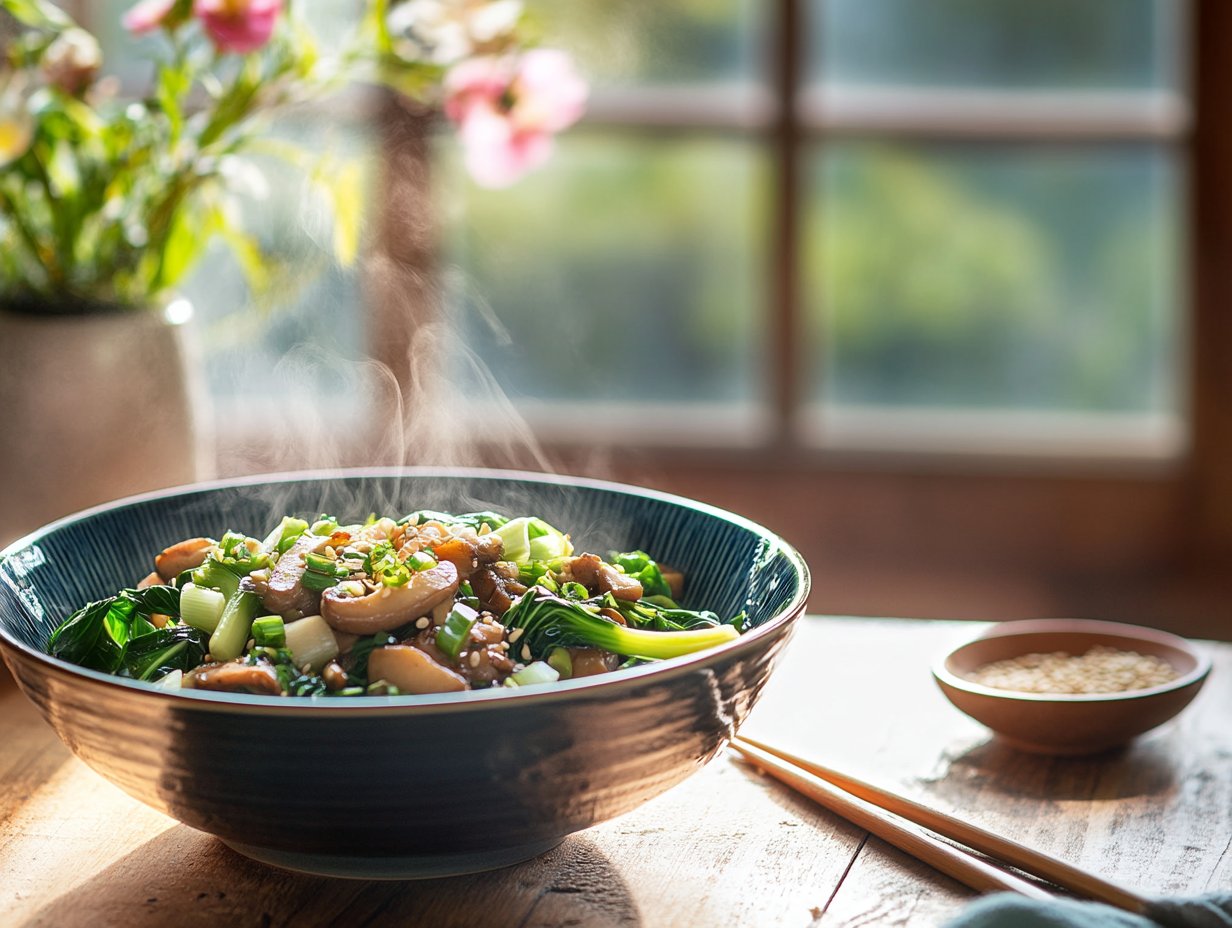
This is a fast weeknight stir-fry built around bok choy, shiitake mushrooms, garlic, and ginger, finished with a soy-rice vinegar sauce. It comes together in about 25 minutes and, with the right additions, works as a complete meal rather than just a side. The honest reason to make it: it’s genuinely faster than ordering out and the ingredients are cheap.
Shopping notes
- Bok choy: Mature bok choy is sold in most grocery stores. Baby bok choy is sweeter and more tender — halve it lengthwise instead of chopping, and reduce the stem cook time by about a minute.
- Shiitake mushrooms: Fresh shiitakes have better texture here than dried. If you can only find dried, rehydrate them fully and squeeze out excess water before slicing, or swap in cremini mushrooms.
- Tamari vs. soy sauce: Tamari is the straightforward gluten-free swap — same quantity, no other adjustments needed.
- Sesame oil: Use toasted sesame oil, not plain. The flavor difference is significant and the toasted version is what gives the dish its characteristic aroma.
- Protein add-ins: If you want a complete meal, firm or extra-firm tofu is the most practical choice — press it, cube it, and pan-fry it separately before starting the stir-fry. Shelled edamame (frozen, thawed) stirs in at the end with zero extra work. Tempeh, crumbled or cubed, also holds up well to high heat.
The short version of why this works
Two things actually matter in this recipe. First, high heat throughout — a lukewarm pan steams the vegetables instead of searing them, and you end up with soggy bok choy and mushrooms that release too much liquid. Get the pan genuinely hot before anything goes in. Second, the cornstarch slurry in the sauce thickens on contact with that hot pan, so the coating clings to the vegetables rather than pooling at the bottom of the wok. If you add the sauce to a pan that’s cooled down, the slurry won’t set properly and the whole dish turns watery. Keep the heat up when the sauce goes in and toss quickly.
Common problems and fixes
- Watery finished dish: Bok choy holds a lot of moisture. If your stir-fry is pooling liquid, your pan wasn’t hot enough or you crowded it. Cook in two batches if needed, and make sure the bok choy stems go in before the leaves — they need more time.
- Garlic and ginger burning before the vegetables are done: This happens when the aromatics sit in the pan too long before you add the next ingredient. Have everything prepped and within arm’s reach before you turn on the heat. Thirty seconds for the aromatics is usually enough.
- Mushrooms turning rubbery instead of browning: Don’t stir them constantly. Let shiitakes sit undisturbed for a minute or two so they can develop some color. Stirring too often keeps them steaming in their own moisture.
- Sauce too salty: Low-sodium soy sauce varies by brand. Taste the sauce before it goes in the pan and cut it with a small splash of water or an extra drop of rice vinegar if it tastes sharp.
- Tofu falling apart in the stir-fry: If you’re adding tofu for protein, cook it separately in its own pan until the outside is firm and golden, then fold it in at the very end. Adding raw or under-pressed tofu directly to the stir-fry breaks it down fast.
Leftovers and meal prep
Store leftovers in an airtight container in the fridge for up to 3 days — the bok choy softens further overnight but the flavor is still good. Reheat in a hot skillet for 2 to 3 minutes rather than the microwave, which makes the vegetables limp. Skip the garnish when storing; add it fresh if you’re serving again. This dish does not freeze well — the bok choy turns mushy on thawing. For meal prep, you can slice the mushrooms, chop the bok choy, and mix the sauce up to 2 days ahead and keep them refrigerated separately; actual cooking still takes the full 25 minutes, but the prep time drops to almost nothing on the night.

Garlic-Ginger Bok Choy Stir Fry

Equipment
- Wok or large skillet
- Chef's knife
- Cutting board
- Mixing bowl
- Stirring spoon or spatula
Ingredients
For the Vegetables and Aromatics:
- 1 tbsp toasted sesame oil preferably cold-pressed for richer flavor
- 4 cups bok choy washed, dried, and chopped into 2-inch pieces
- 1 tbsp fresh ginger finely grated
- 3 cloves garlic minced
- 1 cup shiitake mushrooms sliced; cremini mushrooms are a good substitute
- ¼ cup scallions sliced thin, white and green parts separated
For the Sauce:
- 3 tbsp low-sodium soy sauce or tamari for gluten-free version
- 2 tsp rice vinegar unseasoned
- 1 tsp maple syrup or agave nectar
- 1 tsp cornstarch dissolved in 2 tbsp of water to form slurry
Instructions
- In a small bowl, whisk together the soy sauce, rice vinegar, maple syrup, and dissolved cornstarch slurry. Set aside.
- Heat a wok or large skillet over medium-high heat (375°F / 190°C). Add sesame oil and swirl to coat the pan.
- Add sliced mushrooms to the hot oil and stir-fry for 2–3 minutes until they begin to soften and lightly brown.
- Add the white parts of the scallions, grated ginger, and minced garlic. Stir constantly for about 1 minute until fragrant.
- Add the chopped bok choy. Stir-fry for 3–4 minutes, tossing frequently until the greens are wilted and the stems are just-tender but still crisp.
- Pour in the sauce and toss everything together. Stir until the sauce thickens slightly and evenly coats the vegetables (about 1–2 minutes).
- Remove from heat immediately. Garnish with the green parts of the scallions before serving.
Notes
- Use baby bok choy for a more tender bite and sweeter flavor.
- Add cubed tofu or edamame for protein.
- If your bok choy is large, separate stems from leaves and stir-fry stems 1–2 minutes earlier.
- A dash of chili oil or sriracha adds a spicy kick.
Nutrition
Frequently asked questions
Can I make this a full meal instead of a side?
Yes — add a protein and serve it over rice or noodles. Pan-fried tofu or thawed edamame are the easiest options: edamame goes straight in during the last minute of cooking, and tofu just needs to be cooked separately first and folded in at the end. Either one turns this into a filling dinner without changing the flavor profile.
Can I use a regular skillet instead of a wok?
A large, heavy skillet works fine. The key is surface area — use the biggest pan you have so the vegetables aren’t piled on top of each other. Cast iron or stainless steel both handle the high heat better than nonstick for this kind of cooking.
My bok choy stems are still crunchy but the leaves are already wilting — what do I do?
Add the stems to the pan first and give them a 2-minute head start before adding the leaves. They cook at different rates, and treating them as two separate ingredients fixes the timing problem entirely.
Is there a substitute for rice vinegar?
Apple cider vinegar works as a direct swap in the same quantity. It’s slightly more assertive, so start with a little less and taste before adding the full amount. White wine vinegar also works in a pinch.
What to cook next
- Crispy Tofu Broccoli Stir-Fry
- Sesame Ginger Soba Salad
- Vegan Mushroom Bulgogi Bibimbap
- Miso Glazed Sweet Potatoes