
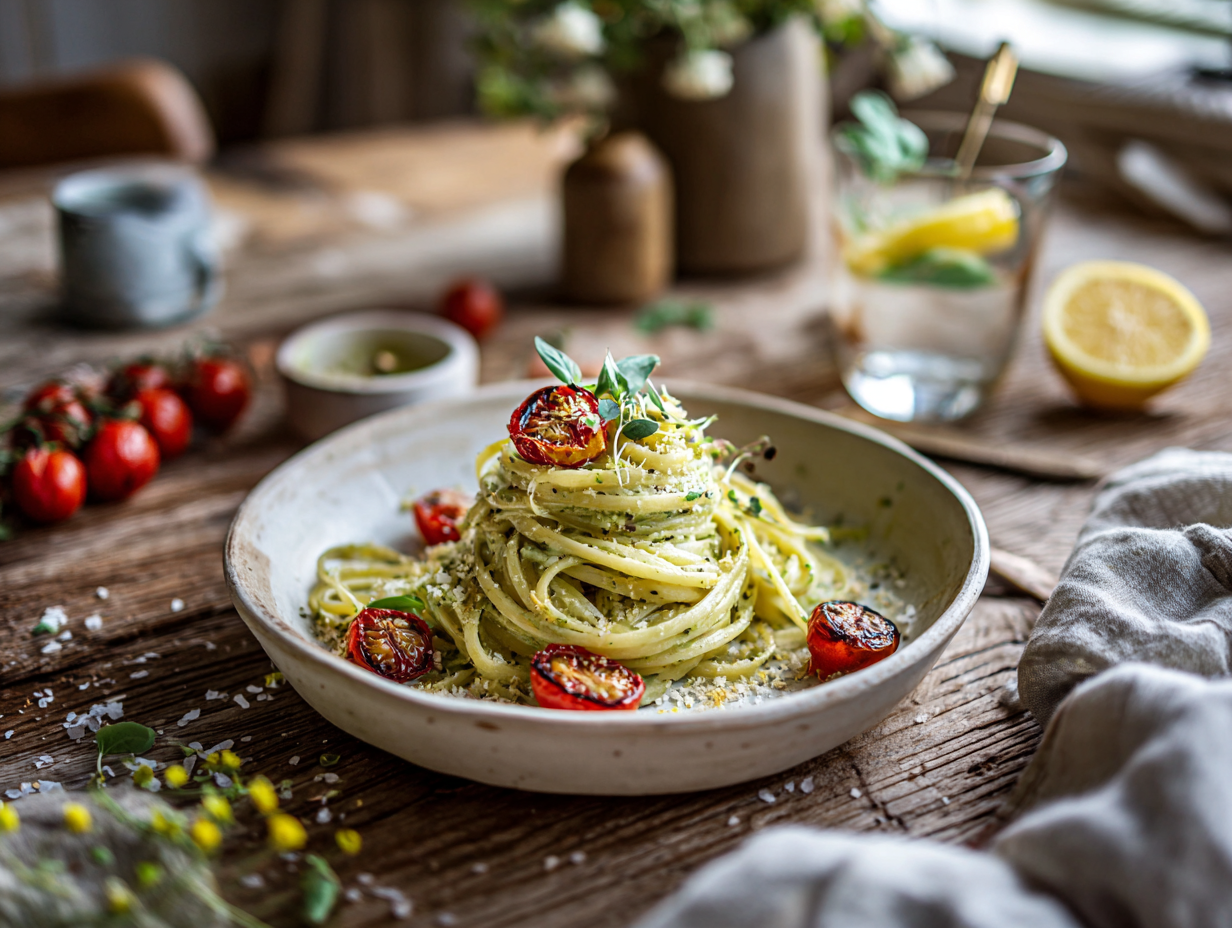
This is a blender pesto made with ripe avocado instead of cheese, tossed with pasta and topped with blistered cherry tomatoes. It comes together in about 30 minutes and the sauce costs less than a jar of store-bought pesto. Nutritional yeast and white miso do the heavy lifting on savory depth, so you won’t miss the dairy.
The technique that matters
Two things make or break this recipe. First, blend the pesto before you drain the pasta — you want to work fast once the avocado is cut, because exposure to air starts browning it within minutes. The lemon juice slows that down, but speed helps more. Second, reserve a full cup of pasta water before you drain. The starchy water is what turns a thick, clumpy avocado paste into a sauce that actually coats the noodles. Add it a splash at a time; you probably won’t need all of it, but you’ll definitely need some.
Common problems and fixes
- Sauce turns brown before serving: This happens when the avocado sits too long after blending. Toss the pasta immediately after blending the pesto — don’t let the sauce sit in the blender while you do other things. Pressing plastic wrap directly onto any leftover sauce (touching the surface) also slows oxidation.
- Pesto tastes flat or bland: Nutritional yeast and miso vary a lot by brand in saltiness and intensity. Taste the pesto before tossing it with pasta and adjust — a pinch more salt, an extra squeeze of lemon, or a small spoonful of miso can fix a flat batch quickly.
- Sauce is too thick and gluey: The avocado was probably very large or very ripe. Thin it with pasta water, a tablespoon at a time, until it moves freely. Olive oil also works if you’ve already drained the pasta water.
- Tomatoes steam instead of blister: The pan wasn’t hot enough, or the tomatoes were crowded. Use a dry skillet over high heat, don’t stir for the first 90 seconds, and cook in a single layer. A cast iron pan gives the best char.
- Pasta clumps after tossing: This usually means the pasta sat too long after draining. Toss it with the pesto while it’s still hot and a little wet from the cooking water — don’t rinse it.
Leftovers and meal prep
Leftover dressed pasta keeps in the fridge for up to 2 days in an airtight container, though the sauce will darken — it still tastes fine, it just won’t look as bright. Reheat gently in a skillet with a splash of water or vegetable broth over low heat; the microwave tends to make the avocado taste a little off. The pesto on its own does not freeze well — avocado turns grainy and watery after thawing. If you want to prep ahead, you can blend the pesto up to 4 hours early and store it with plastic wrap pressed directly onto the surface in the fridge, then toss with freshly cooked pasta when you’re ready.

Avocado Pesto Pasta with Blistered Tomatoes

Equipment
- Large pot (6-quart) with lid
- Colander
- Large skillet or sauté pan (12-inch)
- High-speed blender or food processor
- Mortar and pestle (optional)
- Microplane zester
- Measuring cups and spoons
- Chef's knife
- Cutting board
- Heatproof measuring cup or ladle (for pasta water)
- Tongs
Ingredients
For the Avocado Pesto:
- ⅓ cup pine nuts toast lightly; raw walnuts are a good budget-friendly swap
- 2 cloves garlic fresh, juicy cloves for best aroma
- 2 cups fresh basil leaves packed cups; organic Genovese basil preferred
- ½ cup flat-leaf parsley packed; optional for balance and color
- ½ cup baby spinach packed; optional to help keep pesto vibrant green
- 2 medium ripe Hass avocados halved, pitted, and scooped just before blending for best color
- 1 teaspoon lemon zest from 1 organic lemon, finely grated with a microplane
- 2 tablespoons fresh lemon juice freshly squeezed, no seeds or pith bitterness
- 3 tablespoons extra-virgin olive oil fruit-forward, cold-pressed; divided as needed for blending
- 3 tablespoons nutritional yeast for savory, cheesy depth; use a fresh, mellow brand
- 1 teaspoon white (shiro) miso adds umami and roundness without dairy; optional but recommended
- ½ teaspoon fine sea salt plus more to taste
- ½ teaspoon freshly ground black pepper adjust to taste; coarse grind preferred for texture
- ¼ teaspoon red pepper flakes optional, for gentle heat and contrast
- 1 ½ cups reserved pasta cooking water scoop from the pot just before draining pasta; you may use 3/4 to 1 1/4 cups
For the Toppings:
- ½ cup panko breadcrumbs unseasoned; use gluten-free panko if needed
- 1 tablespoon extra-virgin olive oil for toasting breadcrumbs to golden crispness
- 2 tablespoons vegan parmesan optional, finely grated, for serving
For the Pasta & Tomatoes:
- 4 quarts water for boiling pasta (enough to let it move freely)
- 1 tablespoon kosher salt for the pasta water (Diamond Crystal preferred); plus more to taste
- 12 ounces dried linguine or spaghetti; bronze-cut for best sauce cling if available
- 1 tablespoon extra-virgin olive oil for sautéing tomatoes and shallot
- 1 medium shallot halved and thinly sliced; sweet onions work in a pinch
- 2 cups cherry or grape tomatoes ripe and firm; pat dry to encourage blistering
For Finishing & Garnish:
- ¼ cup small basil leaves for finishing; tear by hand to avoid bruising
- ½ cup microgreens optional; adds freshness and height on the plate
- 4 wedges lemon for serving; a bright squeeze at the table wakes up flavors
Instructions
- Toast the Nuts (3–4 minutes): Place the pine nuts in a dry skillet over medium heat. Stir and shake until lightly golden and fragrant, about 3–4 minutes. Transfer to a plate to cool.Sensory Cue: They will smell buttery and look just tawny at the edges.Oven Option: Toast on a sheet pan at 350°F (175°C) for 5–7 minutes, shaking once.
- Make Crunchy Breadcrumbs (2–3 minutes): In the same skillet, add 1 tablespoon olive oil and the panko. Cook over medium heat, stirring, until evenly golden and crisp, 2–3 minutes. Season with a pinch of salt. Transfer to a bowl to stay crisp.
- Heat Water and Season it Well: Bring 4 quarts of water to a rolling boil (212°F / 100°C). Add 1 tablespoon kosher salt—your water should taste pleasantly seasoned, like the sea.
- Blister the Tomatoes (6–8 minutes): While the water heats, set a large skillet over medium-high heat with 1 tablespoon olive oil. Add sliced shallot and cook 1–2 minutes until glossy. Add the dry tomatoes and cook, undisturbed, 2 minutes, then toss occasionally until skins blister and collapse in spots, 4–6 minutes more. Season with a pinch of salt.Optional Oven Method: Roast at 425°F (220°C) for 10–12 minutes on a preheated sheet pan.
- Build the Pesto Base (2–3 minutes): In a blender or food processor, combine cooled toasted nuts, basil, parsley, spinach, garlic, lemon zest, lemon juice, nutritional yeast, miso, 3 tablespoons olive oil, 2 tablespoons cold water, 1/2 teaspoon sea salt, 1/2 teaspoon black pepper, and red pepper flakes if using. Blend until a thick, smooth paste forms, scraping down as needed.Tip: For a more rustic texture, use a mortar and pestle—start with garlic and salt, then nuts, then herbs, then liquids.
- Cook the Pasta (8–10 minutes): Add linguine to the boiling water and cook until al dente, 8–10 minutes, stirring occasionally. Before draining, scoop out 1 to 1 1/2 cups of the starchy pasta water. Drain pasta in a colander; do not rinse.
- Finish the Pesto with Avocado (30–60 seconds): Just before tossing, add the avocado flesh to the blender with the pesto base. Blend briefly until silky and pale green.Sensory Cue: It should be creamy, glossy, and spoonable, not stiff. If too thick, loosen with a splash of reserved pasta water.
- Emulsify and Coat the Pasta (1–2 minutes): Return the drained pasta to the warm pot (off the heat). Add the avocado pesto and 3/4 cup hot pasta water to start. Toss vigorously with tongs until the sauce clings and turns luxuriously glossy, adding more pasta water a little at a time until it coats like light cream. Fold in the blistered tomatoes and shallot.
- Plate and Garnish: Twirl portions into warm bowls (you can warm bowls in a 200°F / 95°C oven for 5 minutes). Shower with toasted breadcrumbs, a few small basil leaves, vegan parmesan if using, and microgreens. Finish with a crack of black pepper and serve with lemon wedges.
- Serve Immediately: Avocado pesto is at its most vibrant right away. Look for a bright green hue, a silky sheen, and the perfume of basil and lemon as signs it’s perfect.
Notes
Mary’s Tips:
- Herb Balance: If your basil is very peppery, increase parsley by 1–2 tablespoons for balance.
- Nut Swaps: Walnuts, pistachios, or almonds work. Toast lightly to awaken their oils; do not darken or the pesto will taste bitter.
- Ultra-Green Pesto: Add a handful of ice to the blender for the first blitz or blanch basil for 10 seconds, then shock in ice water and blot dry to lock in color.
- Garlic Finesse: If you’re sensitive to raw garlic, microplane it and let it sit in lemon juice for 5 minutes to mellow before blending.
- Gluten-Free: Use your favorite gluten-free pasta and gluten-free panko.
- Oil Control: For a lighter sauce, replace 1 tablespoon olive oil with 1 tablespoon cold pasta water during blending.
- Miso Magic: White miso adds depth; if unavailable, add 1 extra tablespoon nutritional yeast and a pinch of sea salt.
- Leftovers: Avocado can brown; press plastic wrap directly on the sauce surface and refrigerate up to 1 day. Refresh with lemon juice and a splash of warm water when reheating gently.
Serving Suggestions:
Plate in warm shallow bowls. Twirl pasta into a tall nest using tongs, spoon tomatoes around, then sprinkle a halo of golden breadcrumbs. Garnish with tiny basil leaves and microgreens for height. The ideal dish gleams pale green with ruby bursts of tomato and a sandy crunch from the crumbs; the aroma should be fresh basil and citrus with a whisper of garlic. Pairings: A chilled Pinot Grigio, a basil-lime spritzer, or sparkling water with lemon zest.Culinary Context:
This is a modern, dairy-free riff on Ligurian pesto alla Genovese, blending Italian technique with California’s love of ripe avocados. The avocado delivers the cream that cheese and butter typically provide—without overshadowing basil’s fragrance. I first served this after a market morning in late summer; the tomatoes were so sweet they practically made their own sauce.Optional Advanced Instructions:
- Make-Ahead: Toast nuts and breadcrumbs up to 2 days in advance; store airtight at room temperature. Wash and dry herbs; wrap in paper towels and refrigerate in a bag.
- Parallel Cooking: Start blistering tomatoes while the pasta water heats. Blend the pesto base (without avocado) while the pasta cooks; add avocado at the last minute for peak color.
- Alternative Methods: No blender? Use a mortar and pestle for a rustic pesto, or very finely chop all pesto ingredients, then mash with the side of a knife and stir in oil.
Timing & Details:
- Prep Time: 15 minutes
- Cook Time: 15 minutes
- Total Time: 30 minutes
- Servings: 4
- Course: Dinner
- Cuisine: Italian, Californian
Nutrition
Frequently asked questions
Can I use frozen basil or basil paste instead of fresh?
Yes, basil paste works fine here — use about 3 tablespoons in place of a packed cup of fresh leaves. The flavor will be slightly less bright but still good, and it’s a practical swap when fresh basil is expensive or unavailable.
What can I use instead of white miso?
A teaspoon of soy sauce or tamari is the easiest swap — it adds similar savory depth without requiring a special ingredient. If you skip it entirely, just add a little extra nutritional yeast and taste as you go.
Do I have to use pine nuts, or can I substitute something cheaper?
Raw sunflower seeds or raw cashews work well and cost significantly less. Walnuts also work but add a slightly bitter edge — toast them first to mellow that out.
My avocado isn’t very ripe — can I still make this?
A firm avocado will blend into a usable sauce but the result will be less creamy and the flavor more grassy. If that’s what you have, add an extra tablespoon of olive oil to compensate for the missing richness.
Can I make this gluten-free?
Yes — the pesto itself contains no gluten, so just swap in your preferred gluten-free pasta. Check your miso label too, since some brands use barley; chickpea or rice-based miso are safe options.
What to cook next
- Macadamia Nut Pesto Pasta
- Mediterranean Orzo Artichoke Salad
- Miso Glazed Sweet Potatoes
- Spring Pea Mint Risotto