
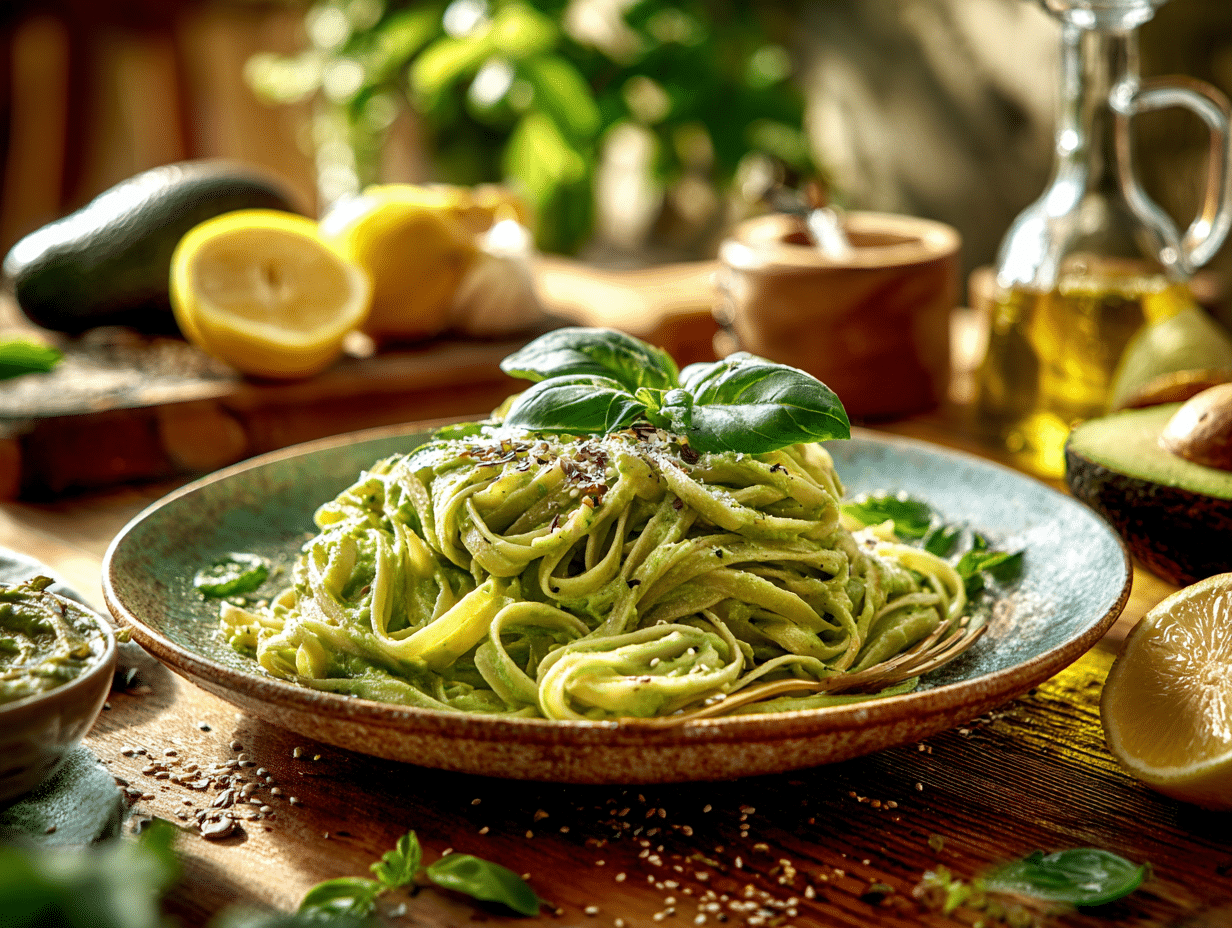
This is a blender pasta sauce made from ripe avocado, garlic, lemon juice, fresh basil, olive oil, and a splash of unsweetened plant milk, tossed with your pasta of choice and finished with nutritional yeast and optional toppings like hemp seeds or toasted pine nuts. It comes together in under 30 minutes with no cooking beyond boiling pasta. The honest reason to make it: it’s genuinely creamy without any dairy, and the protein additions make it a filling dinner rather than a side dish.
The short version of why this works
Two things actually matter here. First, the lemon juice does double duty — it brightens the sauce and slows the avocado from oxidizing, so the sauce stays green instead of turning grey. Use more than you think you need. Second, blending the garlic raw into the sauce gives you a sharper, more present garlic flavor than sautéed garlic would. If raw garlic is too intense for you, let the blended sauce sit for five minutes before tossing — it mellows noticeably. Get both of those right and the sauce takes care of itself.
Mistakes to avoid
- Using underripe avocado. A firm avocado will leave the sauce grainy and slightly bitter. The avocado should yield easily to gentle pressure. If yours aren’t ready, leave them at room temperature for a day or two — don’t try to rush it in the microwave.
- Adding too much plant milk at once. Pour it in gradually. Avocados vary in size and water content, so the sauce can go from thick to watery fast. Start with two tablespoons and add more only if the blender is struggling.
- Letting the pasta cool before tossing. The sauce is cold and thick. If the pasta cools down first, the sauce won’t coat it evenly and the whole dish goes cold fast. Drain the pasta, shake off excess water, and toss immediately.
- Skipping the pasta water reserve. Even though the recipe card covers this, the most common mistake is forgetting until after you’ve already drained. Set a mug next to the pot before you start draining — it’s the only way to loosen the sauce without thinning it with plain water.
- Storing leftovers without pressing plastic wrap directly onto the surface. Air is what turns avocado brown. If you’re saving any portion, press wrap flush against the sauce before sealing the container.
About the ingredients
- Nutritional yeast: This is the ingredient most likely to be unfamiliar. It’s a deactivated yeast sold as yellow flakes or powder, found in most natural food stores and increasingly in regular grocery stores near the spices or health foods. It adds a savory, mildly cheesy flavor and is a good source of B vitamins. Don’t substitute regular yeast — it’s a completely different product.
- Hemp seeds: Worth keeping on hand specifically for dishes like this. They add protein and healthy fats without changing the flavor, and they require zero prep. Toasted pine nuts are the more traditional garnish, but skip the pine nuts — not worth the extra cost or the pan to toast them when hemp seeds do the same nutritional job straight from the bag.
- Unsweetened plant milk: Oat, soy, or almond all work. Avoid anything vanilla-flavored or sweetened — it will make the sauce taste off. Soy milk adds a small protein boost if that matters to you.
- Pasta shape: Short shapes like fusilli or penne hold the thick sauce better than long noodles. For a protein bump, lentil-based or chickpea-based pasta is a straightforward swap that doesn’t change the prep at all.
Leftovers and meal prep
The sauce does not keep well on its own once tossed with pasta — the avocado will start to discolor within a few hours even in the fridge. If you want to prep ahead, make the sauce and store it separately in an airtight container with plastic wrap pressed directly onto the surface; it will hold for up to 24 hours in the fridge. Toss with freshly cooked pasta when you’re ready to eat. Already-tossed leftovers are fine to eat the next day — the color will be less vibrant but the flavor holds — just eat within 24 hours and don’t freeze. Reheat gently in a pan over low heat with a splash of plant milk to loosen, or eat at room temperature. Do not microwave on high; it makes the avocado sauce separate and go oily.

Vegan Creamy Avocado Pasta

Equipment
- Blender or food processor
- Large pot
- Colander
- Chef's knife
- Cutting board
Ingredients
Pasta
- 12 oz spaghetti or fettuccine Use whole wheat or gluten-free if needed
Sauce
- 2 medium ripe avocados peeled and pitted
- ¼ cup extra virgin olive oil preferably cold-pressed
- 2 cloves garlic smashed and peeled
- 2 tbsp fresh lemon juice about half a lemon
- ¼ cup fresh basil leaves packed
- ¼ cup unsweetened plant milk almond or soy work well
- ½ tsp sea salt adjust to taste
- ¼ tsp black pepper freshly cracked, to taste
Garnish
- 2 tbsp nutritional yeast optional, for a cheesy flavor
- 1 tbsp hemp seeds or toasted pine nuts for crunch and visual appeal
Instructions
- Bring a large pot of salted water to a boil. Add the pasta and cook according to package instructions until al dente, about 8–10 minutes. Reserve 1/4 cup of pasta water before draining. Drain and set aside.
- While the pasta cooks, prepare the sauce: In a blender or food processor, combine avocados, olive oil, garlic, lemon juice, basil, plant milk, salt, and pepper. Blend until smooth and creamy. Add reserved pasta water 1 tablespoon at a time if a thinner consistency is desired.
- Return drained pasta to the warm pot (off heat) and pour the avocado sauce over the pasta. Use tongs to toss gently until the noodles are evenly coated with sauce.
- Taste for seasoning and adjust salt or lemon juice if needed. Divide into serving bowls. Garnish with nutritional yeast and hemp seeds or pine nuts for added flavor and texture.
Notes
- Use ripe avocados for the smoothest sauce. Hass avocados are ideal for their rich flavor and creaminess.
- For a spicier version, add a pinch of red pepper flakes to the sauce before blending.
- To add a protein boost, stir in cooked green peas or chickpeas when tossing the pasta with sauce.
Nutrition
Your questions, answered
Can I make this a complete meal with enough protein?
Yes, and it’s straightforward to do. Stir in a cup of cooked chickpeas or edamame before serving, use a legume-based pasta like chickpea or red lentil pasta, and use hemp seeds as your topping — that combination gets you to a genuinely protein-substantial dinner without changing the character of the dish.
My sauce turned out too thick and clumpy. What went wrong?
The avocado was probably too large or the plant milk amount was too conservative. Add reserved pasta water a tablespoon at a time while tossing over low heat — it emulsifies into the sauce better than adding more plant milk at this stage. The sauce should coat the pasta in a thin, even layer, not sit in clumps.
Can I use frozen avocado instead of fresh?
Yes, thawed frozen avocado works here because the texture is going into a blender anyway. Thaw it completely in the fridge first and drain off any excess liquid before blending, otherwise the sauce will be too thin.
Is this gluten-free?
The sauce itself is completely gluten-free. You just need to swap in a gluten-free pasta — rice-based, corn-based, or lentil-based all work well with this sauce. Check the nutritional yeast label too, as most brands are gluten-free but it’s worth confirming if you have celiac disease.
Try these next
- Macadamia Nut Pesto Pasta
- Vegan Thai Drunken Noodles
- Mediterranean Orzo Artichoke Salad
- Sesame Ginger Soba Salad