
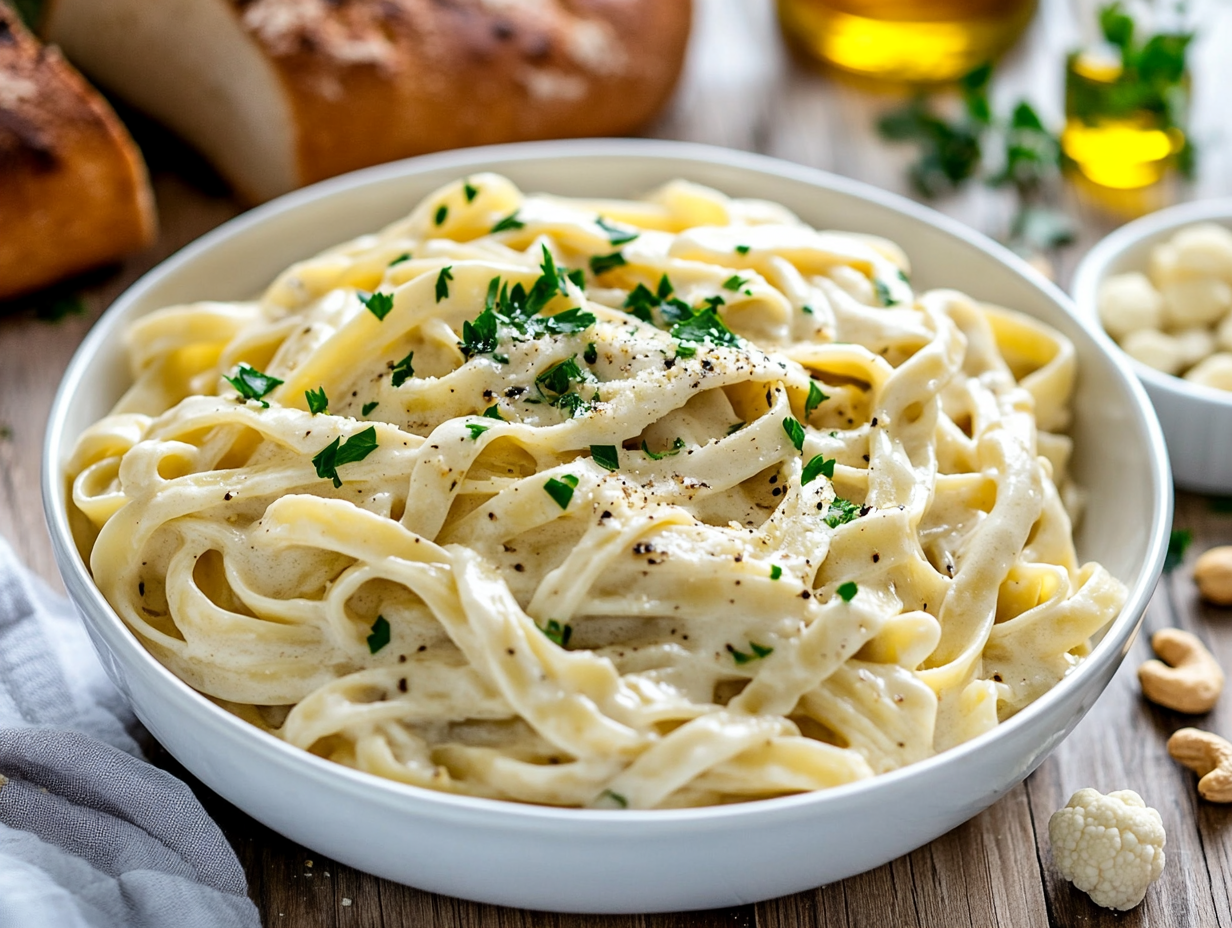
This vegan fettuccine Alfredo uses blended cauliflower and soaked cashews to build a sauce that is genuinely creamy — not a thin approximation. It comes together in under 35 minutes, which makes it realistic on a weeknight. The cashews also push each serving to 486 calories with meaningful fat and protein, so this actually fills you up.
Why this recipe works
Two things matter here. First, the cauliflower is cooked until fully tender before blending — not just softened. Undercooked cauliflower leaves a grainy texture no blender can fix. Second, the cashews must be soaked long enough to blend completely smooth; a high-speed blender handles this well, but only if the cashews have had enough time in water to soften through to the center. These two steps are what separate a sauce that coats pasta from one that slides off it. Everything else — the nutritional yeast, lemon, Dijon, nutmeg — is seasoning layered on top of that textural foundation.
Substitutions that actually work
- Cashews: Blanched, peeled sunflower seeds work as a nut-free swap and blend nearly as smooth. Hemp seeds are another option but produce a slightly greener sauce.
- Nutritional yeast: White miso paste (start with one teaspoon) adds comparable umami depth if you are out of nooch, though the flavor profile shifts slightly.
- Plant milk: Oat milk is the most neutral choice. Avoid full-fat canned coconut milk — it will make the sauce taste tropical rather than savory.
- Fettuccine: Any wide, flat pasta works. For extra protein per bowl, swap in chickpea or lentil fettuccine — the sauce clings to it just as well.
What can go wrong
- Sauce seizes up in the pan: This happens when the heat is too high after you add the blended sauce to the pasta. Keep the burner on low and add reserved pasta water a splash at a time to loosen it back up.
- Sauce tastes flat despite correct seasoning: Cauliflower absorbs salt unevenly. Taste the blended sauce before it hits the pasta and season it there, not just at the end.
- Gritty texture in the finished sauce: The cashews were not soaked long enough or the blender did not run long enough. Blend for a full 60 to 90 seconds after it looks smooth — that extra time matters.
- Pasta clumps before the sauce is ready: Toss the drained pasta with a small drizzle of olive oil immediately after draining if your sauce needs another minute or two. It prevents sticking without affecting the final dish.
- Sauce too thick after sitting: It thickens as it cools. Stir in warm water or warm plant milk one tablespoon at a time when reheating — it comes back together easily.
Leftovers and meal prep
Store leftovers in an airtight container in the fridge for up to three days. The sauce and pasta are fine stored together. Reheat on the stovetop over low heat with a splash of water or unsweetened plant milk, stirring until the sauce loosens — the microwave works too but tends to dry the edges. The sauce on its own freezes well for up to six weeks; freeze it separately from the pasta in a small container, then thaw overnight in the fridge before reheating. Frozen pasta turns mushy, so skip the garnish of fresh herbs before freezing — not worth the extra prep on a portion you are just going to reheat anyway. If you are meal prepping for the week, cook the pasta fresh each time and just pull the sauce from the fridge or freezer.

Vegan Fettuccine Alfredo

Equipment
- High-speed blender
- Large pot
- Saucepan
- Knife
- Cutting board
Ingredients
- 12 oz fettuccine pasta use dried or fresh vegan fettuccine
- 1 tablespoon olive oil extra virgin recommended
- 4 cloves garlic minced
- 2 cups cauliflower florets fresh or frozen, chopped small for faster cooking
- ½ cup raw cashews soaked in hot water for 15 minutes
- 1 cup unsweetened plant-based milk almond or oat milk preferred
- ¼ cup nutritional yeast adds cheesy flavor
- 1 tablespoon fresh lemon juice
- 1 teaspoon Dijon mustard for tang and depth
- ½ teaspoon sea salt adjust to taste
- ¼ teaspoon fresh ground black pepper
- ¼ teaspoon ground nutmeg optional but traditional aroma
- 2 tablespoons chopped fresh parsley for garnish
Instructions
- Bring a large pot of salted water to a boil and cook the fettuccine according to package directions until al dente (about 10–12 minutes). Drain and set aside.
- While the pasta cooks, heat olive oil in a saucepan over medium heat (350°F / 175°C). Sauté the minced garlic until fragrant and lightly golden, about 2 minutes.
- Add the cauliflower florets and 1 cup of water to the saucepan. Cover and simmer for 8–10 minutes, or until cauliflower is fork-tender. Drain and allow to cool slightly.
- In a high-speed blender, combine the cooked cauliflower mixture, soaked cashews (drained), plant-based milk, nutritional yeast, lemon juice, Dijon mustard, sea salt, black pepper, and nutmeg. Blend until completely smooth and creamy. Taste and adjust seasoning as needed.
- Return the cooked pasta to the pot. Pour over the Alfredo sauce and mix well until heated through—about 3–5 minutes over low heat.
- Plate the creamy fettuccine and garnish with freshly chopped parsley. Serve immediately while hot.
Notes
- If you don’t have a high-speed blender, simmer the cashews an extra 10 minutes for a softer texture before blending in a regular blender.
- For extra umami, add a teaspoon of white miso paste to the sauce blend.
- This sauce also works well over spiralized vegetables like zucchini or spaghetti squash for a low-carb version.
Nutrition
Your questions, answered
Can I make this without a high-speed blender?
A standard blender can work, but you need to soak the cashews for at least eight hours rather than the shorter quick-soak method. Blend in two batches and run the blender longer than you think necessary — stopping too early is the main reason the sauce comes out grainy.
How do I add more protein to this dish without changing the flavor?
Swap regular fettuccine for chickpea or lentil pasta, which adds roughly 10 to 14 grams of protein per serving with no noticeable flavor difference under a creamy sauce. Stirring in a cup of white cannellini beans before serving is another option — they are mild enough to disappear into the dish while adding both protein and fiber.
Does the sauce taste like cauliflower?
No, not noticeably. Once the cauliflower is cooked with garlic and blended with nutritional yeast, lemon, and mustard, its flavor becomes background rather than front and center. People who dislike cauliflower on its own consistently eat this sauce without identifying it.
Can I make the sauce ahead of time?
Yes — the sauce keeps in the fridge for up to three days and actually tastes a little better on day two once the flavors have had time to settle. Make it the night before, refrigerate it, then warm it gently on the stovetop with a splash of plant milk while your pasta cooks.