
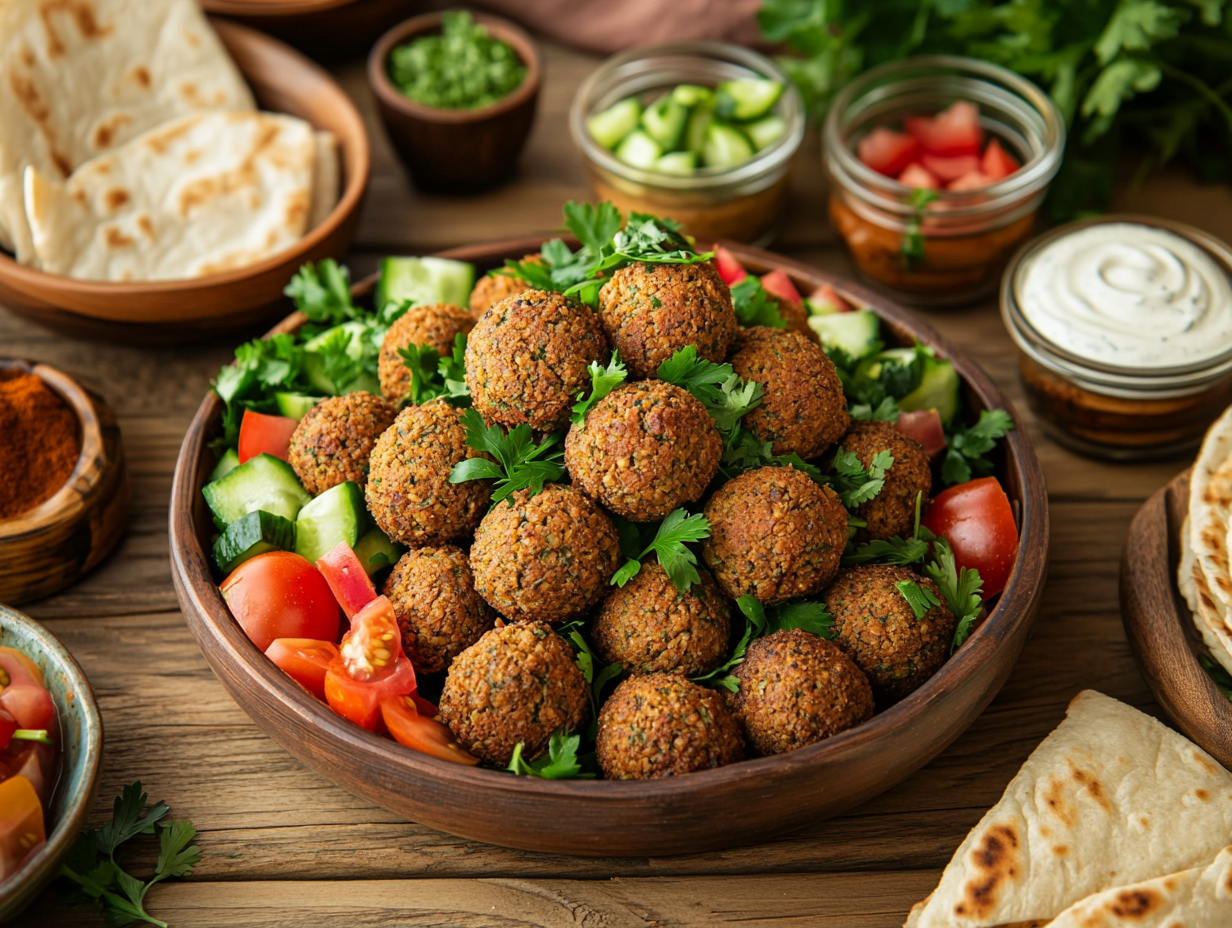
Falafel are crispy, herb-packed chickpea fritters that work as a wrap filling, a bowl topper, or just a snack straight off the plate. This version uses dried chickpeas and a short list of fresh ingredients to get the texture right — something canned chickpeas simply cannot do. If you’ve ever had falafel turn out dense or fall apart in the oil, the fixes are in the details below.
What makes this version work
Two things actually move the needle here. First, starting with dried chickpeas soaked 12–16 hours — not cooked, just soaked — keeps the mixture dry enough to hold together and coarse enough to fry with a real crust. Canned chickpeas are too wet and too soft; the patties absorb oil and turn heavy. Second, processing to a coarse, sandy texture rather than a smooth paste is what gives each falafel an open, slightly crumbly interior that stays light after frying. Pulse in short bursts and stop while there’s still visible texture. Those two steps are where most homemade falafel either succeeds or fails.
Ingredient notes
- Dried chickpeas: Buy them from a store with decent turnover. Very old dried chickpeas (over a year) may never fully soften even after a long soak, which makes processing harder and the texture gritty in a bad way.
- Chickpea flour: A direct swap for all-purpose flour if you need gluten-free falafel. Use the same amount — it binds just as well and keeps the flavor consistent since you’re already working with chickpeas.
- Fresh herbs: Dried cilantro or dried parsley won’t work here. The moisture and flavor from fresh leaves are part of what holds the mixture together and gives the interior that green color.
- Neutral oil for frying: Sunflower and avocado oil both handle 350°F without smoking. Olive oil is not ideal — its smoke point is too low for deep frying and the flavor competes with the herbs.
What can go wrong
- Patties fall apart in the oil: The mixture is too wet or under-chilled. Refrigerate the formed patties for at least 30 minutes before frying — this firms them up and reduces the chance of cracking when they hit the oil.
- Falafel turns out dense and doughy: Over-processing is the usual cause. Once the mixture looks like hummus, it’s too late. You’re aiming for a texture closer to coarse wet sand, not a paste.
- Outside browns before the inside cooks through: Oil is too hot. Use a thermometer and bring it back to 350°F between batches. Crowding the pan drops the temperature fast, so fry in small batches.
- Mixture won’t stick together at all: Add flour one tablespoon at a time and mix, then re-chill. This usually happens when the herbs or onion released extra moisture during processing.
- Bitter or flat flavor: Taste the raw mixture before forming — this is the moment to adjust salt and spices. Once fried, the seasoning is locked in.
Keeping and reheating
Cooked falafel keeps in an airtight container in the fridge for up to 4 days. To reheat, use an oven or air fryer at 375°F for 8–10 minutes — this brings back most of the crust. Microwaving works in a pinch but leaves them soft. For longer storage, freeze cooked falafel in a single layer on a baking sheet first, then transfer to a freezer bag once solid; they keep well for up to 3 months and go straight from frozen into a 400°F oven for about 15 minutes. The uncooked mixture can also be refrigerated for up to 24 hours before frying, which is useful for meal prep — skip storing it longer than that, as the fresh herbs start to lose their brightness. Skip the garnish plate entirely — not worth the extra dish when the falafel is the thing people are actually there for.

Homemade Falafel

Equipment
- Food processor
- Cast iron skillet or deep frying pan
- Slotted spoon
- Mixing bowl
- Paper towels
Ingredients
- 1 cup dried chickpeas soaked overnight for at least 12 hours and drained well
- 1 medium yellow onion roughly chopped
- 4 cloves garlic peeled
- 1 cup fresh flat-leaf parsley tightly packed, stems removed
- 1 cup fresh cilantro tightly packed, stems removed
- 2 teaspoons ground cumin
- 1 teaspoon ground coriander
- 1 teaspoon sea salt or to taste
- ½ teaspoon baking powder
- 2 tablespoons all-purpose flour or chickpea flour
- 2 cups neutral oil for frying such as avocado or sunflower oil
Instructions
- Soak Chickpeas: Rinse the dried chickpeas thoroughly, then place them in a large bowl and cover with water by 3 inches. Soak overnight (12–16 hours). Drain and pat dry just before use.
- Blend Mixture: In a food processor, combine chickpeas, onion, garlic, parsley, cilantro, cumin, coriander, and salt. Pulse until the mixture becomes crumbly and holds together when squeezed. Do not over-purée—texture is key.
- Add Binding Agents: Add the baking powder and flour to the mixture. Pulse once more to incorporate evenly. Transfer the mixture to a bowl, cover, and refrigerate for at least 30 minutes to firm up.
- Shape Falafel: Form the chilled mixture into 1.5-inch balls or small patties using damp hands or a falafel scoop. Pack tightly so they hold together during frying.
- Heat Oil: In a heavy-bottomed skillet or frying pan, heat 2 inches of oil to 350°F (175°C). Use a thermometer for accuracy.
- Fry Falafel: Gently lower each falafel into the oil using a slotted spoon. Fry in batches to avoid overcrowding. Cook for 3–4 minutes per side or until richly golden brown. Transfer to a paper towel–lined plate to drain excess oil.
Notes
- For gluten-free falafel, swap flour with chickpea flour or a gluten-free blend.
- Don’t substitute canned chickpeas; they are too soft and lead to mushy falafel.
- Deeply packed herbs give the falafel their vibrant green and fresh flavor—don’t skimp.
- To crisp falafel without frying, brush them with oil and bake at 400°F (200°C) for 25–30 minutes, flipping halfway.
- Leftovers freeze beautifully. Reheat in oven or air fryer for best texture.
Nutrition
FAQ
Can I use canned chickpeas if I forgot to soak dried ones?
No — canned chickpeas will give you mushy, greasy falafel that’s hard to save. The fix is to plan ahead: dried chickpeas only need a cold-water soak, no cooking, so 12 hours of passive time is the real requirement.
Do I have to deep-fry, or can I bake them?
Baking at 400°F works and produces falafel that’s fully cooked with decent flavor, but the crust will be noticeably softer than the fried version. Brush them well with oil on all sides before baking to get as close to a crust as possible.
How do I know when the oil is hot enough without a thermometer?
Drop a small pinch of the mixture into the oil — if it sizzles immediately and rises to the surface within a few seconds, the oil is ready. If it sinks and sits there quietly, the oil needs more time.
Can I make the mixture ahead and freeze it before frying?
Yes, the uncooked mixture freezes well. Portion it into balls or patties, freeze on a tray until solid, then bag them; fry straight from frozen at a slightly lower temperature (325°F) to give the center time to cook through before the outside over-browns.
Why does my falafel taste bland even though I followed the recipe?
Dried chickpeas absorb seasoning differently depending on their age and how long they soaked, so the mixture always needs a taste-test before frying. Adjust salt and cumin in the raw mixture — a small fried test patty is the most reliable way to check.
What to cook next
- Lebanese Vegan Grape Leaves
- Mediterranean Lentil Power Bowl
- Vibrant Vegan Fattoush Salad
- Moroccan Lentil Apricot Tagine