
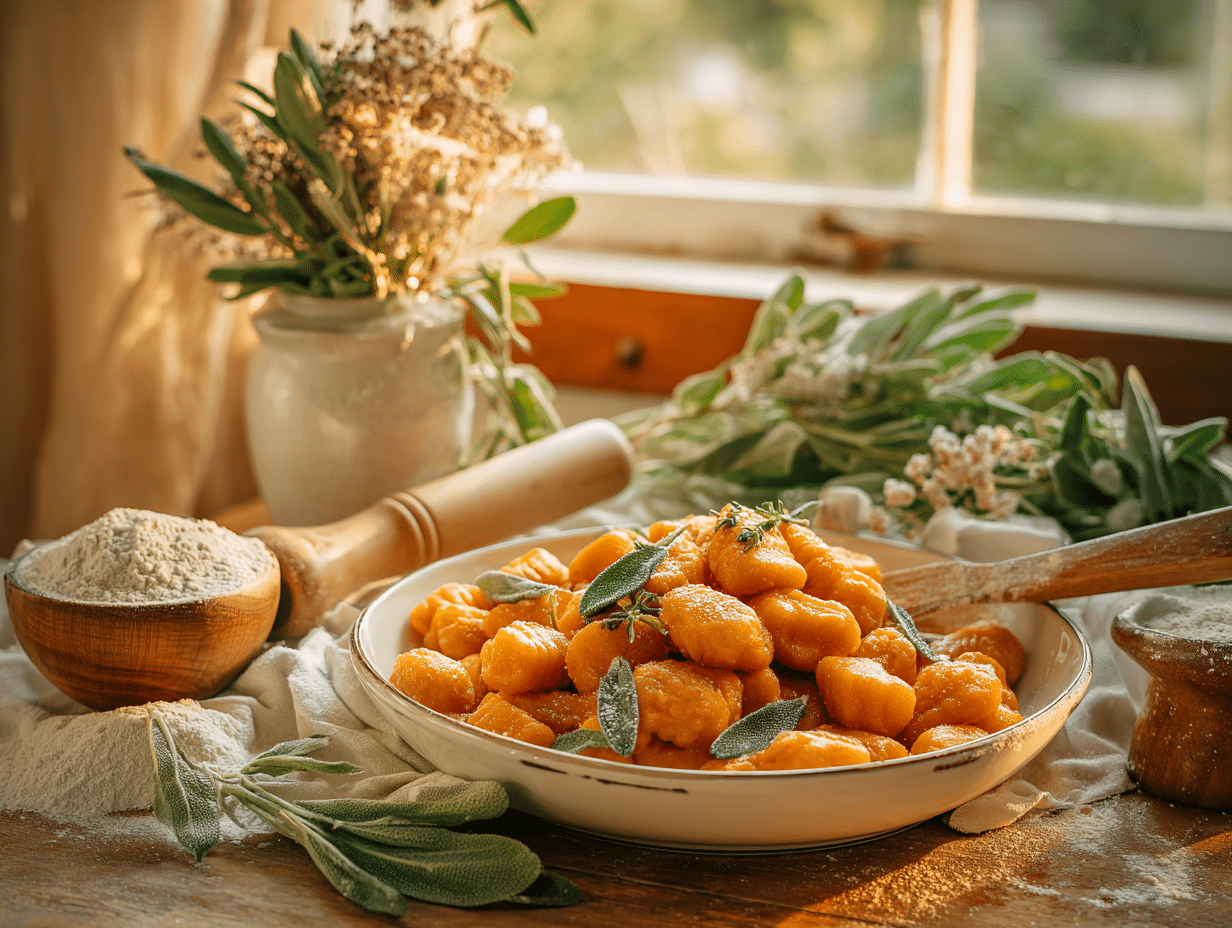
This is a pan-seared sweet potato gnocchi finished in sage garlic olive oil — about an hour of work, mostly hands-on, with a short ingredient list you can largely pull from a well-stocked pantry. Roasting the sweet potatoes and using whole wheat flour are the two choices that actually make the dough behave, and the result is a filling dinner that costs very little per serving.
Before you start
Moisture control is the one thing that determines whether your dough comes together cleanly or turns into a sticky mess. Roasting the sweet potatoes — rather than boiling or microwaving them — drives off enough water that you won’t need to compensate with extra flour, which is what makes gnocchi dense and heavy. Let the roasted flesh cool for at least 10 minutes before you mash it; mashing while it’s steaming hot keeps moisture trapped in the dough. A potato ricer gives you the most uniform texture, but a fork and some patience work fine — just break up any stringy bits so they don’t tear the dough when you roll it.
Mistakes to avoid
- Rolling the dough too thick: Thick ropes produce gnocchi that are gummy in the center even after a full boil. Aim for ropes about 3/4 inch in diameter before cutting.
- Skipping the boiling water salt: Unsalted water produces flat-tasting gnocchi that the sage oil can’t fully rescue. Salt the water generously — it should taste noticeably seasoned.
- Crowding the pan during the sear: If the gnocchi touch each other in the skillet, they steam instead of crisping. Work in two batches if your pan isn’t large enough.
- Letting boiled gnocchi sit in water: Pull them out as soon as they float and transfer them directly to the oiled pan or a lightly oiled plate. Sitting in water makes them waterlogged and they won’t brown properly.
- Burning the garlic before the sage goes in: Garlic goes from golden to bitter fast over medium-high heat. Add it off the heat or on low, then add the sage, so both finish at the same time.
Shopping notes
Whole wheat flour is the main variable here. All-purpose flour works and produces a slightly softer, more neutral dough — use the same amount. If you need a gluten-free version, a 1:1 gluten-free flour blend (the kind with xanthan gum already included) is the most reliable swap; rice flour alone tends to make the dough crumbly. Fresh sage is worth buying if you can — dried sage works in a pinch but use about a third of the amount and add it earlier so it has time to bloom in the oil. If sage isn’t available at all, fresh rosemary in a smaller quantity gives a similar woodsy result without overpowering the dish.
Make-ahead notes
The uncooked shaped gnocchi can be refrigerated on a lightly floured tray, loosely covered, for up to 24 hours — beyond that the dough softens and they can stick together. For longer storage, freeze them raw in a single layer on a parchment-lined sheet until solid, about 2 hours, then transfer to a freezer bag; they keep well for up to 6 weeks. Cook straight from frozen in boiling salted water — they’ll take an extra 2 to 3 minutes compared to fresh. Already-cooked gnocchi reheat best in a hot skillet with a small splash of olive oil; the microwave makes them rubbery, so skip it.

Vegan Sweet Potato Gnocchi

Equipment
- Potato ricer or masher
- Mixing bowl
- Bench scraper or knife
- Large pot
- Slotted spoon
- Non-stick skillet
Ingredients
Sweet Potato Gnocchi Dough
- 2 cups mashed sweet potatoes (about 2 large sweet potatoes) Roasted until tender; avoid boiling to prevent sogginess
- 1 cup whole wheat flour plus extra for dusting
- ½ teaspoon fine sea salt
- ¼ teaspoon freshly ground black pepper
Sage Garlic Olive Oil Sauce
- 3 tablespoons extra virgin olive oil
- 4 cloves garlic thinly sliced
- 8 leaves fresh sage torn or finely sliced
- ¼ teaspoon red pepper flakes optional for a light heat
Instructions
- Roast the sweet potatoes: Preheat your oven to 400°F (200°C). Pierce the sweet potatoes with a fork, place on a baking sheet, and roast for 45-60 minutes until completely tender. Let cool, then remove skins and mash thoroughly until smooth.
- Make the gnocchi dough: In a large mixing bowl, combine 2 cups of mashed, cooled sweet potatoes with 1 cup of whole wheat flour, 1/2 tsp sea salt, and 1/4 tsp black pepper. Mix gently with hands until a soft dough forms. Avoid overworking to keep them tender.
- Shape the gnocchi: Lightly flour a clean surface. Divide dough into 4 equal parts. Roll each into a rope about 3/4-inch thick. Cut into 1-inch pieces. Optionally, roll each piece along the back of a fork to create classic grooves that hold sauce.
- Boil the gnocchi: Bring a large pot of salted water to a boil. Working in batches, cook gnocchi for 2-3 minutes until they float to the surface. Remove with a slotted spoon and transfer to a paper-towel-lined tray.
- Crisp the gnocchi (optional): Heat 1 tablespoon of olive oil in a non-stick skillet over medium heat. Sauté boiled gnocchi in batches until golden and crisp on each side, about 2 minutes per side.
- Prepare sage garlic oil: In a small skillet over medium-low heat, warm 2 tablespoons of olive oil. Add garlic slices and cook until golden and fragrant, about 1–2 minutes. Add sage leaves and red pepper flakes, stir gently for 30 seconds, then remove from heat.
- Serve: Pour the warm sage garlic oil over sautéed gnocchi. Toss gently to coat. Plate and serve immediately.
Notes
- Instead of whole wheat flour, you may use all-purpose or gluten-free flour for a lighter or allergy-friendly version.
- Roasting sweet potatoes enhances caramelization and flavor — avoid boiling which introduces excess moisture.
- Use a potato ricer for the smoothest gnocchi dough texture; avoid using a blender or food processor.
- Cooked gnocchi can be frozen before crisping. Flash-freeze on a baking sheet then store in a freezer bag for up to 2 months.
Nutrition
Frequently asked questions
Can I use canned sweet potato or sweet potato puree instead of roasting my own?
You can, but you’ll need to dry it out first or the dough will be too wet. Spread the puree on a clean skillet over low heat and stir for 4 to 5 minutes until it looks visibly drier and pulls away from the pan, then let it cool before mixing in the flour.
My dough is still sticky even after adding the flour — what do I do?
Add flour one tablespoon at a time and stop as soon as the dough holds together without sticking to your hands. The dough should be soft and slightly tacky, not completely dry — over-flouring is the more common mistake and produces tough gnocchi.
Do I have to do the pan-searing step, or can I just serve them boiled?
You can serve them straight from the boiling water — they’ll be tender and perfectly edible. That said, skipping the sear means you lose the contrast between the crisp outside and the soft center, which is most of what makes this dish satisfying rather than just filling.
What can I add to make this more of a complete meal?
Toasted pine nuts or chopped walnuts stirred in at the end add protein and crunch without any extra cooking. Sautéed white beans or a handful of wilted spinach added to the pan in the last minute are both easy additions that don’t require a separate dish — skip the garnish of extra fried sage leaves, though; not worth the extra oil or the extra pan.
Try these next
- Vegan Polenta Mushroom Bliss
- Macadamia Nut Pesto Pasta
- Miso Glazed Sweet Potatoes
- Spring Pea Mint Risotto