
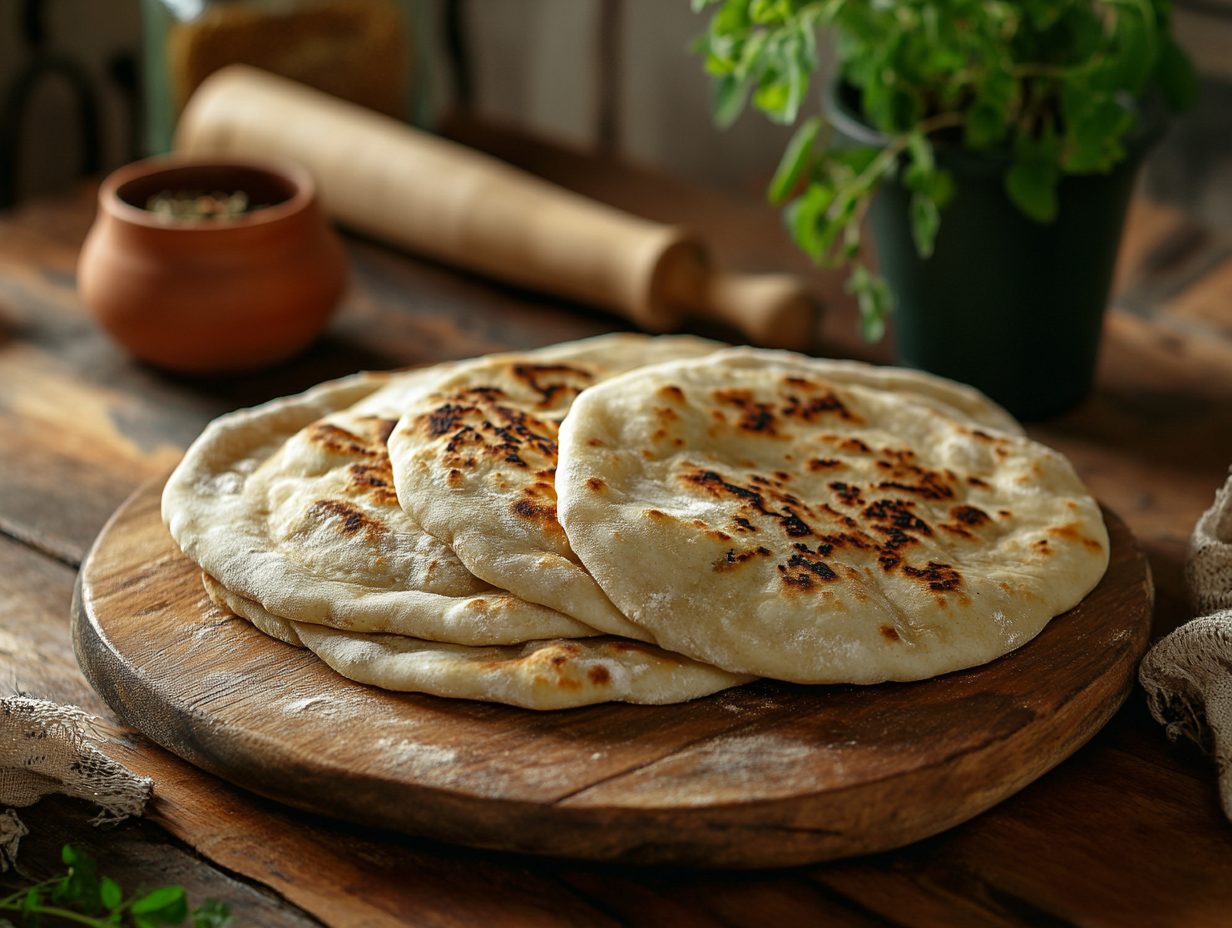
Mahjouba is an Algerian semolina flatbread folded around a cooked tomato-onion filling — crisp on the outside, soft and savory inside. The ingredient list is short and the whole thing comes together in under an hour. It’s a genuinely satisfying weeknight dinner that doesn’t ask much of you.
The technique that matters
Two things decide whether your mahjouba works. First, the dough rest: after kneading, the semolina dough needs at least 20 minutes covered at room temperature so the gluten relaxes enough to stretch thin without tearing. Rush this and the dough fights back. Second, the filling must be dry before it goes into the bread. If your tomato mixture is still wet and loose when you spread it, steam builds inside the flatbread as it cooks and the dough turns gummy instead of crisping up. Cook the filling until almost all the liquid has evaporated — it should look jammy and hold its shape on the spoon. Get those two things right and the rest is straightforward.
Shopping notes
- Semolina flour: You want fine semolina (sometimes labeled “semolina flour” or “finely ground semolina”), not the coarse kind sold for pasta or pudding. Bob’s Red Mill fine semolina is widely available in US grocery stores. Coarse semolina will give you a gritty, unworkable dough.
- Fresh tomatoes vs. canned: Fresh ripe tomatoes give the best flavor, but if yours are pale and watery, a 14-oz can of diced tomatoes drained well is a better call — skip the garnish of fresh tomato on top, not worth the extra dish.
- Cumin: Ground cumin is standard here. If you only have whole seeds, toast and grind them quickly — it takes two minutes and the flavor difference is real.
- Harissa (optional): A spoonful stirred into the filling adds heat without changing the texture. Most US supermarkets carry it in the international aisle; Mina and CAVA brands are easy to find.
Common problems and fixes
- Dough tears when stretching: The dough hasn’t rested long enough, or the semolina-to-water ratio is slightly off. Wet your hands lightly with water or a few drops of olive oil before stretching — this gives you more control and reduces friction without adding flour, which toughens the dough.
- Flatbread sticks to the pan: The pan wasn’t hot enough before the dough went in. Let your skillet heat over medium for a full two minutes first. A dry cast-iron or non-stick pan works best; avoid adding oil to the pan itself, as it causes uneven browning.
- Filling leaks out during folding: You’ve spread the filling too close to the edges. Leave a 1-inch border all the way around before folding. Also make sure the filling is cool enough to handle — hot filling makes the dough slippery and harder to seal.
- Bread is cooked outside but raw-tasting inside: The heat is too high. Medium to medium-low is the right range. High heat browns the outside before the dough in the center has time to cook through. Press the flatbread gently with a spatula while it cooks to ensure even contact with the pan.
- Dough is too stiff to stretch thin: Add water one teaspoon at a time and knead it in. Semolina absorbs water more slowly than all-purpose flour, so the dough can seem dry right after mixing but loosen up after resting. If it’s still stiff after the rest period, a little more water is the fix.

Mahjouba (Algerian Vegetable-Stuffed Flatbread)

Equipment
- Large mixing bowl
- Cast iron or non-stick skillet
- Rolling Pin
- Kitchen towel or plastic wrap
- Sharp knife
Ingredients
For the Dough:
- 2 cups fine semolina preferably Tunisian or Moroccan
- ½ teaspoon salt
- ¾ cup warm water plus more if needed
- 2 tablespoons neutral oil such as grapeseed or sunflower, for dough
For the Filling:
- 2 tablespoons olive oil
- 3 medium yellow onions finely diced
- 3 cloves garlic minced
- 2 cups ripe tomatoes peeled and chopped, Roma recommended
- 1 teaspoon tomato paste
- ½ teaspoon ground cumin
- ¼ teaspoon smoked paprika optional, for depth of flavor
- 1 pinch salt to taste
- 1 pinch freshly ground black pepper to taste
- 2 tablespoons neutral oil for cooking
Instructions
- Prepare the Dough: In a large bowl, combine semolina and salt. Gradually add warm water while mixing with your hand until a soft, elastic dough forms. Knead for 10 minutes until smooth. Divide into 4 balls, coat lightly with oil, cover with a damp cloth or plastic wrap, and let rest for 45 minutes.
- Make the Filling: While the dough rests, heat olive oil in a skillet over medium heat (350°F / 175°C). Add onions with a pinch of salt and sauté for 10-12 minutes until deeply softened and lightly golden. Add garlic and cook for 2 minutes until fragrant.
- Add Tomatoes: Stir in chopped tomatoes, tomato paste, cumin, paprika, salt, and pepper. Reduce heat to low and simmer uncovered for 20 minutes, stirring occasionally, until mixture thickens and flavors deepen. Set aside to cool slightly.
- Shape Flatbreads: Lightly oil your hands and surface. Flatten each dough ball into a thin, almost transparent round (about 10 inches wide). Gently stretch by hand if needed, as done for Moroccan msemen.
- Fill and Fold: Place 3–4 tablespoons of the filling into the center. Fold edges inward to form a square pocket, gently pressing sides to seal.
- Cook Flatbreads: Heat a lightly oiled skillet over medium heat (350°F / 175°C). Place one filled mahjouba seam-side down and cook for 3–4 minutes per side, until golden with a few charred spots. Repeat with remaining pieces.
Notes
- For softer dough, add a tablespoon more water at a time if it feels dry during kneading.
- Use ripe, in-season tomatoes for optimal flavor, or substitute with high-quality canned tomatoes in winter.
- For a spicy twist, add a pinch of cayenne or harissa to the filling.
Nutrition
FAQ
Can I make the dough ahead of time?
Yes — the dough keeps well in the fridge for up to 24 hours wrapped tightly in plastic wrap or in a sealed container. Take it out 15 minutes before you want to stretch it so it comes back to room temperature and relaxes again.
Can I make the filling ahead of time?
Absolutely, and it actually improves with a little time. The filling keeps in the fridge for up to 3 days in a sealed container. Reheat it briefly in a pan before using so it spreads easily and any residual moisture cooks off.
What can I use instead of semolina flour if I can’t find it?
A 50/50 blend of all-purpose flour and fine cornmeal is the closest practical substitute — it gives some of the same slight chew and structure. All-purpose flour alone works in a pinch but produces a softer, less chewy flatbread.
How do I store and reheat leftovers?
Stack cooled flatbreads with a piece of parchment between each one and refrigerate for up to 2 days. Reheat in a dry skillet over medium heat for 2 minutes per side — the microwave works but makes them soft and a bit rubbery.
My onions are browning too fast before they soften — what’s going wrong?
The heat is too high or the pan is too dry. Drop the heat to medium-low and add a small splash of water to the pan — it steams the onions and slows the browning without adding fat. You want them fully soft and translucent before the tomatoes go in.
More plant-based recipes to try
- Moroccan Lentil Apricot Tagine
- Lebanese Vegan Grape Leaves
- Moroccan Spiced Couscous
- Mediterranean Lentil Power Bowl