
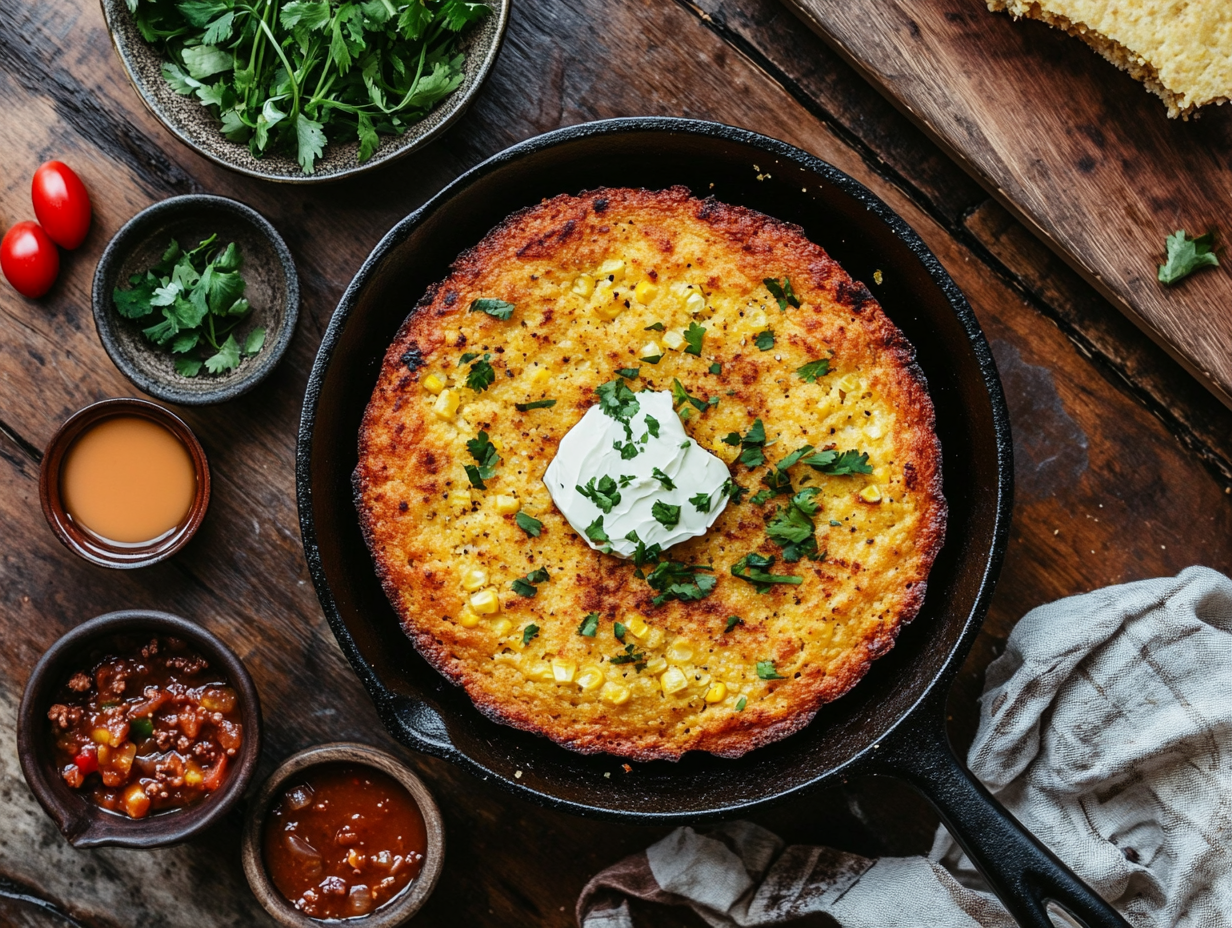
This is a cast-iron skillet cornbread made without dairy or eggs — golden and crisp on the bottom, moist in the middle, and ready in under 40 minutes. The real reason to make it: one batch holds up well all week and pairs with almost anything savory you’re already cooking. It’s a genuinely useful thing to have in your fridge.
The technique that matters
Preheating the cast-iron skillet is the one step you cannot skip. Put the oiled skillet in the oven while it heats up, then pour the batter into the hot pan — you should hear it sizzle. That contact heat sets a crisp, deeply browned crust on the bottom before the oven heat even gets to work on the top. The second technique worth getting right is the vegan buttermilk: stir apple cider vinegar into your unsweetened plant milk and let it sit for five minutes before mixing it into the batter. It curdles slightly and adds a mild tang that keeps the crumb tender rather than dense. Both steps take almost no extra time and make a real difference in the finished texture.
Substitutions that actually work
- Plant milk: Soy milk produces the most reliable curdling with apple cider vinegar and gives the richest crumb. Oat and almond milk both work, but oat milk adds a faint sweetness you may or may not want.
- Oil: Avocado and sunflower oil are neutral and work well. Melted refined coconut oil also works; unrefined adds a coconut flavor that can clash with savory mix-ins.
- Flour: A 1:1 gluten-free baking blend substitutes directly. The texture will be slightly more crumbly but still holds together for slicing.
- Cornmeal grind: Medium-grind gives the best texture. Fine-grind makes it closer to cake; coarse-grind can turn gritty. Stone-ground is worth buying if you can find it — it has more flavor than degerminated cornmeal.
Leftovers and meal prep
Cornbread keeps well at room temperature for one day, loosely wrapped. After that, move it to an airtight container in the fridge where it stays good for up to five days — it actually slices more cleanly once cold. For longer storage, cut it into individual portions, wrap each one tightly, and freeze for up to two months. Reheat a cold slice in a dry skillet over medium heat for two to three minutes per side; this brings the crust back better than a microwave does. A microwave works in a pinch — 20 to 30 seconds on medium power — but the bottom goes soft. If you’re baking specifically for the week ahead, skip the garnish of extra herbs on top — not worth the extra dish — and focus on getting a clean, even bake that slices neatly for packed lunches or quick sides.
Mistakes to avoid
- Overmixing the batter: Stir until the dry ingredients are just incorporated. Lumps are fine. Overmixing develops gluten and makes the cornbread tough and rubbery.
- Skipping the rest time after mixing: Give the batter two to three minutes to sit after mixing before pouring it into the skillet. The baking powder and soda need a moment to activate, which helps the rise.
- Using a cold skillet: If the skillet isn’t hot when the batter goes in, you lose the crust entirely and the bottom steams instead of sears. Preheat it for at least eight minutes.
- Cutting it too soon: Let the cornbread rest in the pan for at least ten minutes after it comes out of the oven. Cutting while it’s still very hot causes it to crumble and fall apart, especially along the bottom crust.
- Under-oiling the skillet: Cast iron is porous and will grip the batter if you’re stingy with oil. Coat the bottom and sides thoroughly before preheating so the whole piece releases cleanly.

Vegan Skillet Cornbread
Equipment
- 10-inch cast iron skillet
- Mixing bowls
- Whisk
- Measuring cups and spoons
- Rubber spatula
Ingredients
For Dry Ingredients:
- 1 ½ cups medium-grind cornmeal preferably stone-ground, organic
- 1 cup unbleached all-purpose flour or gluten-free flour blend if needed
- 2 tablespoons organic cane sugar reduce if you prefer a more savory bread
- 2 teaspoons baking powder
- ½ teaspoon baking soda
- ½ teaspoon sea salt
For Wet Ingredients:
- 1 ½ cups unsweetened plant milk such as almond or soy
- 1 tablespoon apple cider vinegar to create vegan buttermilk
- ⅓ cup neutral oil such as avocado or sunflower oil
Instructions
- Preheat your oven to 425°F (220°C). Place your 10-inch cast iron skillet inside the oven during the preheat—it will help form a gorgeous crust.
- In a large mixing bowl, combine the dry ingredients: cornmeal, flour, sugar, baking powder, baking soda, and salt. Whisk thoroughly to remove any lumps and to aerate.
- In a separate bowl or liquid measuring cup, whisk together the plant milk and apple cider vinegar. Let it sit for 5 minutes to curdle slightly—it mimics buttermilk. Then whisk in the oil until emulsified.
- Pour the wet ingredients into the dry ingredients. Stir with a spatula just until combined—avoid overmixing to keep the texture light.
- Carefully remove the hot skillet from the oven using oven mitts. Lightly grease it with a bit of oil using a heat-safe brush or paper towel.
- Pour the cornbread batter into the hot skillet and spread evenly. You should hear a gentle sizzle as the batter hits the pan.
- Bake for 20–25 minutes, or until the top is golden and a toothpick inserted in the center comes out clean.
- Let cool for 10 minutes before slicing. Serve warm with vegan butter or maple syrup if desired.
Notes
- For a twist, fold in 1/2 cup of corn kernels or diced jalapeños before baking.
- If stone-ground cornmeal isn't available, use medium-grind but reduce sugar slightly for balance.
Nutrition
FAQ
Can I make this without a cast-iron skillet?
Yes — an 8-inch or 9-inch round cake pan or an 8×8 square baking pan both work. You won’t get the same crisp bottom crust, but the cornbread will still bake through evenly; just grease the pan well and don’t bother preheating it.
Why did my cornbread come out dry?
The most common cause is overbaking by even a few minutes — pull it when a toothpick comes out with just a few moist crumbs, not bone dry. Measuring flour by scooping directly from the bag can also pack in too much; spoon it into the measuring cup and level it off.
Can I add mix-ins like jalapeños or corn kernels?
Yes, and they hold up well. Fold them in at the very end of mixing so you don’t overwork the batter. Fresh or thawed frozen corn kernels, diced jalapeños, or chopped scallions all work without changing the bake time.
Does it matter which plant milk I use?
It matters a little. Soy milk curdles most reliably with apple cider vinegar and produces a slightly richer crumb. Oat and almond milk work but curdle less dramatically, which is fine — the recipe still works, just with a marginally lighter tang.
How do I know when it’s done baking?
The top should be golden and set, and the edges will have pulled away slightly from the sides of the skillet. A toothpick inserted in the center should come out with a few moist crumbs — if it comes out wet with batter, give it two to three more minutes.
Can I make the batter ahead of time?
No — mix the batter right before baking. Once the baking powder and soda hit the liquid, the leavening reaction starts immediately; batter that sits for more than ten minutes before going into the oven will produce a flat, dense result.
More plant-based recipes to try
- Louisiana-Style Vegan Gumbo
- BBQ Jackfruit Sliders
- Southern Comfort Goes Vegan
- Vegan Southern Comfort Breakfast
1 comment
Just made your cornbread recipe and it is wonderful. I’ve made cornbread all my life but lately I’ve had trouble with it always being too crumbly, just couldn’t get it right. I’ll be keeping this recipe in my files. Thank you so much!