
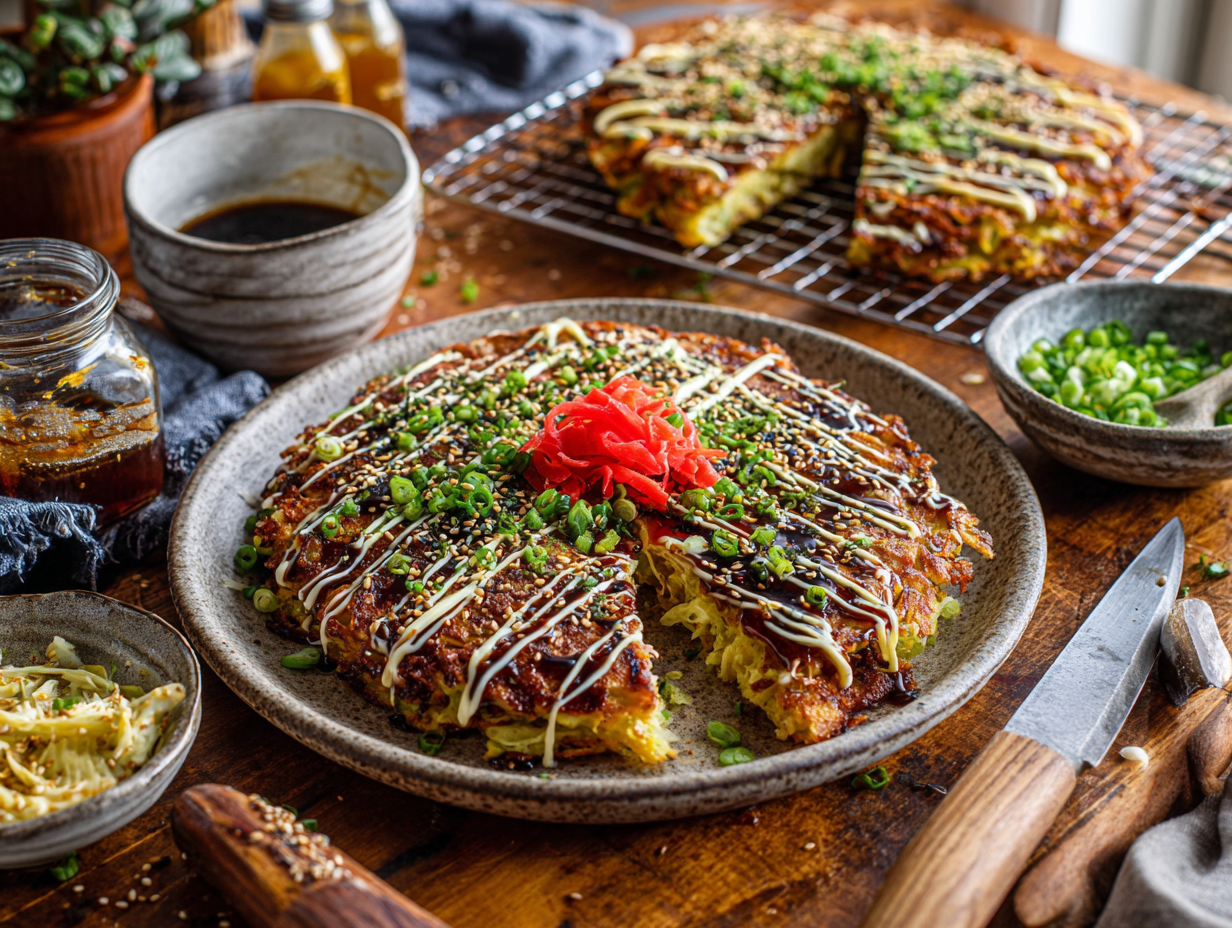
Okonomiyaki are thick, savory Japanese cabbage pancakes cooked on a skillet and topped with a sweet-tangy sauce. This vegan version uses a flax egg and a high cabbage ratio, so the result is crispy at the edges, tender in the middle, and genuinely filling. If you want a weeknight dinner that feels different without requiring specialty equipment, this is a solid choice.
About the ingredients
- Flax egg: Mix 1 tablespoon ground flaxseed with 3 tablespoons water and let it sit for 5 minutes until it thickens into a gel. Ground flaxseed is sold at most grocery stores near the nuts and seeds.
- Beni shoga (pickled red ginger): This is different from the pale sushi ginger. Look for it at Asian grocery stores or order online. In a pinch, finely chopped regular pickled ginger works, though the color won’t be the same.
- Aonori: Dried seaweed flakes used as a topping. If you can’t find it, crumbled nori sheets are a reasonable substitute.
- Tenkasu (tempura scraps): These add crunch inside the batter. They’re often sold at Asian grocery stores. Skip them if unavailable — the pancake still works without them.
- Nagaimo (mountain yam): Optional, but grating a small amount into the batter gives the interior a silkier texture. It’s sticky and slightly mucilaginous raw, which is normal. Potato starch stirred into the batter is an easier substitute.
- Okonomiyaki sauce: Check the label — some brands contain oyster extract. Bull-Dog brand makes a vegan-friendly version. Hoisin sauce thinned with a little soy sauce is a workable swap.
- Vegan mayo: Any brand works. Kewpie now makes a vegan version that’s closer to the original flavor profile.
What makes this version work
The two things that actually matter here are cabbage prep and pan temperature. Cabbage holds a lot of water. If you shred it and immediately mix it into the batter, that water releases during cooking and you get a soggy, pale pancake instead of a crispy one. Shred the cabbage finely, then let it sit with a pinch of salt for a few minutes and squeeze out the excess liquid with your hands before adding it to the batter. On the heat side, medium to medium-low is the right range — high heat browns the outside fast while leaving the center raw and gummy. Give each side a full 4 to 5 minutes undisturbed before flipping, and resist pressing down on the pancake, which squeezes out the steam that cooks the interior.
What can go wrong
- Pancake falls apart when flipping: The batter wasn’t cohesive enough, usually because the flax egg wasn’t given enough time to gel, or the cabbage added too much water. Let the flax egg sit a full 5 minutes and squeeze the cabbage dry before mixing.
- Gummy, undercooked center: The pan was too hot. A dark exterior can form in under 2 minutes on high heat while the inside stays raw. Lower the heat and add 1 to 2 more minutes per side.
- Pancake sticks badly to the pan: Not enough oil, or the pan wasn’t hot enough before adding the batter. Use a well-seasoned cast iron or nonstick pan, heat it first, then add oil and let that heat up before pouring in the batter.
- Flat, dense texture: Overmixing develops gluten in the flour and tightens the batter. Stir just until the dry ingredients are incorporated — a few lumps are fine.
- Toppings slide off: Apply the sauce and mayo while the pancake is still hot from the pan. The warmth helps them set slightly so they don’t pool on the plate.
Leftovers and meal prep
Cooked pancakes keep in the fridge for up to 3 days in an airtight container. Store them without the toppings — the sauce makes them soggy overnight. To reheat, a dry skillet over medium heat for 2 to 3 minutes per side brings back most of the crispiness; a microwave works but leaves them soft. For freezing, layer cooled pancakes between sheets of parchment, seal in a freezer bag, and freeze for up to 6 weeks. Reheat straight from frozen in a covered skillet on low heat for about 5 minutes per side. The batter itself can be made a few hours ahead and kept covered in the fridge — give it a gentle stir before cooking since the cabbage will have released a little more liquid.

Vegan Okonomiyaki (Japanese Savory Cabbage Pancakes)

Equipment
- Large mixing bowl
- Medium mixing bowl
- Whisk
- Measuring cups and spoons
- Chef’s knife and cutting board
- Box grater or microplane (for nagaimo/potato, optional)
- Nonstick skillet or flat griddle (12-inch or larger)
- Ladle or 1/4-cup measure
- Wide spatula
- Squeeze bottle (for vegan mayo, optional)
- Wire rack and baking sheet (to hold pancakes warm)
- Paper towels
Ingredients
For the Batter:
- 2 tablespoons ground flaxseed mixed with water to make a flax gel (egg replacer)
- 5 tablespoons water for hydrating the flaxseed
- 1 cup all-purpose flour spooned and leveled for accuracy
- 2 tablespoons potato starch cornstarch works in a pinch
- 1 teaspoon baking powder aluminum-free preferred
- ½ teaspoon kosher salt Diamond Crystal; reduce if using a fine salt
- ¼ teaspoon ground white pepper black pepper works; white pepper is classic
- ¾ cup cool water or unsalted vegan kombu–shiitake dashi for deeper umami
- ⅓ cup unsweetened soy milk or other neutral plant milk
- 1 tablespoon soy sauce use tamari for gluten-free
- 1 teaspoon toasted sesame oil adds nutty aroma
- ½ cup finely grated nagaimo (mountain yam) or peeled russet potato optional but recommended for custardy texture
For the Filling:
- 4 cups green cabbage, finely shredded about 1/2 small head; slice as thin as possible
- 1 cup scallions, finely sliced green and pale parts
- ⅓ cup pickled red ginger (beni shoga), chopped plus extra for garnish
- ½ cup corn kernels optional; fresh or thawed frozen
- ½ cup tenkasu (tempura scraps) or coarse panko ensure vegan; adds crunch
- 2 tablespoons neutral oil plus more as needed for frying; avocado or grapeseed
For the Sauces & Toppings:
- ½ cup vegan okonomiyaki sauce or mix 1/4 cup tonkatsu-style sauce + 2 tablespoons ketchup + 1 tablespoon vegan Worcestershire + 1 teaspoon maple syrup
- ½ cup vegan mayonnaise in a squeeze bottle for neat zigzags; Kewpie-style vegan if available
- 2 tablespoons aonori (seaweed flakes) or finely shredded nori for umami and aroma
- 2 tablespoons toasted sesame seeds white or black
- 1 cup scallions extra sliced; for garnish
- 1 cup pickled red ginger extra sliced; for garnish
Instructions
- Mise En Place and Cabbage Prep (10 minutes): Finely shred 4 cups cabbage and slice 1 cup scallions. Chop 1/3 cup pickled red ginger. For extra tenderness, toss the cabbage with a small pinch of salt, let sit 5 minutes, then blot dry—this softens the shreds without losing crunch.
- Make the Flax Gel (5 minutes): In a medium bowl, whisk 2 tablespoons ground flaxseed with 5 tablespoons water. Let stand until thick and viscous—like loose egg whites. This will bind the batter.
- Mix the Dry Ingredients (1 minute): In a large bowl, whisk 1 cup all-purpose flour, 2 tablespoons potato starch, 1 teaspoon baking powder, 1/2 teaspoon kosher salt, and 1/4 teaspoon white pepper until well combined.
- Whisk in the Liquids (3 minutes): Add 3/4 cup cool water, 1/3 cup unsweetened soy milk, 1 tablespoon soy sauce, 1 teaspoon toasted sesame oil, and the flax gel. If using, stir in 1/2 cup finely grated nagaimo or grated potato. Whisk just until no dry spots remain—avoid overmixing to keep the pancake tender. Rest the batter 10 minutes to hydrate.
- Fold in the Filling (2 minutes): Add the cabbage, scallions, pickled red ginger, corn (if using), and tenkasu/panko. Fold gently with a spatula until the vegetables are evenly coated—there should be a high ratio of veg to batter.
- Preheat the Pan (3 minutes): Heat a nonstick skillet or flat griddle over medium to about 350°F (175°C). Lightly oil the surface with neutral oil. If holding finished pancakes, set your oven to 200°F (95°C) and place a wire rack over a baking sheet.
- Portion and Shape (1 minute): For each pancake, ladle about 3/4 cup of the mixture onto the hot surface, forming a 5 to 6-inch round about 3/4-inch thick. Use a spatula to neaten the edges for even browning.
- Cook First Side (6–7 minutes): Cover loosely with a lid or an inverted sheet pan to trap steam. Cook until the edges look set, the bottom is deeply golden, and you hear a gentle sizzle—not a harsh crackle.
- Flip and Finish (6–7 minutes): Slide a wide spatula underneath and flip confidently. Cook uncovered until the second side is golden and the center feels springy when pressed. Internal texture should be custardy yet set.
- Repeat in Batches (total cook ~28 minutes): Cook 2 pancakes at a time if your griddle allows, for 2 batches total. Hold finished pancakes on the wire rack in a 200°F (95°C) oven to keep them crisp.
- Sauce and Finish: Brush the top with a glossy layer of vegan okonomiyaki sauce. Zigzag vegan mayo over the surface, then shower with aonori, toasted sesame seeds, and extra scallions and ginger. Serve immediately while the edges are still audibly crisp.
Notes
Mary’s Tips:
- Texture Magic: For the most luscious interior, include the finely grated nagaimo or grated potato—it mimics the silkiness of traditional okonomiyaki.
- Don’t Drown the Batter: Okonomiyaki should be cabbage-forward. If it looks soupy, add 1 to 2 tablespoons flour; if too stiff, drizzle in a tablespoon of water.
- Pan Heat: Aim for a steady medium heat (~350°F/175°C). Too hot and you’ll scorch before the center sets; too low and you’ll miss the crisp edges.
- Gluten-Free Swap: Use a 1:1 gluten-free all-purpose blend and tamari. Potato starch helps keep it light and crisp.
- No Squeeze Bottle? Snip a tiny corner off a sandwich bag filled with vegan mayo for neat lattice lines.
- DIY Sauce: Whisk 1/4 cup tonkatsu-style sauce + 2 tablespoons ketchup + 1 tablespoon vegan Worcestershire + 1 teaspoon maple. Taste and adjust sweet/salty to preference.
- Alternative Binder: 1/3 cup aquafaba can replace the flax gel; whip lightly until foamy, then fold into the batter.
Serving Suggestions:
Slice each pancake into quarters and fan slightly on a warm plate. Brush a glossy sheen of sauce, then mayo in a tidy lattice. Sprinkle aonori and sesame seeds for vibrant contrast—emerald, ivory, and umami-rich aroma. Pair with chilled green tea, a light lager, or sparkling yuzu soda. For a fuller meal, add a crisp cucumber-wakame salad.Culinary Context:
Okonomiyaki is a Kansai (Osaka) street-food classic, distinct from Hiroshima’s layered version. The joy is customization—“as you like it”—and this plant-forward take leans into Japanese pantry flavors: sesame, nori, and pickled ginger for brightness, minus the fish-based elements. I learned to chase the perfect balance of crisp edge and custardy center from a tiny Osaka counter where the cook’s mantra was simple: “More cabbage, less fear of the flip.”Optional Advanced Instructions:
- Make-Ahead Batter Base: Mix the batter (without vegetables) up to 12 hours ahead and refrigerate. Fold in cabbage and other fillings just before cooking.
- Quick Vegan Dashi (not included in timing): Soak 1 (4-inch) piece kombu and 2 dried shiitakes in 2 cups cool water for 20–30 minutes; strain and chill. Use in place of water for extra depth.
- Holding Technique: Keep cooked pancakes on a wire rack in a 200°F (95°C) oven so bottoms don’t steam and soften.
- Beginner Flip Alternative: Slide the pancake onto a plate, invert the skillet over it, and flip the whole thing so the pancake drops back in—clean and safe.
Nutrition
Common questions
Can I make this gluten-free?
Yes — substitute a 1:1 gluten-free all-purpose flour blend for the regular flour. The texture will be slightly more delicate, so handle the pancake gently when flipping and make sure your okonomiyaki sauce is also gluten-free, since many contain wheat.
I don’t have a flax egg. What else can I use?
A chia egg works the same way — 1 tablespoon ground chia seeds mixed with 3 tablespoons water, rested for 5 minutes. Aquafaba (the liquid from a can of chickpeas) also works at about 3 tablespoons per egg, though the batter will be slightly thinner.
My grocery store doesn’t carry okonomiyaki sauce. What do I do?
Mix 2 tablespoons hoisin sauce, 1 tablespoon soy sauce, 1 teaspoon rice vinegar, and 1 teaspoon maple syrup. It’s not identical, but it hits the same sweet-savory-tangy notes. Skip the aonori garnish if you’re already skipping the specialty sauce — not worth the extra dish.
How finely does the cabbage need to be shredded?
Aim for strips no wider than about ¼ inch. Thicker pieces don’t soften fully during the cooking time and create uneven texture. A sharp knife or a mandoline on the thinnest setting both work well.
Can I use a different vegetable instead of cabbage?
Cabbage is structural here — it makes up most of the bulk and its texture after cooking is part of what makes okonomiyaki distinct. You can add other vegetables like thinly sliced scallions, corn, or shredded carrot alongside the cabbage, but replacing it entirely will give you a different dish.
Why is my pancake coming out pale instead of golden?
The pan likely wasn’t hot enough before you added the batter, or there wasn’t enough oil. Preheat the pan for a full minute over medium heat, then add the oil and give it another 30 seconds before pouring in the batter. A light golden crust should start forming within the first 2 minutes.
More plant-based recipes to try
- Vegan Japanese Katsu Curry
- Vegan Vietnamese Sizzling Crepes
- Sesame Ginger Soba Salad
- Vegan Mushroom Bulgogi Bibimbap