
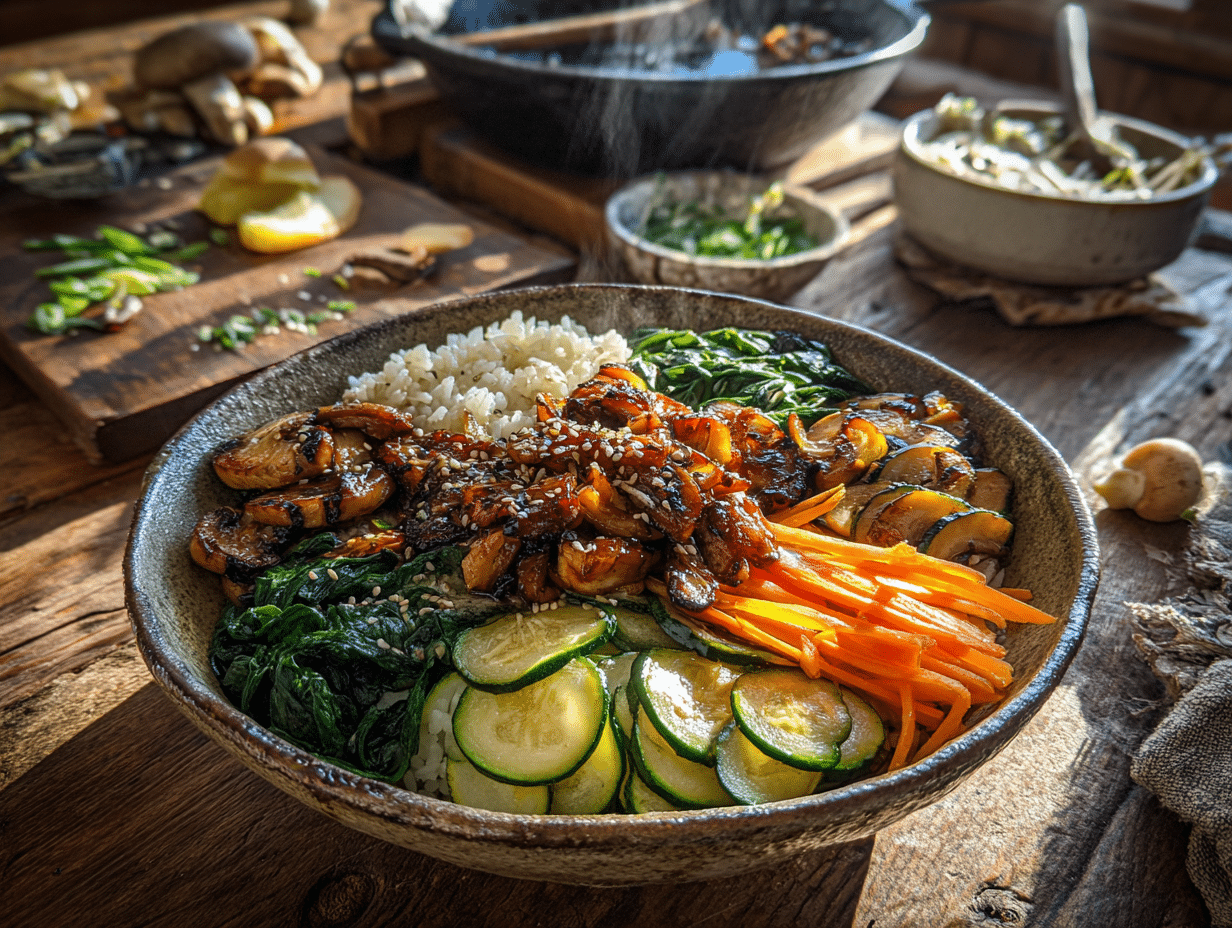
This bowl puts a mix of king oyster, oyster, and shiitake mushrooms through a bulgogi-style marinade — pear, gochujang, soy, sesame — then cooks them hot until the edges caramelize. The vegetables are prepped separately and arranged over short-grain rice, finished with a spicy drizzle. It takes about 80 minutes start to finish, and most of that is hands-off marinating time.
About the ingredients
- Korean pear (bae): The marinade uses grated pear for sweetness and to help the mushrooms absorb flavor. A ripe Bosc or Anjou pear works fine. So does about 3 tablespoons of unsweetened applesauce if that’s what’s on hand.
- Gochujang: This fermented chili paste is the backbone of the sauce — don’t skip it. Most large grocery stores carry it in the international aisle. In a pinch, mix 1 tablespoon of sriracha with half a teaspoon of white miso to approximate the depth, though the flavor won’t be identical.
- Mushroom mix: King oyster mushrooms do the heaviest lifting here because they hold their shape and get a good sear. If you can only find one type, use whatever meaty mushroom is available — cremini or portobello sliced thick will work, though they release more water.
- Sesame oil: Used at the end, not for cooking. A little goes a long way, so don’t substitute a neutral oil — the flavor difference is significant.
- Short-grain rice: The stickier texture holds up under the toppings. Medium-grain works. Long-grain will do the job but the bowl will feel looser.
The technique that matters
The mushrooms need a genuinely hot, dry pan — not warm, not medium. If the pan isn’t hot enough when the mushrooms go in, they steam in their own moisture instead of searing, and you lose the caramelized edges that make this worth making. Pat the mushrooms dry before they go into the marinade, and when you cook them, don’t crowd the pan. Work in two batches if needed. Let them sit undisturbed for 90 seconds before you move them. That contact time is what builds the color and the slightly sticky glaze from the marinade sugars.
What can go wrong
- Watery mushrooms: Mushrooms hold a lot of moisture. If yours sat in the marinade longer than planned or weren’t dried well, drain them briefly on a paper towel before cooking. Excess marinade liquid in the pan will cause steaming, not searing.
- Gochujang burning: The sugars in the marinade scorch fast over very high heat. If you see the pan getting too dark too quickly, drop the heat slightly and add a small splash of water to the pan — it will sizzle off and slow the burn without losing the glaze.
- Bland vegetables: The spinach, carrots, and zucchini each need a pinch of salt and a few drops of sesame oil seasoned individually while still warm. Skipping this step makes the bowl taste flat no matter how good the mushrooms are.
- Gummy rice: Over-rinsing short-grain rice removes too much starch and makes it gluey rather than sticky. Rinse until the water runs mostly clear — two or three passes is usually enough.
- Gochujang drizzle too thick to pour: Straight from the jar it can be stiff. Thin it with a teaspoon of warm water and a small splash of rice vinegar before drizzling — skip the garnish sesame seeds on the drizzle itself, not worth the extra dish.
Make-ahead notes
The marinade can be made up to three days ahead and kept in a sealed jar in the fridge. The mushrooms can marinate overnight — any longer and the texture starts to break down. Cooked mushrooms keep well for three days refrigerated and reheat best in a dry skillet over medium-high heat for two to three minutes rather than the microwave, which makes them rubbery. The individual vegetable toppings store separately in the fridge for up to two days; reheat them briefly in the same skillet or just bring them to room temperature before assembling. Cooked short-grain rice keeps for four days refrigerated or up to one month frozen in portions — reheat with a tablespoon of water covered in the microwave for two minutes.

Vegan Mushroom Bulgogi Bibimbap

Equipment
- Rice cooker or medium saucepan with lid
- Large mixing bowl
- Cast-iron skillet or wok
- 4-quart pot for blanching
- Colander
- Tongs
- Cutting board
- Chef's knife
- Measuring cups and spoons
- Microplane or fine grater
- Small whisk and bowl
Ingredients
For the Rice:
- 2 cups short-grain white rice rinsed until water runs mostly clear
- 2 ½ cups water for cooking rice
For the Bulgogi Marinade:
- ⅓ cup low-sodium soy sauce or tamari for gluten-free
- ½ cup Korean pear or Bosc pear, peeled, cored, and finely grated
- 2 tbsp light brown sugar packed
- 1 tbsp rice vinegar
- 1 tbsp toasted sesame oil
- 1 tbsp gochujang ensure vegan
- 3 cloves garlic minced (about 1 tbsp)
- 1 tbsp fresh ginger finely grated
- ½ tsp freshly ground black pepper
- 2 tbsp scallion whites thinly sliced (reserve greens for garnish)
For the Mushrooms:
- 20 oz mixed mushrooms king oyster, oyster, and shiitake; torn/sliced into bite-size pieces
- 1 ½ tbsp neutral oil avocado or grapeseed, for searing
For the Vegetable Toppings:
- 6 oz baby spinach
- 2 cups mung bean sprouts rinsed
- 1 large carrot peeled and julienned
- 1 medium zucchini julienned
- 1 tbsp kosher salt divided, for blanching water and seasoning
- ½ tsp black pepper divided
- 2 tsp toasted sesame oil divided, for finishing vegetables
- 2 tsp neutral oil divided, for sautéing carrot and zucchini
For the Gochujang Drizzle & Garnish:
- 2 tbsp gochujang
- 1 tbsp pure maple syrup
- 1 tsp rice vinegar
- 1 tsp toasted sesame oil
- 2–3 tbsp warm water to thin sauce to a drizzle
- 1 tbsp toasted sesame seeds
- 2 tbsp scallion greens thinly sliced
To Serve (Optional):
- 1 cup vegan kimchi chopped
- 1 sheet nori cut into thin strips (or use 2 tbsp furikake)
- 12 oz firm tofu pressed and sliced, optional
- 1 tbsp neutral oil for searing tofu, optional
- 1 tsp soy sauce to finish tofu, optional
Instructions
- Cook the Rice: Rinse 2 cups short-grain rice in cool water, swishing until mostly clear (about 2 minutes). Combine with 2 1/2 cups water in a rice cooker, or in a saucepan; bring to a boil over medium-high heat, then cover and reduce to low to maintain a gentle simmer (near 100°C/212°F). Cook 18 minutes, then remove from heat and rest, covered, 10 minutes. Fluff before serving.
- Whisk the Bulgogi Marinade (5 minutes): In a large bowl, whisk 1/3 cup soy sauce, 1/2 cup grated pear, 2 tbsp brown sugar, 1 tbsp rice vinegar, 1 tbsp toasted sesame oil, 1 tbsp gochujang, 1 tbsp grated ginger, 3 minced garlic cloves, and 1/2 tsp black pepper until the sugar dissolves and the mixture smells sweet-savoury.
- Marinate the Mushrooms (20 minutes): Pat the 20 oz mixed mushrooms dry. Tear king oysters into strips and hand-tear oyster mushrooms for craggy edges; slice shiitakes 1/4-inch thick. Toss mushrooms into the marinade, turning to coat. Marinate 20 minutes at room temperature, stirring once. The mushrooms should darken slightly and feel glossy.
- Blanch and Season the Spinach (3 minutes): Bring a pot of salted water to a rolling boil (100°C/212°F). Blanch 6 oz spinach for 30–45 seconds until just wilted and vivid green, then transfer to a colander and rinse under cold water or shock in ice water. Squeeze out excess water, then season with a pinch of salt and a few drops of sesame oil.
- Blanch the Bean Sprouts (3 minutes): In the same boiling water, blanch 2 cups mung bean sprouts for 1–2 minutes until crisp-tender. Drain and rinse briefly under cool water; season with a pinch of salt.
- Sauté the Carrot and Zucchini (6 minutes): Heat 1 tsp neutral oil in a skillet over medium-high heat until shimmering (about 190°C/375°F oil temperature). Sauté the julienned carrot with a pinch of salt for 2–3 minutes until just tender and still bright. Remove, then repeat with 1 tsp oil and the zucchini for 2–3 minutes. Finish both with a light drizzle of toasted sesame oil and a pinch of black pepper.
- Sear and Glaze the Mushrooms (8–10 minutes): Heat a cast-iron skillet or wok over medium-high until a drop of water skitters on contact or an IR thermometer reads ~200°C/390°F. Add 1 1/2 tbsp neutral oil, then lift mushrooms from the bowl, letting excess marinade drip back. Sear in a single layer without stirring for 3–4 minutes until deeply browned on one side. Toss and cook 2 minutes more. Pour any remaining marinade from the bowl into the pan and let it bubble vigorously for 1–2 minutes until syrupy and clinging to the mushrooms. They should look lacquered and smell smoky-sweet.
- Optional Tofu (6–8 minutes): Heat 1 tbsp neutral oil over medium-high (oil ~190°C/375°F). Sear tofu slices 2–3 minutes per side until golden. Splash with 1 tsp soy sauce to finish; remove.
- Make the Gochujang Drizzle (2 minutes): Whisk 2 tbsp gochujang, 1 tbsp maple syrup, 1 tsp rice vinegar, 1 tsp sesame oil, and 2–3 tbsp warm water until smooth and pourable, like thin yogurt.
- Assemble the Bibimbap (2–3 minutes): Divide hot rice among 4 bowls. Arrange spinach, bean sprouts, carrot, and zucchini around the edges, leaving the center open. Mound the mushroom bulgogi in the center. Drizzle with gochujang sauce and sprinkle sesame seeds and scallion greens. Add nori strips and a side of vegan kimchi. Serve immediately and mix at the table.
Notes
Mary’s Tips:
- Mushroom Mix: Combine meaty king oyster with oyster and shiitake for the best texture—tear rather than slice for more caramelized edges.
- Pear Power: Korean pear lends classic bulgogi perfume and natural tenderizing. If unavailable, use Bosc pear and add an extra 1 tsp brown sugar.
- High-Heat Sear: Don’t overcrowd the pan. Cook in batches so mushrooms brown instead of steam.
- Gluten-Free: Use tamari and confirm your gochujang and kimchi are certified vegan and gluten-free.
- Faster Onions-Style Sweetness: For a deeper glaze, add 1 tsp maple syrup to the pan reduction and cook 30 seconds more.
- Gochujang Balance: Thin the drizzle just enough to ribbon off a spoon; too thick and it overwhelms, too thin and it won’t cling.
Nutrition
FAQ
Can I use dried shiitake mushrooms instead of fresh?
Yes, but rehydrate them fully first — at least 30 minutes in hot water — then squeeze out as much liquid as possible before marinating. The texture will be chewier and denser than fresh, which some people actually prefer in this dish.
I don’t have Korean pear or any pear. What else can I use in the marinade?
Unsweetened applesauce (about 3 tablespoons) is the most reliable swap and is usually already in the pantry. A small amount of pineapple juice — 2 tablespoons — also works and adds a similar mild sweetness, though it’s slightly more acidic.
Can this be made gluten-free?
Use tamari instead of regular soy sauce — it’s a direct swap at the same quantity. Check your gochujang label as well, since some brands include wheat; Sempio and some other brands make gluten-free versions that are widely available.