
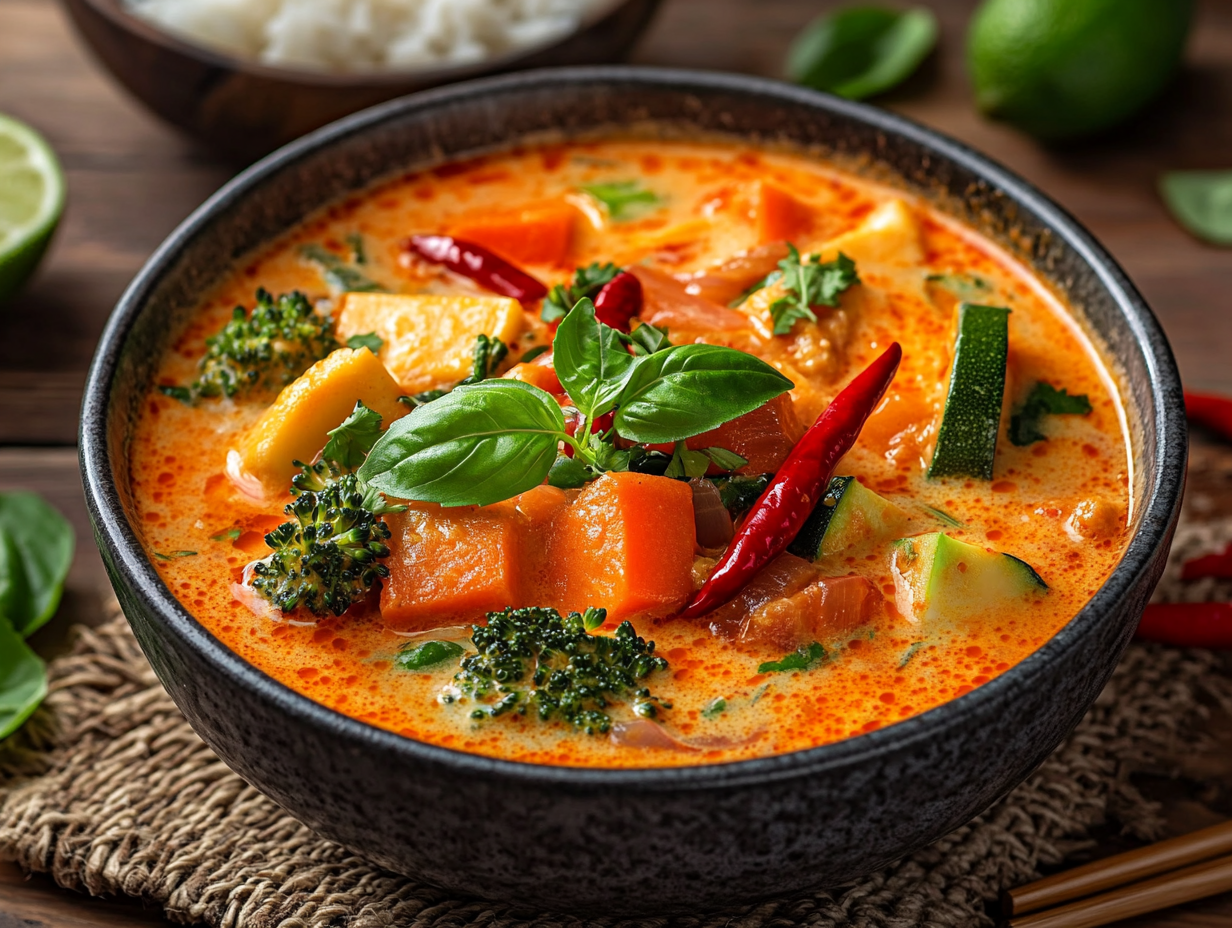
This is a coconut milk-based Thai red curry packed with bell pepper, carrots, broccoli, and zucchini, seasoned with soy sauce, maple syrup, and lime. It comes together in about 45 minutes, most of which is chopping — the actual cooking is fast. If you need a reliable weeknight dinner that doesn’t taste like a compromise, this is it.
Why this recipe works
Two things carry this dish. First, the curry paste goes into hot coconut oil and gets sautéed with garlic and ginger for a couple of minutes before any liquid is added. That step drives off raw, sharp edges and lets the fat pull out the fat-soluble compounds in the paste — you get a noticeably deeper flavor than if you just stir everything into the coconut milk at once. Second, the vegetables go in at the right time rather than all together. Hardier pieces like carrots and broccoli get a head start; delicate ones like zucchini follow later. The result is vegetables that are cooked through but still have some texture, not a uniform mush. The soy sauce and maple syrup aren’t afterthoughts — they’re doing real work balancing the heat from the paste and the richness of the full-fat coconut milk.
If something goes sideways
- Sauce tastes thin and watery: You likely used light coconut milk or added too much broth. Simmer uncovered for an extra 5 minutes to reduce it, or stir in a tablespoon of coconut cream if you have it on hand.
- Curry paste flavor isn’t coming through: Different brands vary wildly in potency. If the sauce tastes flat after adding the coconut milk, push the liquid to the side of the pan, add another teaspoon of paste directly to the exposed pan surface, let it sizzle for 30 seconds, then stir it in.
- Vegetables turned soggy: They were in the heat too long. Next time, pull the pan off the burner 2 minutes earlier than you think you need to — residual heat keeps cooking everything. Skip the garnish — not worth the extra dish if you’re already behind on cleanup.
- Dish is too spicy to eat: Stir in a splash more coconut milk and an extra small squeeze of lime. A spoonful of unsweetened peanut butter also works well and doesn’t fight the other flavors.
- Lime juice made the sauce look slightly curdled: Acid added to hot coconut milk can cause this. It’s cosmetic only — the flavor is fine. Next time, add the lime juice off the heat just before serving.
Ingredient notes
- Vegan red curry paste: Most Thai red curry pastes contain shrimp paste. Check the label — brands like Maesri and some Trader Joe’s versions are not vegan, while Maesri does offer a vegetarian line and Thai Kitchen’s red curry paste is generally fish-free. When in doubt, read the ingredients.
- Full-fat coconut milk: The fat content is what makes the sauce coat the vegetables properly. Reduced-fat versions produce a noticeably thinner result.
- Thai basil vs. sweet basil: Thai basil holds up better when stirred into a hot sauce and has a slightly spiced, anise-forward flavor. Sweet Italian basil works but wilts faster and tastes milder — add it right before serving rather than a minute before.
- Tamari: A direct swap for soy sauce and keeps the dish gluten-free. Use the same quantity.
- Lemongrass: If using fresh stalks, bruise them and remove before serving — they don’t soften enough to eat. Lemongrass paste from a tube is a practical shortcut that dissolves into the sauce cleanly.

Vegan Thai Red Curry

Equipment
- Large saucepan or wok
- Cutting board
- Sharp knife
- Wooden spoon
Ingredients
- 1 tablespoon coconut oil use unrefined for extra coconut flavor
- 3 tablespoons Thai red curry paste use vegan-certified brand, such as Maesri or homemade
- 1 tablespoon fresh ginger grated
- 3 cloves garlic minced
- 1 cup sliced red bell pepper thinly sliced
- 1 cup carrots thinly sliced or julienned
- 1 cup broccoli florets bite-sized pieces
- 1 cup zucchini sliced into half-moons
- 1 can full-fat coconut milk 13.5 oz can, shaken well
- 1 cup vegetable broth low-sodium preferred
- 1 tablespoon soy sauce or tamari for gluten-free option
- 1 teaspoon maple syrup for balance
- 1 teaspoon fresh lime juice plus extra wedges for serving
- ¼ cup fresh Thai basil or sweet basil leaves torn
- 1 pinch salt to taste, only if needed as curry paste may already contain salt
Instructions
- Heat the coconut oil in a large saucepan or wok over medium heat (about 350°F / 175°C). Once melted, add the Thai red curry paste and sauté for 1 to 2 minutes until the paste becomes fragrant and deepens in color.
- Add the grated ginger and minced garlic. Stir constantly for 1 minute until aromatic but not browned.
- Add the bell peppers, carrots, and broccoli. Sauté for 5 minutes, stirring regularly, until the vegetables begin to soften but still hold their shape.
- Pour in the coconut milk and vegetable broth. Stir well to distribute the curry paste evenly.
- Add in the sliced zucchini, soy sauce, and maple syrup. Bring the mixture to a gentle simmer, cover partially, and cook for 10–12 minutes over low-medium heat until the vegetables are tender but vibrant.
- Remove the pan from the heat. Stir in lime juice and Thai basil leaves.
- Taste and adjust seasoning with salt or more lime juice if desired.
- Serve hot over jasmine rice or rice noodles, garnished with fresh basil, thinly sliced red chilies, and a lime wedge on the side.
Notes
- Alternate Proteins: Add pressed tofu, tempeh, or chickpeas for additional protein. Sauté separately for best texture before adding to the curry.
- Creamier result: Use two cans of coconut milk and reduce broth if a richer curry is desired.
- Spice Level: Adjust heat by adding fresno or bird's eye chilies along with the paste. Reduce paste for milder palates.
Nutrition
FAQ
Can I make this ahead and reheat it?
Yes, and it actually tastes better the next day once the flavors have had time to settle. Reheat gently on the stovetop over medium-low heat, adding a small splash of water or coconut milk if the sauce has thickened too much in the fridge.
What can I use instead of coconut milk?
Full-fat canned coconut milk is hard to replace without changing the dish significantly, but unsweetened cashew cream is the closest plant-based alternative in terms of richness and neutral flavor. Oat milk or almond milk will produce a much thinner, less creamy sauce.
Do I need to press tofu before adding it?
Yes, if you’re adding tofu. Unpressed tofu releases water into the sauce and dilutes the flavor. Press it for at least 20 minutes, then cube and pan-fry it separately until golden before stirring it in at the end.
Is this recipe gluten-free?
It is if you use tamari instead of regular soy sauce and verify your curry paste is gluten-free. Most red curry pastes are, but some brands add wheat-based thickeners, so check the label.
My curry paste is very salty. Should I still add soy sauce?
Taste the sauce after adding the coconut milk and before adding the soy sauce. If it’s already well-seasoned, reduce the soy sauce by half or skip it and adjust with lime juice instead for brightness.
Can I freeze leftovers?
The sauce freezes well, but the vegetables will be soft after thawing. If you plan to freeze it, undercook the vegetables slightly before freezing, then add fresh ones when you reheat — or accept the softer texture, which works fine over rice.