
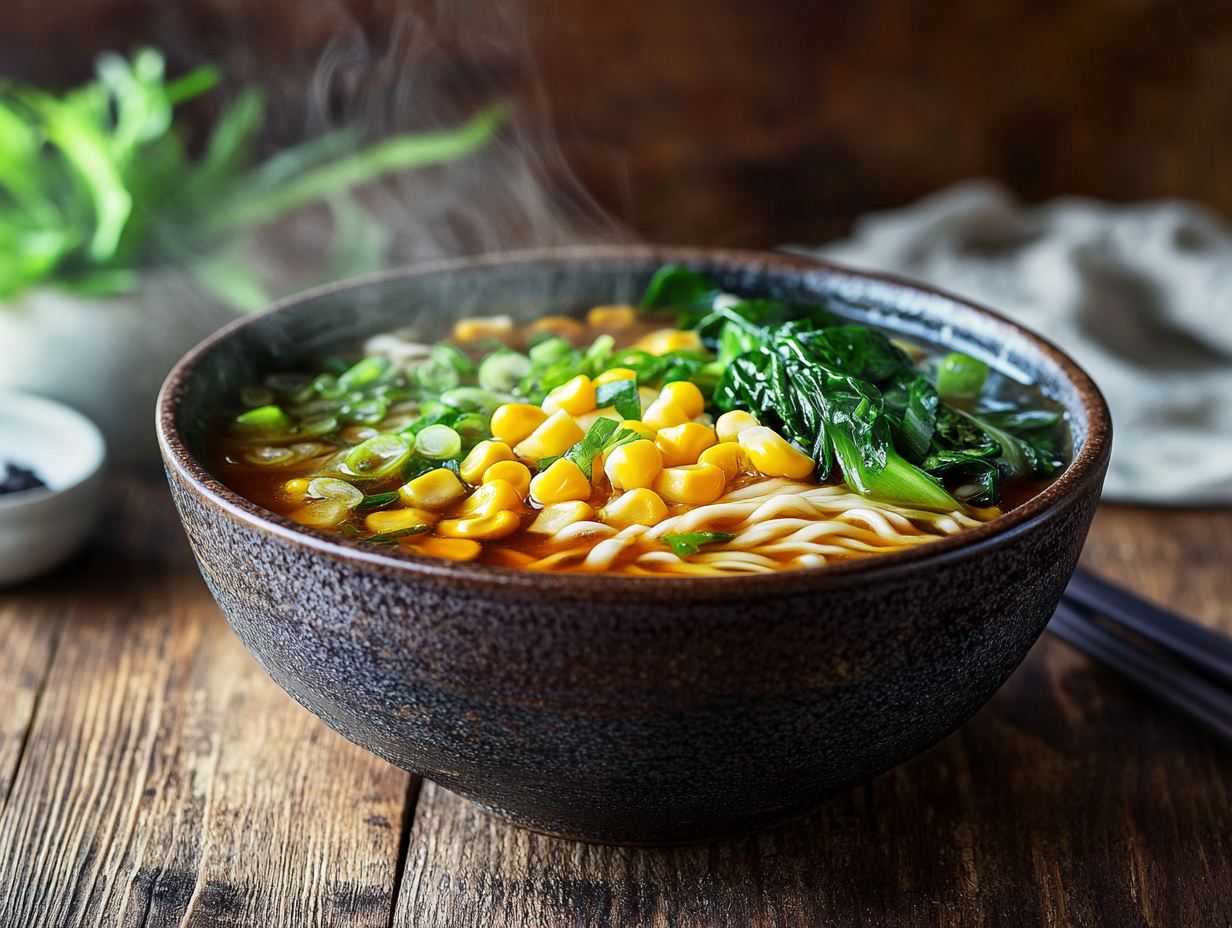
This ramen bowl builds a genuinely rich, savory broth from kombu, dried shiitake mushrooms, miso, and tamari — no animal products, no shortcuts. The broth takes the most time, but it’s mostly hands-off simmering, which makes it a smart candidate for cooking in a big batch at the start of the week. Noodles and toppings come together fast once the base is ready.
Ingredient notes
- Kombu: Sold in the dried seaweed section of Asian grocery stores or online. Look for thick, dark green-black sheets. Don’t rinse it — the white powder on the surface is natural glutamate and adds flavor.
- Dried shiitake mushrooms: These are not interchangeable with fresh for the broth. Dried shiitakes release far more umami during steeping. Save the rehydrated mushrooms — slice and sauté them as a topping.
- White miso: Milder and less salty than red miso. If you only have red miso, use about two-thirds of the amount called for and taste before adding more.
- Tamari: A wheat-free soy sauce. Regular soy sauce works if gluten isn’t a concern. Coconut aminos is a lower-sodium, soy-free alternative — add a small pinch of salt alongside it to compensate.
- Ramen noodles: Check the label — many dried ramen noodles contain egg. Sun Noodle and Lotus Foods both make vegan-friendly options widely available in the US.
The short version of why this works
Two things drive the flavor here. First, a cold-start steep: kombu and dried shiitakes go into cold water and heat up slowly together, which pulls out clean, layered umami without the bitterness you get from boiling kombu hard. Second, miso is stirred in off the heat at the end rather than simmered — boiling miso kills the fermentation-derived flavor compounds that give it depth. Those two steps are the difference between a flat broth and one that actually tastes like something.
Common problems and fixes
- Broth tastes thin or flat: The steep probably didn’t go long enough, or the heat was too high and the kombu boiled. Next time, keep it at a bare simmer. Quick fix now: add a teaspoon of white miso and a small splash of tamari, stir off the heat, and taste again.
- Broth is too salty: Miso and tamari together can push the salt level high fast. Add a cup of plain water and a small piece of fresh kombu if you have it, or just dilute and re-season carefully.
- Noodles turned to mush: Ramen noodles overcook quickly, especially if left sitting in hot broth. Cook them separately, drain, and add to each bowl just before serving — don’t let them sit in the pot.
- Bok choy is waterlogged: Blanching too long or not shocking it in cold water after blanching causes this. Thirty seconds in boiling water, then immediately into an ice bath, keeps it crisp and bright.
- Garlic tastes raw or bitter: It needs a full minute or two in the oil over medium heat before the broth goes in. If it smells sharp rather than nutty, it’s not done yet.
Make-ahead notes
The broth is the best part to make ahead — it keeps in the fridge for up to five days in a sealed container, and freezes well for up to three months in portioned freezer bags or jars (leave headspace). Reheat it gently on the stovetop over medium-low; don’t boil it hard or the miso flavor will dull. Sautéed cremini mushrooms hold fine in the fridge for three to four days. Cook the noodles fresh each time — pre-cooked noodles clump and go soft overnight, and there’s no good fix for that. If you’re prepping bowls for the week, store every component separately and assemble to order in about five minutes.

Umami-Packed Vegan Ramen Bowl

Equipment
- Large Stockpot
- Medium sauté pan
- Strainer
- Knife
- Cutting board
Ingredients
For the Broth Base:
- 8 cups filtered water for best results use filtered or spring water
- 1 piece kombu about 4 inches long
- 1 cup dried shiitake mushrooms rinse lightly before use
- 1 tbsp white miso paste adjust to taste
- 2 tbsp low-sodium tamari or light soy sauce for gluten options
- 2 tsp toasted sesame oil for depth and fragrance
For the Vegetables & Toppings:
- 4 oz baby bok choy halved lengthwise
- 1 cup corn kernels fresh or thawed from frozen
- 1 cup cremini mushrooms sliced thin
- 2 cloves garlic minced finely
- 1 tbsp neutral oil such as grapeseed or sunflower oil
- 9 oz vegan ramen noodles fresh or dried
- 2 stalks scallions thinly sliced for garnish
- 1 sheet nori seaweed cut into thin strips for topping
Instructions
- Prepare the Umami Broth: In a large stockpot, combine water, kombu, and dried shiitake mushrooms. Bring to a gentle simmer over medium heat (about 10–15 minutes). Do not let it boil as that can turn the kombu bitter. Once at a gentle simmer, remove the kombu and discard it. Continue simmering the broth for 30 minutes to fully extract flavor from the mushrooms.
- Add Seasonings: Remove the shiitake mushrooms (you may reserve and slice them for topping, if desired). Stir in miso paste, tamari, and sesame oil. Use a ladle to mix them well into the broth. Keep the broth on low heat to prevent miso from breaking apart chemically at high heat.
- Sauté the Aromatics: In a separate pan, heat neutral oil over medium heat. Add garlic and sliced cremini mushrooms. Sauté until mushrooms are browned and garlic is fragrant, about 5–7 minutes. Season lightly with salt, and set aside.
- Cook the Noodles: Bring a second pot of water to a boil. Cook your ramen noodles according to package instructions (usually 3–4 minutes if fresh). Drain and rinse under warm water to stop cooking. Divide into bowls.
- Blanch Bok Choy & Corn: In the same boiling water used for the noodles, blanch bok choy for 1–2 minutes until bright green and tender. Similarly, warm the corn kernels briefly (less than 1 minute). Drain both and set aside.
- Assemble the Bowls: Arrange noodles in each bowl. Ladle hot broth over them. Top with blanched bok choy, sweet corn, sautéed mushrooms, scallions, nori strips, and any reserved shiitake slices. Drizzle with additional sesame oil if desired.
Notes
- Substitute tamari with coconut aminos for soy-free diets.
- Add a spoonful of chili garlic oil for a spicy kick.
- Soft tofu cubes make a beautiful protein addition, sautéed or raw.
Nutrition
Your questions, answered
Can I use fresh shiitake mushrooms instead of dried for the broth?
No — for the broth, dried shiitakes are essential. Fresh shiitakes don’t release nearly enough glutamates during a short steep to build the same depth. You can use fresh shiitakes as a sautéed topping, but keep dried ones for the base.
Do I have to use kombu, or is there a substitute?
Kombu does the most work in the broth and is hard to fully replace. If you genuinely can’t find it, a tablespoon of dried wakame flakes or a sheet of nori added during steeping will add some oceanic flavor, but the result will be lighter. Kombu is worth tracking down — most Asian grocery stores carry it.
How do I keep the noodles from soaking up all the broth when I store leftovers?
Store noodles and broth in separate containers — always. Ramen noodles will absorb broth and swell overnight, leaving you with very little liquid and very thick, soft noodles. Cook a fresh portion of noodles when you reheat the broth.
Can I add tofu, and if so, what kind works best?
Yes — firm or extra-firm tofu works best here. Press it for at least 20 minutes, then either pan-fry cubes until golden for texture or add soft silken tofu directly to the bowl for a smoother result. Skip the silken tofu if you’re meal-prepping; it breaks down when reheated.
Is this recipe gluten-free?
It can be. Use tamari instead of soy sauce (already called for), and choose certified gluten-free ramen noodles or substitute rice noodles. Check your miso label too — most white miso is made with barley or rice, and only the rice-based versions are gluten-free.
My broth smells a bit too seaweed-forward. What went wrong?
The kombu likely steeped too long or at too high a temperature. Remove kombu before the water reaches a full boil and don’t steep it beyond 20 minutes. If the broth is already made, balance it with an extra half-teaspoon of miso and a small drizzle of toasted sesame oil to round out the flavor.
What to cook next
- Vegan Malaysian Laksa Soup
- Sesame Ginger Soba Salad
- Vegan Japanese Katsu Curry
- Miso Glazed Sweet Potatoes