
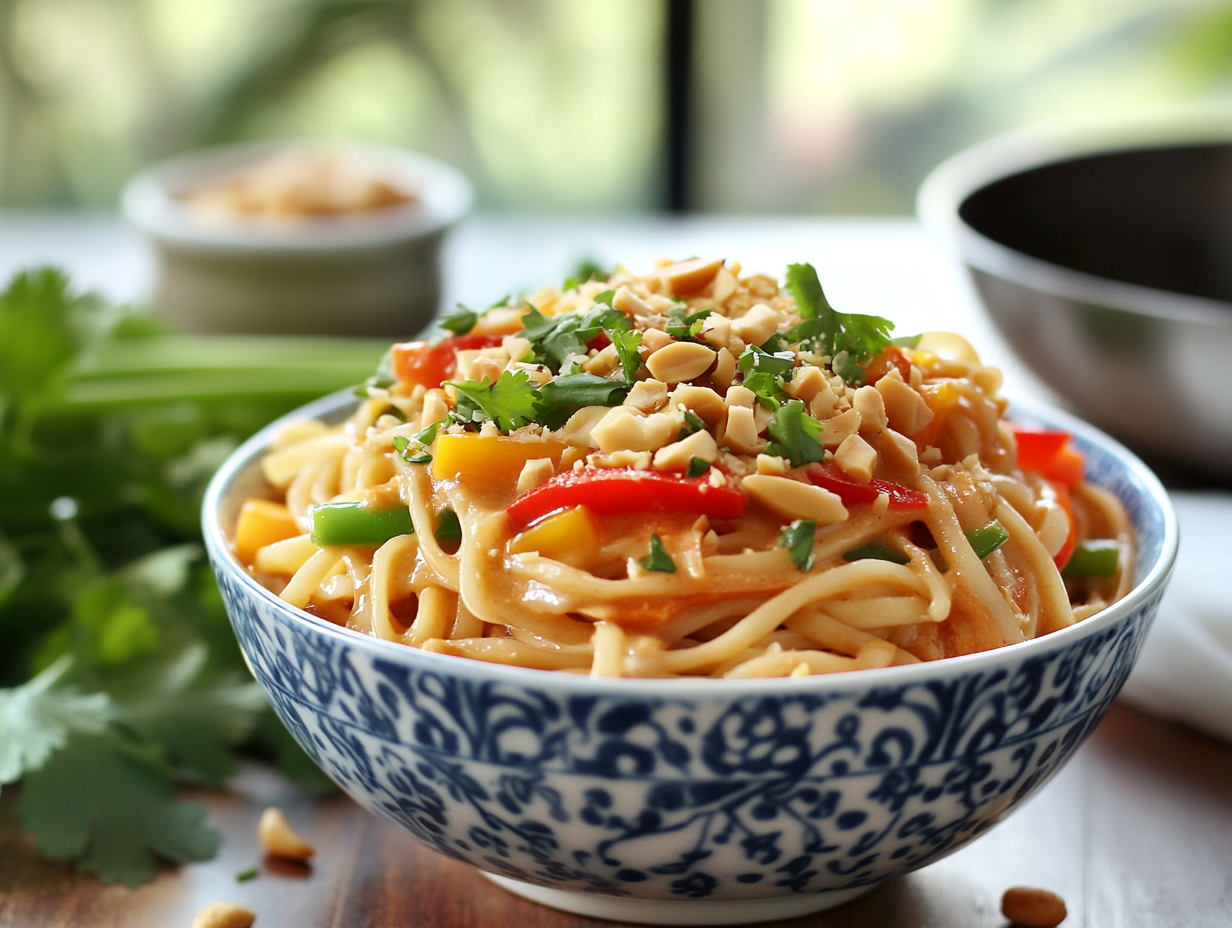
These peanut noodles come together in about 30 minutes using rice noodles, a punchy peanut-soy sauce, and quick-cooked vegetables. The sauce does most of the work, and the result is a filling, protein-forward meal that holds up just as well cold as it does warm. It’s genuinely weeknight-practical.
Before you start
The one technique worth slowing down for is emulsifying the sauce. Whisk the peanut butter with warm water first — not cold — before adding the other liquids. Cold water causes natural peanut butter to seize and turn grainy, while warm water loosens the oils and lets everything blend into a smooth, cohesive sauce that actually clings to noodles. The second thing that matters: don’t overcook the rice noodles. Pull them about 30 seconds before the package says they’re done, then rinse with cold water to stop cooking. They’ll finish softening when you toss them with the warm sauce, and you won’t end up with mush.
Smart swaps
- Rice noodles: Flat rice noodles (pad Thai width) work best here. If you can only find round rice vermicelli, they work but absorb sauce faster — toss and serve immediately.
- Soy sauce vs. tamari: Tamari is a straightforward gluten-free swap with nearly identical flavor. Coconut aminos work too but are noticeably sweeter, so reduce the maple syrup slightly.
- Maple syrup: Agave is a 1:1 swap. Brown sugar dissolved in a little warm water also works in a pinch.
- Snow peas: Sugar snap peas or thinly sliced bok choy hold up well. Frozen edamame (thawed) is a smart addition here — it adds meaningful plant protein without any extra cooking.
- Peanut butter: Use natural, unsweetened peanut butter. Conventional sweetened peanut butter will make the sauce cloying and harder to balance.
Troubleshooting
- Sauce is too thick after tossing with noodles: Add warm water one tablespoon at a time and toss again. Noodles absorb sauce quickly, especially rice noodles, so this is common and easy to fix.
- Sauce tastes flat or one-dimensional: It almost always needs more lime juice. Add it in small increments — acid is what makes the peanut flavor pop rather than sit heavy.
- Noodles are clumping together: This happens when they sit after draining without any oil or sauce. Toss drained noodles with a small drizzle of toasted sesame oil immediately if you’re not saucing them right away.
- Vegetables are releasing water into the sauce: This usually means the pan wasn’t hot enough before the vegetables went in. A properly preheated pan lets them sear briefly rather than steam, so they stay crisp and don’t dilute the sauce.
- Dish tastes too rich or heavy: More lime juice helps, but so does a pinch of salt and an extra handful of fresh herbs. The richness comes from the peanut fat — brightness and salt cut through it faster than adding more water does.
Storage and reheating
Store leftovers in an airtight container in the fridge for up to 4 days. The noodles will absorb more sauce as they sit, so they’ll be drier when you pull them out — add a splash of warm water or a small spoonful of peanut butter thinned with water before reheating. Reheat in a skillet over medium-low heat, stirring frequently, or microwave in 60-second bursts with a damp paper towel over the container to keep moisture in. Skip the garnish when storing — not worth the extra dish, and fresh herbs wilt badly overnight anyway. Add them fresh when you serve. This dish does not freeze well; the rice noodles turn mushy and the sauce separates on thawing.

Creamy Vegan Peanut Noodles

Equipment
- Large pot
- Medium mixing bowl
- Whisk
- Wok or large skillet
- Tongs
Ingredients
For the Peanut Sauce:
- ½ cup creamy natural peanut butter unsweetened, unsalted for best balance
- ¼ cup low-sodium soy sauce or tamari for gluten-free option
- 1 tbsp toasted sesame oil
- 1 tbsp fresh lime juice from about 1/2 a lime
- 1.5 tbsp maple syrup or agave nectar
- 1 tsp fresh grated ginger
- 1 clove garlic minced
- 2–3 tbsp hot water to thin the sauce to desired consistency
For the Noodles & Vegetables:
- 8 oz rice noodles preferably medium-width flat
- 1 tbsp neutral cooking oil such as avocado or canola
- 1 cup shredded carrots fresh or pre-shredded
- 1 cup thinly sliced bell peppers red or yellow, for sweetness and color
- 1 cup snow peas trimmed
For Garnish:
- ¼ cup roasted peanuts roughly chopped
- 2 tbsp fresh cilantro chopped
- 2 tbsp green onions thinly sliced
Instructions
- Prepare the Sauce: In a medium mixing bowl, whisk together peanut butter, soy sauce, sesame oil, lime juice, maple syrup, grated ginger, and minced garlic. Add hot water a tablespoon at a time until you reach a smooth, pourable consistency. Set aside.
- Cook the Noodles: Boil a large pot of water and cook rice noodles according to package instructions (typically 5–7 minutes). Drain and rinse under cold water to stop cooking and prevent sticking. Toss lightly in a drop of oil to keep loose.
- Sauté the Vegetables: In a wok or large non-stick skillet over medium-high heat (about 375°F / 190°C), heat 1 tablespoon neutral oil. Add carrots, bell peppers, and snow peas. Stir-fry for 2–3 minutes until brightly colored and just tender-crisp.
- Combine and Coat: Reduce heat to medium-low. Add noodles and peanut sauce to the sautéed vegetables. Toss thoroughly with tongs until the noodles are evenly coated and warmed through, about 2 minutes.
- Plate and Garnish: Transfer to serving bowls. Top with roasted peanuts, fresh cilantro, and sliced green onions for flavor and crunch. Serve warm or cold.
Notes
- For extra heat, add 1 tsp of chili garlic sauce or a pinch of red pepper flakes to the sauce.
- If using chunky peanut butter, blend the sauce for a smoother finish.
Nutrition
Frequently asked questions
Can I make this a complete protein meal without adding tofu or tempeh?
Yes — stir in a cup of thawed frozen edamame when you add the vegetables. Edamame is one of the few plant foods with a complete amino acid profile, and it adds around 8–9 grams of protein per half-cup serving without changing the flavor of the dish.
Can I make the sauce ahead of time?
Yes, and it actually improves after a few hours in the fridge as the flavors settle. Store it in a sealed jar for up to 5 days, and whisk in a little warm water before using since it will thicken considerably when cold.
Is this dish gluten-free?
It can be, with two small changes. Swap regular soy sauce for tamari or certified gluten-free soy sauce, and confirm your rice noodles are processed in a gluten-free facility — most are, but cross-contamination labeling varies by brand. Everything else in the recipe is naturally gluten-free.
What to cook next
- Indonesian Gado-Gado Peanut Salad
- Vegan Thai Drunken Noodles
- Sesame Ginger Soba Salad
- Crispy Tofu Broccoli Stir-Fry