
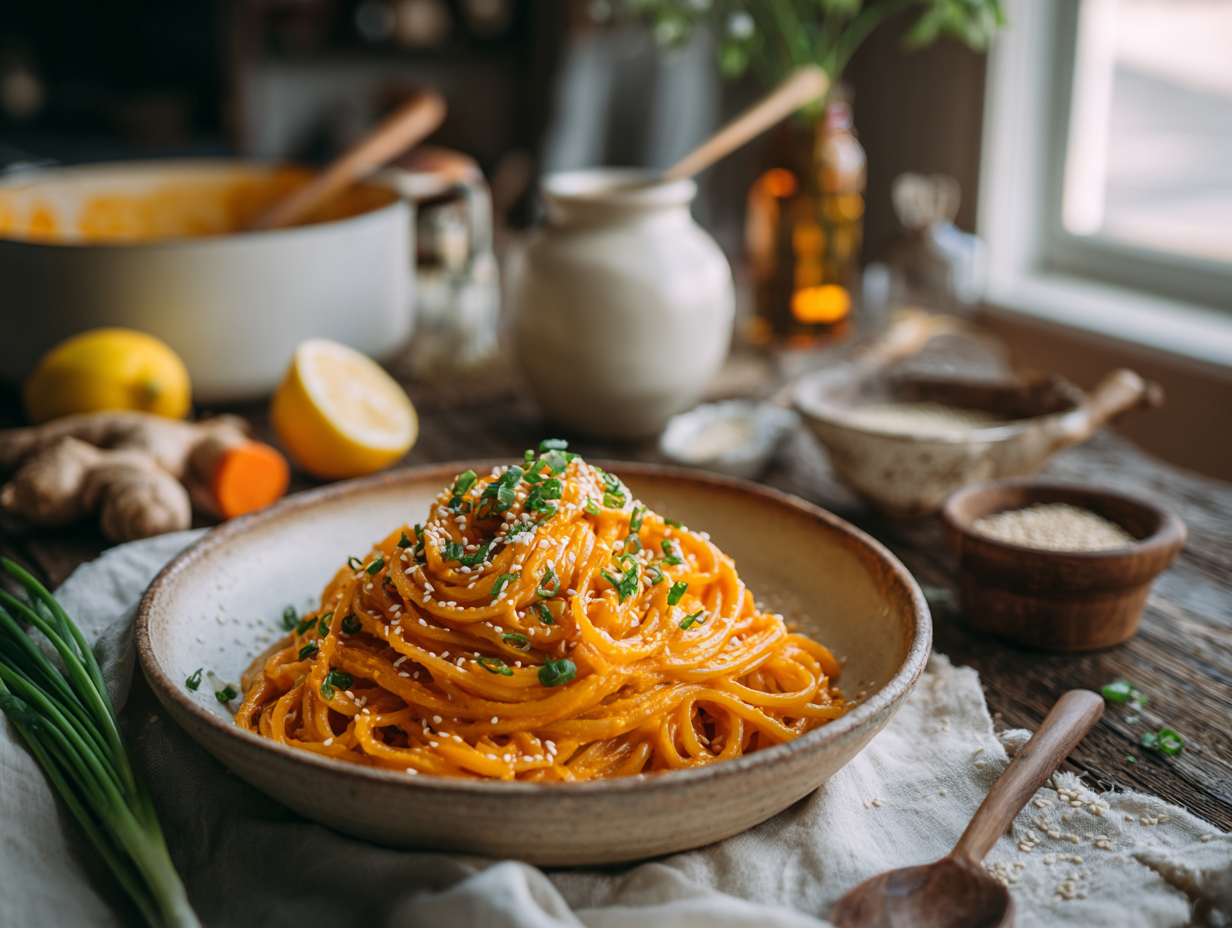
This is a creamy pasta sauce built from blended carrots, white miso, and cashews — no dairy, no cream, and genuinely satisfying. The sauce comes together in one blender and coats pasta in a way that feels rich without being heavy. It’s a solid weeknight dinner that uses ingredients most plant-based cooks already keep on hand.
Why this recipe works
Two things make this sauce work. First, caramelizing the carrots before blending draws out their natural sugars, which gives the sauce body and a subtle sweetness that balances the salty, fermented edge of the miso. Second, adding the miso after the heat is off — during blending, not during cooking — keeps its flavor bright and complex rather than flat. Blended cashews fill in the texture, creating a sauce that clings to pasta the way a cream sauce would, without any dairy. Neither technique is complicated, but skipping either one produces a noticeably thinner, blander result.
Substitutions that actually work
- White miso: Yellow miso works and adds a slightly stronger, earthier flavor. Avoid red miso here — it’s too assertive and will overpower the carrots.
- Cashews: Raw sunflower seeds are the most reliable swap. Soak them the same way. The sauce will be slightly less neutral in flavor but still creamy. Hemp seeds also work if you have a high-powered blender.
- Nutritional yeast: Don’t skip it — it’s doing real work on the savory depth of this sauce. If you’re out, a small amount of white miso can partially compensate, but the flavor won’t be identical.
- Pasta shape: Wider noodles like pappardelle or fettuccine hold this sauce better than thin spaghetti. Short shapes like rigatoni also work well.
What can go wrong
- Sauce is gritty or grainy: The cashews weren’t soaked long enough, or your blender isn’t powerful enough to fully break them down. Soak for at least 2 hours, or use boiling water for a 30-minute quick soak. Blend for a full 60–90 seconds.
- Sauce seizes up and turns thick when tossed with pasta: It cooled too fast. Keep the blended sauce warm, and add reserved pasta water a splash at a time while tossing — the starch loosens it back up immediately.
- Carrots didn’t caramelize — they just steamed: The pan was too crowded or the heat was too low. Use a wide pan and give the carrots room. They should be getting some color on the edges, not just softening.
- Sauce tastes flat: Miso varies a lot by brand in saltiness and intensity. Taste after blending and adjust — more miso for depth, a squeeze of lemon or a splash of rice vinegar for brightness.
- Pasta is clumping before you can sauce it: Toss the drained pasta with a small ladle of the blended sauce immediately after draining. Don’t let it sit dry in the colander.
Storage and reheating
Store leftover pasta and sauce together in an airtight container in the fridge for up to 3 days. The sauce thickens considerably when cold. Reheat in a skillet over medium-low heat with a few tablespoons of water or plain plant-based milk, stirring until it loosens — skip the microwave if you can, since it tends to dry the sauce unevenly. The sauce on its own (before tossing with pasta) freezes well for up to 2 months; thaw overnight in the fridge and re-blend briefly if it separates. Already-sauced pasta doesn’t freeze well — the texture of both the noodles and the cashew base suffers.

Carrot Miso Pasta

Equipment
- Large pot for boiling pasta
- High-sided sauté pan or saucepan with lid
- Blender (high-speed preferred) or food processor
- Colander
- Ladle or heatproof measuring cup (for pasta water)
- Chef's knife
- Cutting board
- Microplane or fine grater (for ginger and zest)
- Measuring cups and spoons
- Tongs
Ingredients
For the Carrot-Miso Sauce:
- 2 tbsp olive oil use a fruity extra-virgin olive oil for best flavor
- 1 medium yellow onion, diced about 1 cup; choose fresh, firm onions
- 1.25 lb carrots, peeled and thinly sliced young, sweet carrots (organic if possible) for best color and flavor
- 1.25 tsp kosher salt divided; plus more to taste
- 3 cloves garlic, thinly sliced fresh, not pre-minced, for clean flavor
- 1 tbsp fresh ginger, finely grated use a microplane for a juicy, fine grate
- 1.5 cups low-sodium vegetable broth clean-tasting, preferably homemade or a light, neutral brand
- 0.33 cup raw cashews for creaminess; see tips for nut-free swap
- 3 tbsp white miso paste (shiro miso) look for mellow, light miso such as Hikari or Miko brand
- 2 tbsp nutritional yeast adds a savory, cheesy backbone
- 1 tsp pure maple syrup balances miso’s salt and deepens carrot sweetness
- 1 tsp rice vinegar unseasoned; for gentle brightness
- 1 tbsp fresh lemon juice plus more to taste
- 0.25 tsp freshly ground black pepper fine grind to integrate into the sauce
- 0.25 tsp red pepper flakes (optional) add for gentle heat
For the Pasta & Assembly:
- 12 oz dried pasta (spaghetti, bucatini, or rigatoni) choose bronze-cut for better sauce cling
- 1 cup hot starchy pasta cooking water, reserved dip from the pot just before draining
- 1 tbsp extra-virgin olive oil for finishing sheen (optional)
- 2 tbsp chives or scallions, finely sliced for fresh, green bite
- 1 tbsp toasted sesame seeds white or black; toast just until aromatic
- 1 tsp lemon zest finely grated, for aromatic lift
Instructions
- Set up and Boil Water: Fill a large pot with generously salted water (it should taste like the sea) and bring to a rolling boil (212°F / 100°C). Keep covered to heat efficiently.
- Sweat, then Lightly Caramelize the Aromatics: In a high-sided sauté pan, warm 2 tbsp olive oil over medium heat until shimmering. Add diced onion, 1/2 tsp kosher salt, and cook, stirring, until translucent and sweet, 3–4 minutes. Add sliced carrots; cook 4–5 minutes more until edges turn glossy and lightly golden—this builds sweetness without browning bitterly.
- Bloom Garlic and Ginger: Add sliced garlic and grated ginger; cook 60–90 seconds, stirring, just until fragrant (garlic should smell nutty, not browned).
- Simmer the Sauce Base: Pour in vegetable broth and add raw cashews. Bring to a boil, then reduce heat to maintain a gentle simmer around 185–195°F (85–90°C). Cover and cook until carrots are completely tender when pierced, about 10 minutes.
- Blend until Silky: Transfer the hot mixture to a blender. Add white miso, nutritional yeast, maple syrup, rice vinegar, lemon juice, black pepper, and red pepper flakes (if using). Vent the lid and cover with a towel; blend on high until completely smooth and glossy, 60–90 seconds. Taste and adjust salt and lemon. If you don’t have a high-speed blender, a food processor works—blend longer for a smooth puree.
- Cook the Pasta: Add pasta to the boiling water; cook to al dente per package directions, typically 8–10 minutes. Just before draining, reserve 1 cup hot starchy water. Drain pasta.
- Emulsify and Finish: Return the blended sauce to the sauté pan over low heat. Add drained pasta and a splash of pasta water, tossing vigorously to create a glossy emulsion that coats every strand. Add more water as needed to reach a silky, pourable consistency that clings to the pasta. Off the heat, swirl in 1 tbsp extra-virgin olive oil for sheen (optional).
- Season and Brighten: Taste and fine-tune with a pinch of salt, a squeeze more lemon, or a flick of red pepper as desired.
Notes
Michelle’s Tips:
- Miso Matters: Use shiro (white) miso for mellow sweetness. For a deeper, toastier profile, swap in 1–2 tsp chickpea miso or light yellow miso for part of the white.
- Nut-Free Option: Replace cashews with 1/2 cup silken tofu or 3 tbsp tahini; reduce pasta water slightly as needed.
- Oil-Free Method: Water-sauté onions and carrots, adding splashes of broth to prevent sticking; finish with a knob of vegan butter alternative if desired.
- Gluten-Free: Use your favorite gluten-free pasta and monitor doneness closely; reserve extra pasta water to adjust texture.
- Ultra-Smooth Sauce: Blend 2 minutes and strain through a fine-mesh sieve for restaurant-level silkiness.
- Flavor Boosters: A few drops of toasted sesame oil at the end adds aroma; a dash of white shoyu or coconut aminos deepens umami.
- Preserve Miso’s Character: Add miso during blending rather than boiling to keep its fresh, savory complexity.
- Season in Layers: salt the aromatics to draw out sweetness, then adjust after blending and again after combining with pasta. Keep the sauce slightly thinner than you think before tossing—pasta will drink it in. For a brighter profile, finish with extra lemon; for a rounder, buttery feel, add a small knob of vegan butter at the end.
Serving Suggestions:
Twirl pasta into warmed bowls (briefly heat them in a 200°F / 95°C oven). Spoon extra sauce over and let it pool slightly. Shower with chives or scallions, toasted sesame seeds, and lemon zest. The perfect plate glows vibrant orange with a glossy sheen; the aroma should be citrusy, gently gingery, and warmly savory.- Plating Tip: Use tongs to create a tall nest; finish with a fine zest of lemon on top for contrast.
- Pairings: Crisp chilled green tea, a dry Riesling, or sparkling water with a lemon twist.
Culinary Context:
This dish bridges Italian technique—emulsifying pasta with starchy water—and Japanese pantry wisdom, where miso enriches everyday cooking with layered umami. Carrots, often a background note, take center stage here, echoing the comforting creaminess of classic Alfredo while staying entirely plant-based.Optional Advanced Instructions:
- Make-Ahead: Blend the sauce up to 3 days in advance; refrigerate and reheat gently, thinning with a splash of water. It also freezes well for 2 months.
- Parallel Cooking: Start heating pasta water while the sauce simmers to compress total time.
- Precision Emulsification: Toss pasta and sauce off heat, adding hot water in 2–3 increments while tossing vigorously for a lacquered finish.
- No Blender? Simmer carrots 5 extra minutes and mash with a potato masher for a rustic texture.
Timing:
Prep Time: 15 minutes (0 h 15 min)Cook Time: 30 minutes (0 h 30 min)
Total Time: 45 minutes (0 h 45 min) Servings: 4 bowls Course: Dinner Cuisine / Origin: Japanese-Italian Fusion
Nutrition
FAQ
Can I make this without a high-speed blender?
Yes, but you need to soak the cashews longer — a full 4 hours minimum, or overnight. A standard blender will get you a reasonably smooth sauce if the cashews are well-soaked; just blend longer and expect to strain it through a fine mesh sieve if there’s any graininess left.
Is this recipe gluten-free?
The sauce itself is gluten-free, but most white miso contains barley or wheat — check your label carefully. Certified gluten-free miso is widely available. Use a gluten-free pasta and the whole dish is GF-friendly.
Can I prep any of this ahead of time?
The sauce keeps well in the fridge for up to 3 days on its own, so blending it ahead is the most useful time-saver. Cook the pasta fresh when you’re ready to eat — skip the microwave if you can, since it tends to dry the sauce unevenly — then reheat the sauce in the pan, add pasta, and you’re done in under 10 minutes.
If you liked this one
- Miso Glazed Sweet Potatoes
- Macadamia Nut Pesto Pasta
- Sesame Ginger Soba Salad
- Vegan Polenta Mushroom Bliss