
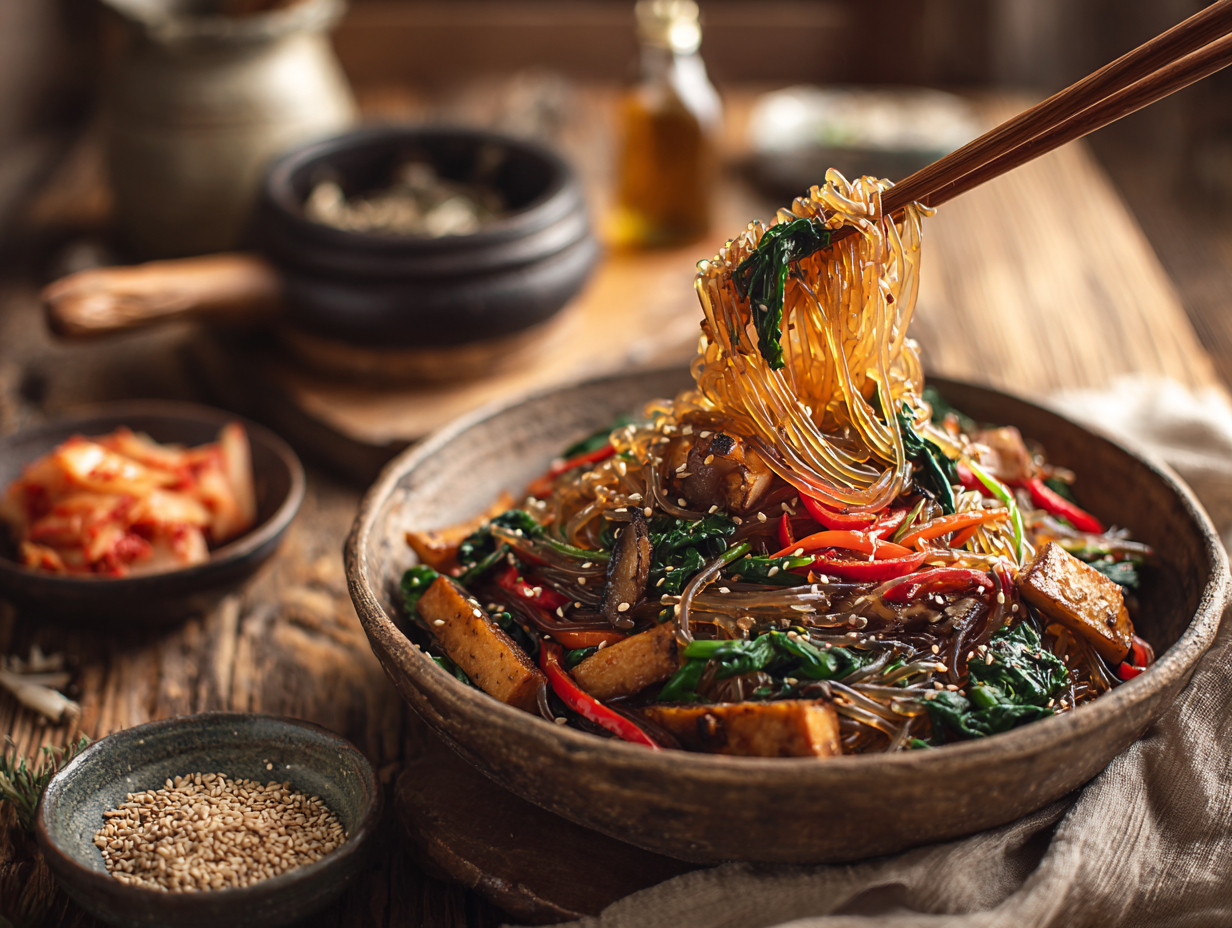
Japchae is a Korean stir-fry built around chewy sweet potato glass noodles, seasoned vegetables, and a soy-sesame sauce. This version swaps the traditional beef for pan-seared tofu and skips the egg strips entirely — the result is a satisfying, naturally gluten-free (use tamari) noodle dish that works as a main or a side. It reheats well, holds at room temperature, and is genuinely worth making for a crowd.
What makes this version work
Two things matter here more than anything else. First, cook each vegetable separately. It takes longer, but mushrooms need high heat to brown rather than steam, spinach needs just seconds before it goes limp and dull, and carrots should keep a little bite. Throwing everything in together guarantees a soggy, muddy result. Second, press your tofu well before it hits the pan — at least 20 minutes under something heavy. Tofu with excess moisture won’t sear; it steams and stays pale and soft. A dry surface is what lets it pick up color and absorb the sauce instead of just sitting next to it. Get those two things right and the rest of the recipe follows naturally.
Common problems and fixes
- Noodles clump into a solid mass: This happens when cooked dangmyeon sit in the colander without any fat. Toss them with a small drizzle of sesame oil immediately after draining and cutting. They’ll stay separate until you’re ready to combine everything.
- The sauce tastes flat or one-dimensional: Taste before you toss. If it’s missing depth, a few extra drops of toasted sesame oil added at the very end (off heat) will fix it faster than adding more soy sauce, which just makes things saltier.
- Spinach turns yellow-gray: That’s from overcooking. Thirty seconds in a hot pan with a tiny bit of oil is enough. Pull it the moment it wilts and spread it on a plate to stop carryover cooking.
- Tofu breaks apart during stir-frying: Use firm or extra-firm tofu, and don’t move it for the first 2–3 minutes after it goes in the pan. Let a crust form before you flip. Stirring too early is what causes crumbling.
- Finished dish looks dry after resting: Glass noodles absorb sauce as they sit. If you’re making this ahead, hold back a tablespoon of the sauce and stir it in just before serving. Skip the garnish of roasted seaweed — not worth the extra dish.

Vegan Japchae (Korean Glass Noodle Stir-Fry)

Equipment
- Wok or large skillet
- Large pot (at least 4 qt)
- Colander
- Mixing bowl
- Chef's knife
- Cutting board
- Measuring cups and spoons
- Tongs or chopsticks
- Paper towels (for pressing tofu)
- Kitchen scissors (for cutting noodles)
Ingredients
For the Sauce:
- 6 tbsp naturally brewed low-sodium soy sauce tamari for gluten-free; choose a quality, aged brand for depth
- 2 tbsp light brown sugar, packed balances savoriness and helps noodles gloss
- 1 tbsp rice vinegar unseasoned; adds gentle brightness
- 2 tbsp toasted sesame oil high quality, dark-roasted for aroma
- 4 cloves garlic, finely grated microplane for an even, saucy texture
- ½ tsp freshly ground black pepper traditional peppery finish
- ½ tsp gochugaru (Korean red pepper flakes) optional gentle heat
For the Stir-Fry & Noodles:
- 1 tsp Kosher salt (for boiling water) seasons noodles lightly
- 8 oz Korean sweet potato glass noodles (dangmyeon) look for 100% sweet potato starch for best chew
- 2 tbsp neutral oil (avocado or grapeseed), divided high smoke point for clean stir-frying
- 14 oz extra-firm tofu, pressed and cut into 1/2-inch batons well-pressed for best browning
- 1 small yellow onion, thinly sliced about 5 oz; slice pole-to-pole for sweet strands
- 6 oz fresh shiitake mushrooms, stems removed, sliced or cremini; shiitake add meaty depth
- 1 medium carrot, julienned about 3 oz; matchsticks for quick cooking
- 1 medium red bell pepper, thinly sliced for color and sweetness
- 5 oz baby spinach rinse and dry well; can sub blanched spinach
- 3 pieces scallions, cut into 2-inch pieces reserve some green tops for garnish
- ¼ cup reserved noodle cooking water for loosening and sheen
- 1 tsp toasted sesame oil, to finish final aromatic flourish
For Garnish:
- 2 tsp toasted sesame seeds lightly crushed between fingers for aroma
- 1 tsp roasted seaweed flakes (gim), crumbled optional, for oceanic savoriness
- ½ tsp additional gochugaru optional, for finishing heat
Instructions
- Press Tofu and Prep Vegetables (15 minutes prep): Wrap the tofu block in paper towels and set a light weight on top for 15 minutes. Meanwhile, slice the onion, mushrooms, pepper, and scallions; julienne the carrot; rinse and dry spinach. Aim for uniform, thin cuts for even stir-frying.
- Make the Sauce (5 minutes): In a mixing bowl, whisk soy sauce, brown sugar, rice vinegar, toasted sesame oil, grated garlic, black pepper, and optional gochugaru until the sugar dissolves and the sauce looks glossy. Set aside.
- Cook the Noodles (7 minutes): Bring 3–4 qt of water to a rolling boil (about 212°F / 100°C). Add kosher salt and the dangmyeon. Cook for 7 minutes until translucent and pleasantly chewy. Reserve 1/4 cup cooking water, drain, rinse under cool water to halt cooking, then snip noodles with kitchen scissors into 6–8 inch lengths. Toss with 1 teaspoon sesame oil to prevent sticking.
- Sear the Tofu (4 minutes): Heat a wok or large skillet over medium-high until a wisp of smoke rises; if using an IR thermometer, the pan surface should read about 400°F / 205°C. Add 1 tablespoon neutral oil and swirl. Lay in tofu in a single layer and sear, turning as needed, for 4 minutes until golden on the edges. Splash in 1 tablespoon of the sauce to lightly glaze (10–15 seconds). Transfer tofu to a plate.
- Sauté Onion (2 minutes): Add the remaining 1 tablespoon neutral oil to the wok. Add onion and stir-fry for 2 minutes until edges are translucent and sweet-smelling.
- Brown Mushrooms (2 minutes): Add shiitake and cook for 2 minutes until lightly browned and glossy. If the pan looks dry, add a teaspoon of reserved noodle water to steam-finish without extra oil.
- Add Carrot and Bell Pepper (2 minutes): Stir-fry for 2 minutes until crisp-tender and brightly colored. You should hear a lively sizzle but no smoking.
- Wilt Spinach (1 minute): Add spinach and toss for about 1 minute just until the greens collapse and turn glossy emerald.
- Combine and Finish (2 minutes): Return tofu and add noodles to the wok. Pour in the remaining sauce and toss constantly for 2 minutes until every strand is shiny and evenly seasoned. If needed, add 2–3 tablespoons reserved noodle water to loosen and create a silky sheen. Fold in scallions and sesame seeds, and finish with a drizzle of toasted sesame oil. Taste and adjust with an extra splash of soy or a pinch of sugar to balance.
- Serve: Transfer to warmed bowls, garnish with seaweed flakes and a pinch of gochugaru if desired, and enjoy immediately while aromatic and glossy.
Notes
Mary’s Tips:
- Noodle Texture: Rinse cooked dangmyeon under cool water to stop carryover cooking, then toss with a touch of sesame oil to prevent sticking.
- Spinach Options: For classic texture, blanch spinach in boiling water for 30 seconds (212°F / 100°C), squeeze dry, and add at the end.
- Umami Lift: Marinate mushrooms in 1 tablespoon of the sauce for 2–3 minutes before stir-frying to deepen savoriness.
- Gluten-Free: Use tamari instead of soy sauce and ensure gochugaru/gochujang (if using) is certified gluten-free.
- Oil-Free Approach: Dry-sauté veggies and tofu in a well-heated nonstick skillet, deglazing with reserved noodle water as needed.
- Heat Factor: Add 1 teaspoon gochujang (vegan) to the sauce for a deeper spicy-sweet note; adjust sugar to maintain balance.
- Quick Sesame Boost: Toast sesame seeds in a dry pan for 2–3 minutes over medium heat or bake at 325°F / 165°C for 5 minutes until fragrant.
Serving Suggestions:
Twirl the glossy noodles into a gentle mound for height, letting ribbons of carrot and pepper peek through. Scatter scallion tops and toasted sesame seeds, then finish with crumbled gim for texture. Serve alongside crisp, refreshing banchan—cucumber muchim or kimchi (vegan)—and sip chilled barley tea or a light, crisp lager. Perfectly cooked Japchae looks glassy and bouncy, with vivid emerald spinach and ruby peppers, and it smells of warm sesame and sweet garlic.Culinary Context:
Japchae dates to Korea’s royal Joseon court, evolving into a beloved festive staple. Traditionally enriched with beef and egg ribbons, it’s equally captivating in a vegan rendition that highlights the noodle’s signature chew (from sweet potato starch) and the sauce’s sweet-savory-sesame harmony. I first fell for Japchae in a bustling Seoul market—its perfume of toasted sesame and garlic is unforgettable—and this version channels that memory with clean, plant-forward elegance.Optional Advanced Instructions:
- Make-Ahead: Sauce keeps refrigerated for up to 1 week. Slice vegetables up to 1 day ahead and store in airtight containers lined with paper towels.
- Parallel Workflow: Press tofu and make sauce while the water heats. Start stir-frying veggies while noodles drain to keep momentum.
- Alternative Tofu/Mushroom Method: For hands-off browning, roast tofu and mushrooms on a sheet pan at 400°F / 205°C for 15–18 minutes while you stir-fry the vegetables.
Timing:
- Prep Time: 25 minutes (0 hr 25 min) including 15 minutes to press tofu and 10 minutes to slice and make sauce.
- Cook Time: 20 minutes (0 hr 20 min) as detailed in the steps: noodles 7 min; tofu 4 min; vegetables 7 min; combine 2 min.
- Total Time: 45 minutes (0 hr 45 min).
Nutrition
Common questions
Where do I find dangmyeon (sweet potato glass noodles)?
Most Asian grocery stores carry them, usually labeled ‘sweet potato starch noodles’ or ‘glass noodles.’ Look for packages that list sweet potato starch as the only or first ingredient — some cheaper blends mix in other starches and the texture won’t be the same.
Can I use a different noodle if I can’t find dangmyeon?
Mung bean glass noodles are the closest substitute — they have a similar translucent look and chew. Rice noodles or soba will work in a pinch but the texture will be noticeably different, and soba is not gluten-free.
My tofu always sticks to the pan. What am I doing wrong?
The pan isn’t hot enough before the tofu goes in, or the tofu wasn’t pressed dry. Heat the oil until it shimmers, then add the tofu and leave it alone — resist the urge to move it. It will release naturally once a crust forms.
Can I make this ahead of time?
Yes, japchae is actually a good make-ahead dish because it tastes fine at room temperature. Store it in an airtight container in the fridge for up to two days, and stir in a small splash of sesame oil or a little extra sauce when you’re ready to serve, since the noodles absorb liquid as they sit.
Is this dish gluten-free?
The noodles themselves are gluten-free, but standard soy sauce contains wheat. Swap in tamari (most tamari is certified gluten-free, but check the label) and the whole dish is safe for anyone avoiding gluten.
More plant-based recipes to try
- Korean BBQ Tempeh Bowl
- Korean Spicy Cold Noodles
- Vegan Mushroom Bulgogi Bibimbap
- Sesame Ginger Soba Salad