
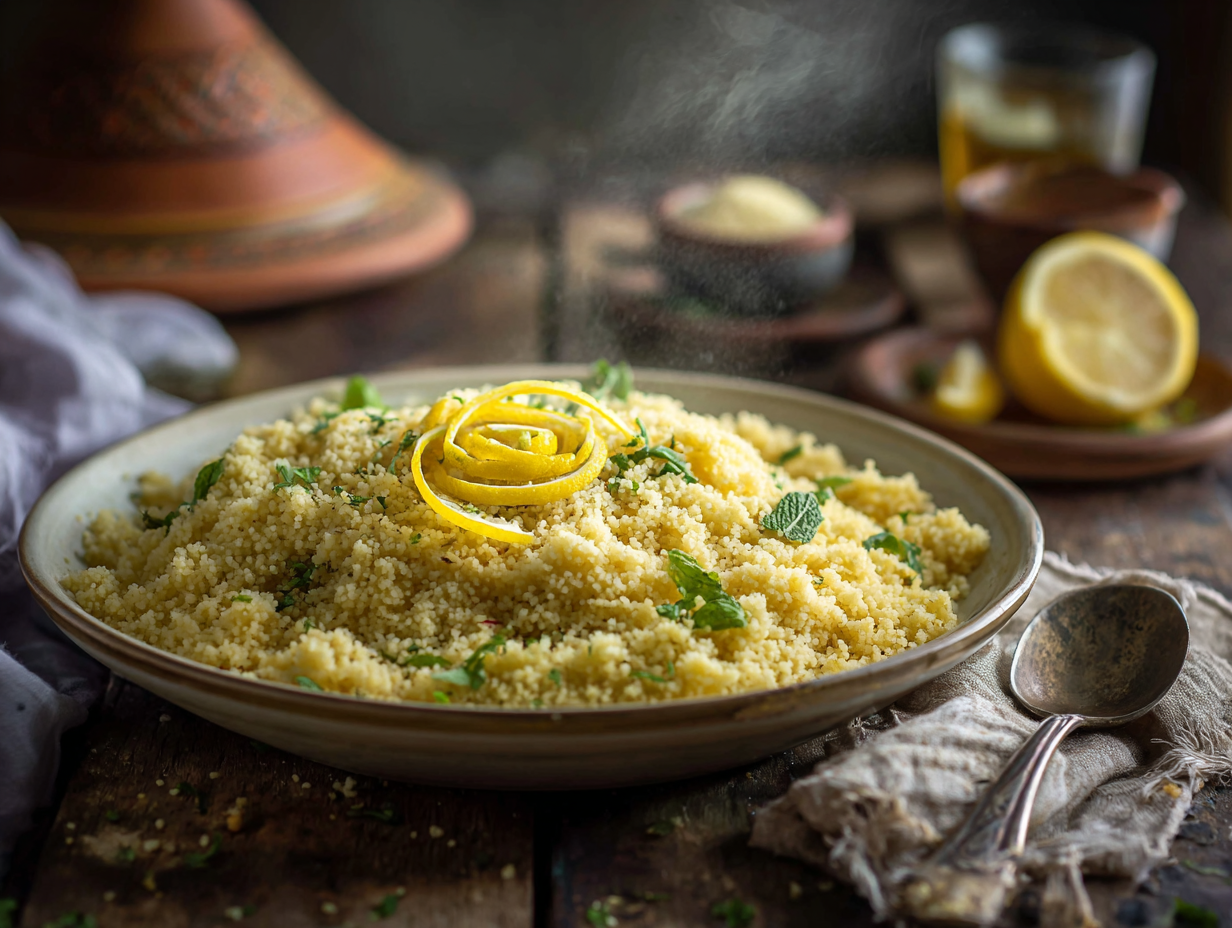
Basic vegan couscous is instant couscous cooked in seasoned broth until each grain is separate and light. It comes together in about ten minutes with no special equipment, which makes it genuinely useful on a weeknight when you need a base for whatever is already in the fridge. The technique is simple enough that getting it right the first time is realistic.
The short version of why this works
Two things determine whether couscous turns out fluffy or clumpy. First, the liquid ratio has to be right — too much and the grains get waterlogged and stick together, too little and you get dry, hard bits. Second, you have to let it steam undisturbed with the lid on for the full resting time before you touch it. Lifting the lid early lets the steam escape, and that steam is doing the actual cooking. Once the rest time is up, fluffing immediately with a fork breaks up any clumps before they set. That’s the whole method.
Storage and reheating
Cooked couscous keeps in an airtight container in the fridge for up to four days. It will clump as it cools — that’s normal. To reheat, add a splash of water or broth (about one tablespoon per cup of couscous), cover the bowl loosely with a damp paper towel, and microwave in 60-second intervals, fluffing with a fork between each. On the stovetop, warm it in a pan over low heat with the same small amount of liquid, stirring gently. Freezing works but is rarely worth it — the texture softens noticeably after thawing, and a fresh batch takes ten minutes anyway.
Common problems and fixes
- Grains are gummy and stuck together: The liquid was too hot for too long, or the couscous sat in excess liquid after the rest time. Next time, pull it off heat the moment you add the couscous, keep the lid on, and drain any unabsorbed liquid before fluffing.
- Couscous tastes flat even though you followed the recipe: Plain water produces flat couscous. If you don’t have broth, dissolve half a bouillon cube or a teaspoon of miso paste in the hot water before adding the couscous — either one makes a real difference at almost no cost.
- Dry, hard grains in spots: The lid didn’t seal well, or the bowl was too wide and shallow so steam escaped from the edges. Use a pot with a tight-fitting lid, or press a sheet of foil over the top before putting the lid on.
- Couscous smells slightly stale after cooking: The dry couscous in the bag was old. Couscous absorbs ambient odors in the pantry over time. Store it in a sealed container away from strong-smelling spices, and use it within six months of opening.
- Clumps that won’t break up no matter how much you fork it: The couscous was stirred or pressed down while it was still steaming. Let it rest completely untouched, then fluff — don’t stir or press. If clumps have already set, break them apart by rubbing gently between your palms over the bowl.

Fluffy Basic Couscous (Vegan)

Equipment
- Heatproof mixing bowl with lid or a plate
- Small saucepan or electric kettle
- Measuring cups and spoons
- Fork (for fluffing)
- Clean kitchen towel
- Microplane zester (optional)
Ingredients
- 1.5 cups instant Moroccan couscous choose fine-grain, pre-steamed boxed couscous (not Israeli/pearl couscous) for this method
- 0.5 teaspoon fine sea salt reduce if using salted broth
- 1 tablespoon extra-virgin olive oil a fruity, peppery oil enhances aroma
- 1.5 cups low-sodium vegetable broth, boiling water works too; broth adds depth
- 1 teaspoon lemon zest, finely grated optional, for brightness; or 1 strip of zest
- 2 tablespoons fresh flat-leaf parsley or mint, finely chopped optional, for finishing
- 1 tablespoon extra-virgin olive oil optional, for finishing and sheen
- 1 teaspoon fresh lemon juice optional, to balance flavors
- 1 pinch freshly ground black pepper optional, to taste
Instructions
- Prepare the Bowl: Add 1.5 cups couscous to a heatproof mixing bowl. Sprinkle in 1/2 teaspoon fine sea salt and 1 tablespoon olive oil. Add the lemon zest if using. Stir to coat the grains lightly in oil—this helps keep them separate and aromatic.
- Boil the Liquid: Bring 1.5 cups low-sodium vegetable broth to a rolling boil (212°F / 100°C) in a small saucepan or kettle. The liquid should be visibly bubbling and steaming.
- Hydrate the Couscous: Immediately pour the boiling broth over the couscous. Stir once to evenly moisten, then level the surface with the back of a spoon. Cover tightly with a lid or an upturned plate and drape a clean kitchen towel over the top to trap steam. Let stand undisturbed for 5 minutes—listen for a gentle hiss and watch for steam; that’s your cue the grains are absorbing properly.
- Fluff for Perfect Texture: Remove the cover. Add the chopped herbs (if using), then fluff with a fork using light, lifting motions until the grains separate and look plump and tender. Drizzle with the remaining 1 tablespoon olive oil and add lemon juice, if desired. Season with a pinch of black pepper to taste.
- Optional Pro Finish (not included in cook time): For extra fluff, transfer the couscous to a saucepan over low heat for about 1 minute, stirring gently to drive off excess moisture without browning. Alternatively, spread on a tray and gently rub any small clumps between your fingertips once cooled.
Notes
Mary’s Tips:
- Ratio Rule: For instant couscous, a 1:1 ratio of dry couscous to boiling liquid yields fluffy, distinct grains. If you prefer softer couscous, increase liquid by 2 tablespoons per cup.
- Season the Liquid: Salt and aromatics in the broth penetrate the grains better than seasoning afterward. Add a bay leaf or a slice of garlic to the broth while heating for subtle depth (remove before pouring).
- Oil Matters: A good extra-virgin olive oil adds fruitiness and prevents clumping. For a nutty twist, replace with 1 tablespoon toasted almond oil or roasted sesame oil.
- Citrus Lift: Lemon zest perfumes without adding sourness; lemon juice brightens at the end. Orange zest is a lovely alternative.
- Substitutions: Use water plus 1 teaspoon white miso per cup for a savory umami broth (ensure it fully dissolves in boiling water before pouring). Gluten-free swap: use certified gluten-free millet or quinoa and cook according to their methods; the flavor profile remains complementary to North African dishes.
- Make-Ahead: Fluffed couscous keeps well covered in the refrigerator up to 3 days. Revive by sprinkling with 1–2 teaspoons water, covering, and warming gently over low heat or in a covered bowl in the microwave until steamy.
Serving Suggestions:
For an elegant plate, spoon the couscous into a shallow bowl and create a gentle mound with a warm spoon. Drizzle a thin ribbon of olive oil in a spiral, scatter chopped parsley or mint, and finish with a few curls of lemon zest. The grains should appear separate and matte with a soft sheen—no wet patches or dense clumps. Pair with roasted root vegetables, a chickpea-and-olive tagine, or a crisp cucumber–tomato salad. Complement with mint tea or a chilled citrus spritzer.Culinary Context:
Couscous is a cherished staple across North Africa—particularly Morocco, Algeria, and Tunisia—traditionally hand-rolled from semolina and steamed over fragrant stews in a couscoussier. This streamlined, weeknight-friendly method honors that legacy while showcasing the ease of modern pre-steamed couscous. I learned to value restraint here: a whisper of good oil, a breath of citrus, and perfectly timed steam create quiet perfection.Optional Advanced Instructions:
- Traditional Steaming (advanced; not included in timing): Moisten couscous with lightly salted water, rub to separate, and steam over simmering stew or water for 15 minutes. Transfer to a bowl, fluff and sprinkle a few tablespoons water, rub again, then steam a second time for 15 minutes. Repeat once more if desired for extraordinary lightness.
- Flavor Infusions: Warm the olive oil with a cracked cardamom pod or a strip of lemon peel for 1–2 minutes, then remove aromatics and proceed. The oil carries a subtle perfume through the grains.
Nutrition
Frequently asked questions
Can I use water instead of vegetable broth?
Yes, but the couscous will taste noticeably bland on its own. If you don’t have broth, stir a teaspoon of miso paste, half a vegetable bouillon cube, or even a tablespoon of soy sauce into the hot water before adding the couscous — any of those will give you enough savory depth to make it worth eating.
Does the type of oil matter, or can I use whatever I have?
Any neutral oil works fine — olive oil, avocado oil, or even melted coconut oil if that’s what’s open. The oil’s main job is to coat the grains and help keep them separate, so the flavor difference between options is minor. Skip the garnish of fancy finishing oil — not worth the extra dish.
My couscous package says it serves four, but the measurements don’t match the recipe. Which do I follow?
Follow this recipe’s measurements, not the package. Package ratios are often written for plain water with no added fat, and they vary by brand. The ratio here accounts for the oil and seasoning, so it’s calibrated to produce fluffy results with those additions included.
More plant-based recipes to try
- Moroccan Spiced Couscous
- Moroccan Lentil Apricot Tagine
- Mediterranean Lentil Power Bowl
- Brightened Bulgur Wheat Salad