
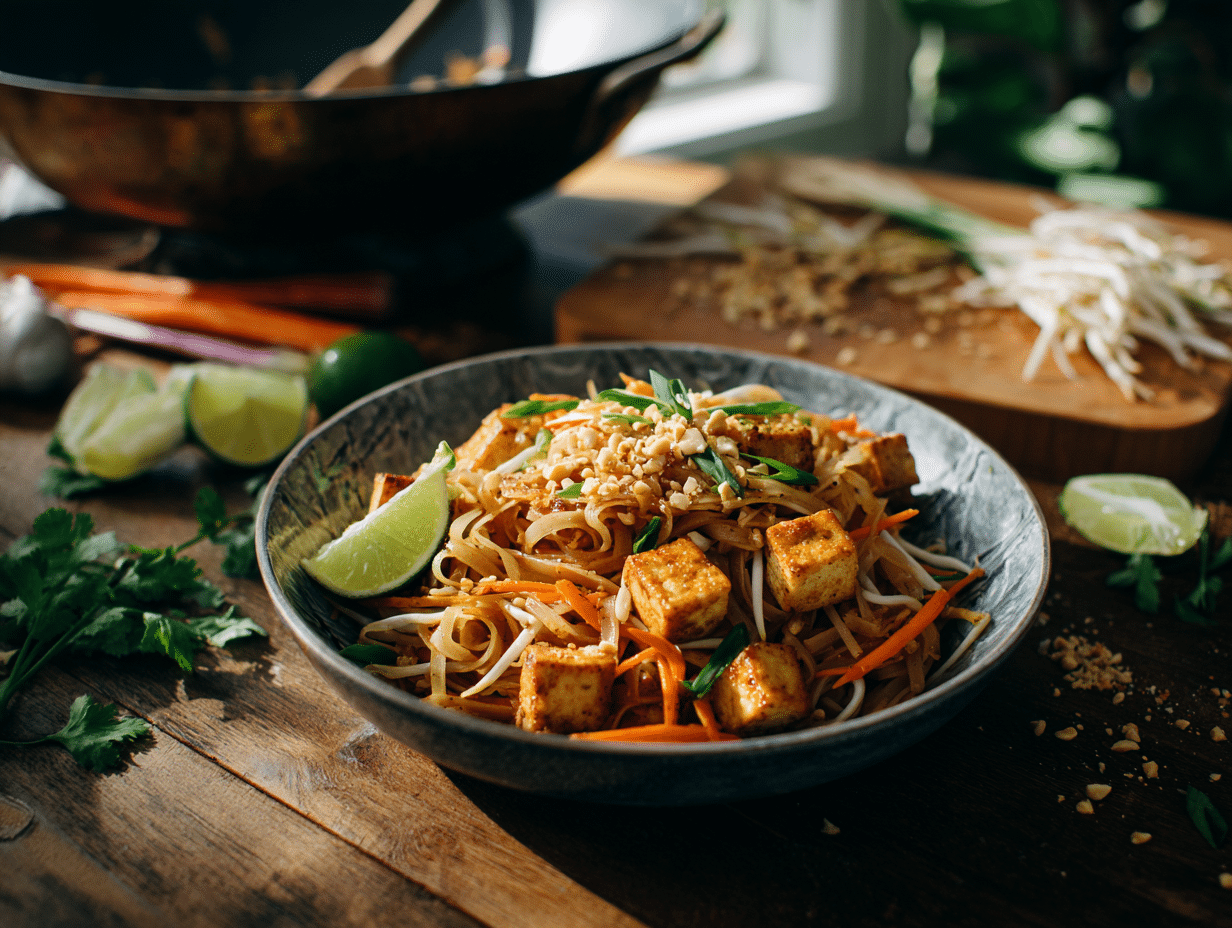
Pad Thai is a stir-fried rice noodle dish built around a tangy tamarind sauce, a salty-sweet balance from tamari and coconut sugar, and whatever protein and vegetables you have on hand. This version uses extra-firm tofu and skips every animal product without losing any of the flavor that makes the dish worth making. It comes together in about 30 minutes, which is the real reason it belongs in your weeknight rotation.
The technique that matters
The single most important move in this recipe is cooking in stages rather than dumping everything in at once. Stir-fry the tofu first, get it golden, then set it aside. Cook the aromatics and noodles separately in the same pan before combining everything at the end. This keeps the tofu crisp instead of steamed and gives the noodles direct contact with the hot pan so they pick up some color instead of just getting soft. High heat throughout is non-negotiable — if the pan isn’t hot enough, the noodles will stick together and the tofu will release moisture instead of browning. A 12-inch skillet or wok, fully preheated before anything goes in, solves most problems before they start.
If something goes sideways
- Noodles clumping into a solid mass: They were either over-soaked or the pan wasn’t hot enough. Rinse soaked noodles under cold water right before they go in the pan, and make sure the oil is shimmering before you add them. A splash of water (1–2 tablespoons) and quick tossing will loosen them if it happens mid-cook.
- Sauce tastes flat or one-dimensional: Tamarind paste varies a lot in concentration by brand. Taste the sauce before it hits the pan — if it needs more tang, add a small squeeze of lime juice; if it needs more depth, a few extra drops of tamari will do it.
- Tofu isn’t browning: The pan cooled down when the tofu went in, or the tofu still had too much moisture. Pat the pressed tofu completely dry with a paper towel right before it hits the oil, and resist the urge to move it for at least 2 minutes per side.
- Everything tastes too salty: Tamari and soy sauce vary in sodium content. Add the sauce in two stages — about two-thirds first, toss and taste, then add the rest only if needed.
- Bean sprouts turned soggy: They went in too early. Add sprouts in the last 60 seconds of cooking, just long enough to warm through. They should still have a little snap when the dish hits the bowl.
About the ingredients
- Tamarind paste: Look for it in the international aisle or at an Asian grocery store. Avoid tamarind concentrate labeled as a drink mix — it’s sweetened and will throw off the sauce balance. If you genuinely can’t find paste, equal parts fresh lime juice and a small amount of rice vinegar is a workable backup, though the flavor is simpler.
- Coconut sugar: It dissolves easily and has a mild caramel note that works well here. Regular brown sugar is a direct swap in the same quantity.
- Tamari vs. soy sauce: Tamari is gluten-free and slightly richer, but standard soy sauce works fine if that’s what you have. Use low-sodium if your brand runs salty.
- Tofu: Extra-firm is the right call — skip the garnish of fresh cilantro if you’re short on time, not worth the extra prep step when lime and scallions are already doing that job.
Make-ahead notes
The sauce can be mixed and stored in a sealed jar in the fridge for up to five days — making it ahead is the single biggest time-saver on a busy night. Pressed and cubed tofu keeps refrigerated in an airtight container for up to three days before cooking. The finished dish holds in the fridge for up to three days, though the noodles will absorb the sauce and soften as they sit. To reheat, add a tablespoon of water to the pan over medium heat and toss until warmed through — the microwave works but tends to make the noodles gummy. This dish doesn’t freeze well; the noodles turn mushy after thawing.

Vegan Pad Thai

Equipment
- Wok or large skillet
- Saucepan
- Knife
- Cutting board
- Spatula or tongs
Ingredients
Main Ingredients
- 8 oz flat rice noodles preferably brown rice noodles for extra fiber
- 1 tbsp toasted sesame oil or neutral oil like grapeseed
- 14 oz extra firm tofu pressed and cut into ½ inch cubes
- 2 cups bean sprouts
- 1 cup shredded carrots use a julienne peeler for uniformity
- 3 cloves garlic minced
- 1 tbsp fresh ginger grated
- 1 cup crushed roasted peanuts unsalted, for garnish and texture
- 1 bunch fresh cilantro roughly chopped, for garnish
For the Sauce
- 3 tbsp tamari or low-sodium soy sauce
- 2 tbsp coconut sugar or light brown sugar
- 1.5 tbsp tamarind paste adds authentic tanginess; substitute with lime juice + rice vinegar if unavailable
- 1 tbsp sriracha add more for spice
Instructions
- Soften the noodles: Cook the rice noodles according to package instructions (usually soaking in hot water for 10–15 minutes). Drain and set aside.
- Prepare the sauce: In a small bowl, whisk together tamari, coconut sugar, tamarind paste, and sriracha until smooth. Set aside.
- Crisp the tofu: Heat sesame oil in a wok or large skillet over medium-high heat (375°F / 190°C). Add tofu cubes and cook until golden and crisp on all sides, about 8–10 minutes. Remove and set aside.
- Sauté vegetables: In the same pan, sauté garlic, ginger, and white part of green onions until fragrant, about 1–2 minutes. Add carrots and cook for another 2 minutes for slight tenderness.
- Combine everything: Add noodles, sauce, and tofu back into the skillet. Toss gently using tongs until everything is evenly coated and heated through, about 3–4 minutes. Add bean sprouts last to retain their crunch.
- Serve: Plate into bowls. Garnish generously with crushed peanuts, green part of green onions, fresh cilantro, and lime wedges.
Notes
- For extra protein, add sautéed tempeh with the tofu.
- To prevent sticking, rinse noodles in cold water after cooking and toss lightly in oil before stir-frying.
- Add a pinch of smoked paprika or liquid smoke to your tofu marinade to mimic the grilled aroma.
Nutrition
FAQ
Can I use soba or udon noodles instead of rice noodles?
Rice noodles are strongly recommended here because they absorb the tamarind sauce differently than wheat-based noodles. Soba or udon will work in a pinch, but the texture will be denser and the dish will taste closer to a lo mein than a pad Thai.
My tamarind paste is very thick and dark — how much should I use?
Start with half the amount called for in the recipe, thin it with a tablespoon of warm water, and taste before adding more. Tamarind paste sold in blocks tends to be more concentrated than jarred paste, so the quantity needs adjusting.
Can I swap the tofu for something else?
Tempeh is the most straightforward swap — cube it, pan-fry the same way, and it holds up well to the sauce. Edamame or a handful of cooked chickpeas also work if you want to skip the pressing and frying step entirely.
Is this recipe gluten-free?
It is if you use tamari instead of regular soy sauce and confirm your sriracha brand is gluten-free. Rice noodles are naturally gluten-free, so the sauce is the only place to check labels.
How do I keep leftovers from turning into a sticky clump overnight?
Toss the cooled noodles with a very light drizzle of neutral oil before refrigerating — this keeps them from fusing together. Store the garnishes separately so they don’t wilt into the noodles.
Can I make this less spicy without losing flavor?
Yes — reduce or omit the sriracha and the dish still has plenty of flavor from the tamarind, tamari, garlic, and ginger. If you want a hint of heat without the burn, a small pinch of white pepper stirred into the sauce gives warmth without sharpness.
What to cook next
- Vegan Pad Kra Pao
- Vegan Thai Drunken Noodles
- Indonesian Gado-Gado Peanut Salad
- Sesame Ginger Soba Salad