
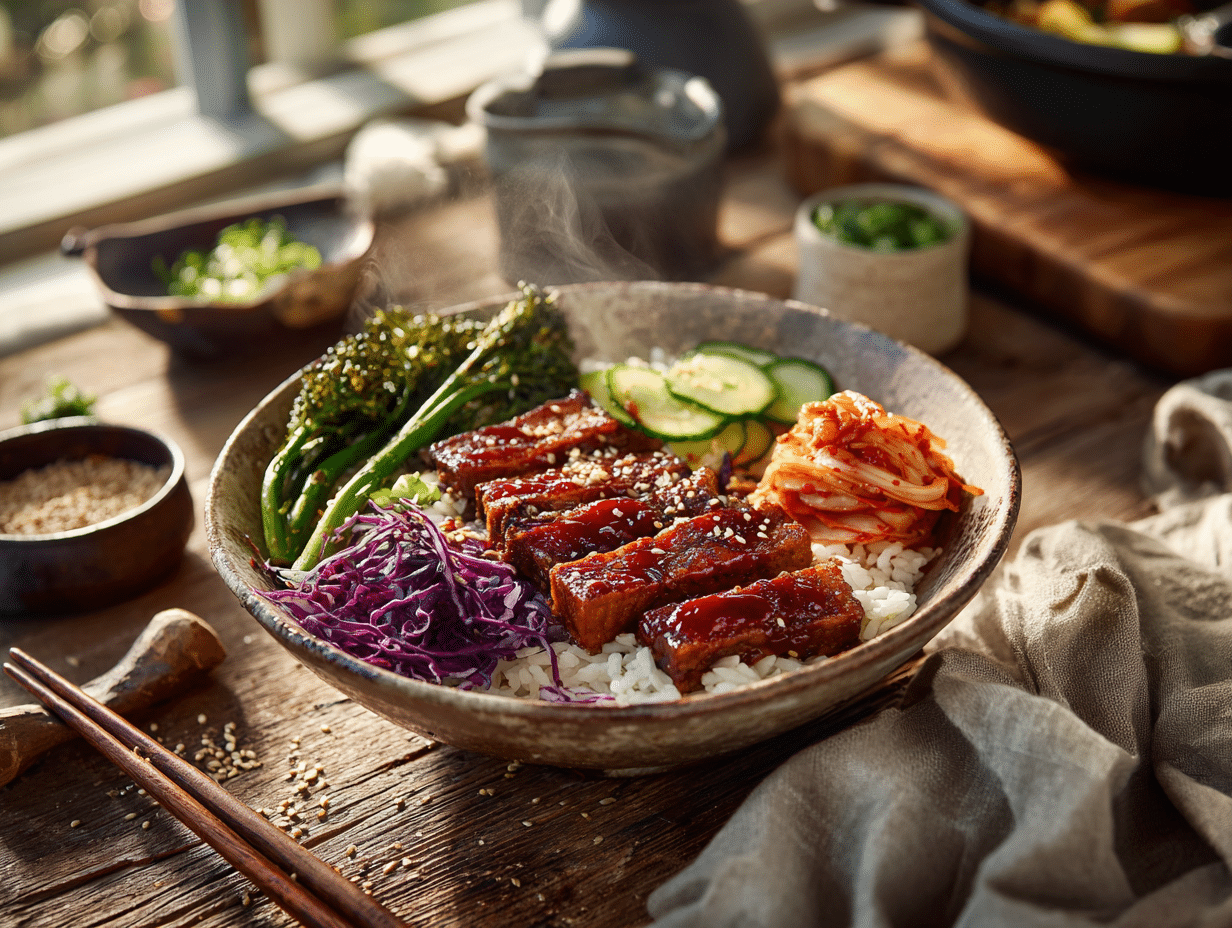
This bowl puts gochujang-glazed tempeh over rice with quick-pickled cucumbers, kimchi, and charred greens. It comes together in about 40 minutes, and every component stores well separately — which makes it genuinely useful on a busy weeknight, not just a weekend project.
Why this recipe works
Two things make this recipe reliable. First, steaming the tempeh before it hits the marinade is not optional — it softens the dense interior so the gochujang sauce soaks in rather than sitting on the surface. Skip that step and you get a coated slab instead of flavored-through tempeh. Second, the marinade contains maple syrup alongside gochujang, and that sugar is what gives you the lacquered, slightly charred exterior when the tempeh hits a hot pan. Too low a heat and it just steams in its own moisture; medium-high is the minimum to get that sticky, caramelized crust that makes the whole bowl work.
If something goes sideways
- Tempeh tastes bitter after cooking: The steaming step was likely too short or skipped. Steam for a full 10 minutes next time. If it’s already cooked, a splash of rice vinegar stirred into the finished bowl can cut the bitterness.
- The glaze burns before the tempeh is cooked through: Your pan was too hot or the tempeh slices were too thick. Pull the pan off heat for 30 seconds, add a tablespoon of water to the pan, and finish on medium. Slice thinner next batch.
- Pickled cucumbers are too watery and dilute the bowl: Salt the sliced cucumbers for 10 minutes and squeeze out the excess liquid before adding the pickling liquid. This keeps them crisp and concentrated.
- Tempeh sticks to the pan: The pan wasn’t hot enough before you added the tempeh, or you moved it too soon. Let it sit undisturbed for 2–3 minutes until it releases naturally.
- Bowl tastes flat overall: Gochujang brands vary a lot in saltiness and heat. Taste the marinade before it goes on the tempeh and adjust — more soy sauce for salt, a few drops of rice vinegar for brightness.
Make-ahead notes
Every component of this bowl stores separately and that’s the point. Cooked, glazed tempeh keeps in an airtight container in the fridge for up to 4 days; reheat it in a dry skillet over medium heat for 3–4 minutes to bring back the crust — the microwave works but you lose the texture. The pickled cucumbers are best within 2 days before they go soft. Cooked rice keeps for 4 days refrigerated or up to 2 months frozen in portioned bags; reheat from frozen with a tablespoon of water in the microwave. Kimchi is already shelf-stable in the fridge. Assemble bowls to order from prepped components rather than storing assembled bowls — the rice absorbs moisture from everything else and turns gummy. If you’re prepping for the week, steam and marinate a double batch of tempeh on Sunday; it reheats faster than cooking from scratch every night.

Korean BBQ Tempeh Bowl

Equipment
- Steamer basket and pot with lid
- Large nonstick or cast-iron skillet (or grill pan)
- Mixing bowls
- Whisk
- Chef's knife
- Cutting board
- Measuring cups and spoons
- Tongs or spatula
- Microplane or fine grater
- Rice cooker or saucepan with lid (optional, if cooking rice)
Ingredients
For the Tempeh & Marinade:
- 16 oz tempeh cut into 1/2-inch slices; choose plain, organic tempeh for clean flavor
- 8–12 oz water or as needed; for steaming tempeh
- 3 tbsp gochujang (Korean red chili paste) use a vegan brand; adjust to taste for heat and sweetness
- 3 tbsp low-sodium tamari or soy sauce; tamari keeps it gluten-free
- 2 tbsp pure maple syrup grade A amber for balanced sweetness and sheen
- 1 tbsp unseasoned rice vinegar for brightness; unseasoned to control salt/sugar levels
- 1 tbsp toasted sesame oil for nutty depth; use fresh for best aroma
- 2 tbsp water to loosen the marinade so it coats evenly
- 3 cloves garlic, finely grated about 1 tbsp; grate for even distribution and faster caramelization
- 1 tbsp fresh ginger, finely grated bright heat and fragrance; microplane for a paste
- ½ tsp gochugaru (Korean chili flakes) optional, for an extra halo of warmth
For the Quick Cucumber Pickles:
- 1 medium English cucumber, thinly sliced about 2 cups; choose firm, fresh cucumbers for snap
- 2 tbsp unseasoned rice vinegar keeps pickles bright and clean-tasting
- 1 tsp granulated sugar balances acidity and heat
- ¼ tsp kosher salt Diamond Crystal preferred; adjust if using Morton’s
- ⅛ tsp gochugaru (Korean chili flakes) optional, for a light blush of heat
For Cooking & Veg:
- 2 tsp neutral oil, divided avocado or grapeseed; 1 tsp for tempeh, 1 tsp for greens
- 8 oz broccolini, trimmed or baby bok choy; choose crisp, dark-green stalks
- ⅛ tsp kosher salt for seasoning greens
For the Bowls & Garnish:
- 3 cups cooked short-grain rice white or brown; day-old rice reheats beautifully and stays fluffy
- 1 cup shredded purple cabbage for crunch and color contrast
- 1 large carrot, peeled into ribbons about 1 cup; use a peeler for delicate texture
- ½ cup vegan kimchi check label for fish-free; adds funk and sparkle
- 2 whole scallions, thinly sliced green and white parts; for freshness and lift
- 1 tbsp toasted sesame seeds for nutty aromatics and texture
- 1 tsp toasted sesame oil for finishing drizzle just before serving
Instructions
- Steam the Tempeh to Mellow Bitterness (10 minutes): Set a steamer basket over a pot with about 1 inch of water. Bring to a lively simmer (212°F / 100°C). Add sliced tempeh, cover, and steam for 10 minutes. This opens the pores so it drinks up the marinade and yields a cleaner, nuttier flavor. Pat dry.
- Whisk the Korean BBQ Marinade (5 minutes): In a bowl, whisk together gochujang, tamari, maple syrup, rice vinegar, toasted sesame oil, water, garlic, ginger, and gochugaru. The sauce should be glossy, pourable, and smell sweet-savory with a chili warmth. Pro move: Reserve 2 tablespoons of marinade in a separate small bowl for glazing at the end.
- Marinate the Tempeh (30 minutes): Toss steamed tempeh in the marinade to coat every surface. Marinate at room temperature for 30 minutes (or up to 24 hours refrigerated). Stir once midway so every slice gets equal attention.
- Quick-Pickle the Cucumbers (10 minutes active + 15 minutes rest within prep): Combine rice vinegar, sugar, salt, and gochugaru in a bowl. Add cucumber slices, toss, and gently massage to release juices. Let stand 15 minutes until slightly translucent at the edges and snappy-sweet.
- Sear the Tempeh (8–10 minutes): Heat 1 teaspoon neutral oil in a large skillet over medium-high heat until it shimmers (surface ripples; ~375°F / 190°C pan surface). Lay tempeh in a single layer; cook 3–5 minutes per side until deeply caramelized and lacquered. Brush with the reserved clean marinade for extra gloss during the last minute. Alternate: Bake on a parchment-lined sheet at 425°F / 220°C for 18–20 minutes, flipping halfway; brush with reserved marinade in the final 3 minutes.
- Char the Greens (5–6 minutes): In the same skillet, add 1 teaspoon neutral oil and broccolini with a pinch of salt. Cook over medium-high heat 5–6 minutes, tossing occasionally, until vivid green with blistered tips and crisp-tender stems. If using baby bok choy, cook cut-side down first for better caramelization.
- Warm the Rice (optional, 2–3 minutes): Reheat cooked rice in the microwave (covered) for 2–3 minutes until hot and steamy, or in a covered saucepan over low heat with a tablespoon of water until warmed through. Fluff with a fork.
- Assemble the Bowls: Divide rice among 4 bowls. Nestle in cabbage, carrot ribbons, a mound of vegan kimchi, and charred broccolini. Fan the glossy tempeh slices over the rice. Add a tumble of quick-pickled cucumbers. Drizzle a whisper of toasted sesame oil, then finish with scallions and sesame seeds.
Notes
Michelle’s Tips:
- Deeper Caramelization: Pat the steamed tempeh very dry before marinating. Moisture fights browning.
- Heat Control: If your gochujang is very spicy, cut back to 2 tbsp and add 1 tbsp tomato paste for body without extra heat.
- Gluten-Free: Use tamari. Confirm your gochujang is brewed without barley or wheat.
- Soy-Free Option: Swap tempeh for king oyster mushrooms or chickpea tempeh; use coconut aminos in place of tamari (reduce maple slightly).
- Using Leftover Marinade: Only use the reserved clean marinade for glazing. If you must reuse marinade that touched tempeh, bring it to a rolling boil for 1 minute to food-safe temperatures.
- Smoky BBQ Vibe: Add 1/4 tsp toasted sesame seeds to the marinade and a drop of liquid smoke, if desired.
Nutrition
Your questions, answered
Can I use tofu instead of tempeh?
Yes, extra-firm tofu works, but press it for at least 30 minutes first to remove moisture. It won’t have the same nutty depth as tempeh and the texture will be softer, but it absorbs the marinade well and the bowl is still very good.
Where do I find gochujang and is there a substitute?
Most large grocery stores carry it in the international aisle, and it’s easy to find at any Korean or Asian market. There’s no true substitute that gives you the same fermented depth, but in a pinch you can mix 1 tablespoon of red miso with 1 teaspoon of sriracha and a pinch of smoked paprika — it’s different but functional.
How do I make this gluten-free?
Swap the soy sauce for tamari in equal amounts — everything else in the recipe is naturally gluten-free. Double-check your gochujang label, as some brands add wheat; Sempio and some CJ brands offer gluten-free versions.
Can the marinated tempeh be frozen before cooking?
Yes, and it actually improves the result. Freeze the steamed, marinated tempeh slices in a single layer, then transfer to a bag for up to 2 months. Thaw overnight in the fridge and cook straight from cold — the freeze-thaw cycle opens the texture further and the marinade penetrates even more deeply.
Try these next
- Vegan Mushroom Bulgogi Bibimbap
- Korean Spicy Cold Noodles
- Indonesian Gado-Gado Peanut Salad
- Miso Glazed Sweet Potatoes