
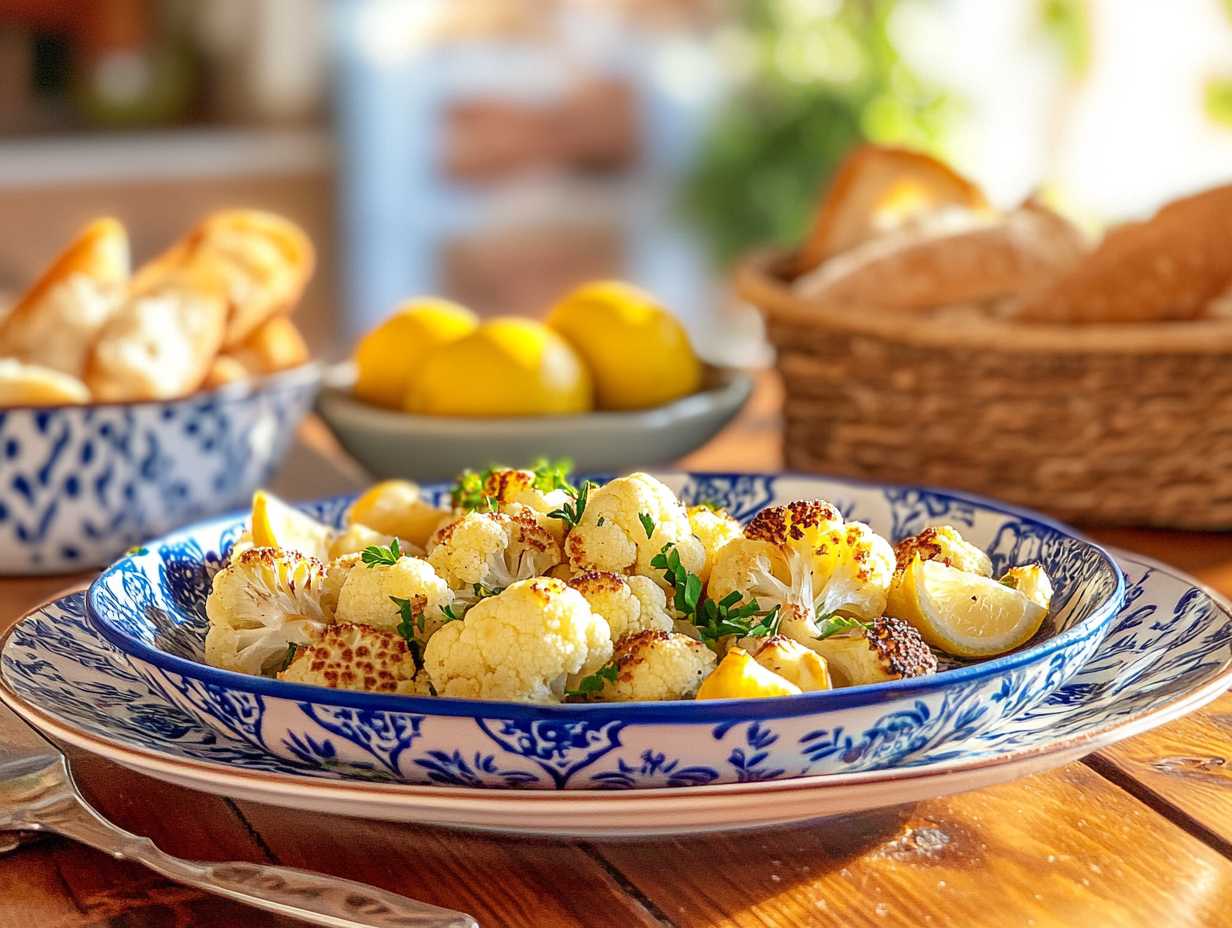
Lemon garlic roasted cauliflower is a straightforward sheet-pan side that earns its place on the table through high heat and good seasoning — not complicated technique. The florets come out golden and crispy at the edges, tender inside, and bright from lemon. It’s the kind of dish that gets eaten fast, even by people who claim they don’t like cauliflower.
The technique that matters
The single thing that separates good roasted cauliflower from soggy, steamed-tasting cauliflower is keeping the florets dry and giving them space. Excess moisture on the surface of the cauliflower turns to steam in the oven, and steam prevents browning. Pat the florets dry after washing, and spread them in a single layer with a little room between each piece — crowding the pan is the most common reason this dish underperforms. The second technique worth knowing: place the flat cut side of each floret directly against the hot pan. That direct contact is what builds the caramelized crust on the bottom, which is the best part.
Mistakes to avoid
- Using a cold baking sheet: Putting cauliflower on a room-temperature pan slows browning at the start. Preheat the sheet in the oven while the oven comes up to temperature, then add the oiled florets — you’ll hear a sizzle, which means it’s working.
- Adding lemon juice before roasting and nothing after: Lemon juice applied only before roasting mostly cooks off and loses its brightness. Reserve a small squeeze to add right before serving — that’s where the fresh citrus flavor actually comes through.
- Mincing garlic too coarsely: Large garlic chunks burn before the cauliflower finishes roasting and turn bitter. Mince it finely or use a microplane so it coats the florets evenly and cooks at the same rate.
- Pulling it out too early: Pale, lightly golden cauliflower is not the goal. You want deep amber edges and some dark spots — that’s where the flavor is. If it looks almost too done, it’s probably right.
- Skipping the flip: The florets need one turn at the halfway point so the tops get some direct heat too. Without it, you get one crispy side and one soft side.
Leftovers and meal prep
Leftovers keep well in an airtight container in the fridge for up to four days. To reheat, use a dry skillet over medium-high heat for about five minutes — this brings back the crispiness that a microwave will kill. The microwave works in a pinch but expect softer texture. You can also prep the cauliflower florets, toss them in the marinade, and store them raw in the fridge for up to 24 hours before roasting; the extra marinating time actually improves the flavor. Skip freezing — cauliflower turns watery and soft after thawing and isn’t worth it here. Cold leftovers work well chopped into a grain bowl or tucked into a wrap with hummus and greens, no reheating needed.

Lemon Garlic Roasted Cauliflower

Equipment
- Large baking sheet
- Mixing bowl
- Microplane or garlic press
- Zester
Ingredients
- 1 large head of cauliflower cut into florets
- 3 tablespoons extra virgin olive oil use cold-pressed for best flavor
- 4 cloves garlic minced or grated finely
- 1 teaspoon lemon zest freshly grated
- 2 tablespoons fresh lemon juice from 1 small lemon
- 1 teaspoon sea salt adjust to taste
- ½ teaspoon black pepper freshly ground
- ¼ teaspoon red pepper flakes optional, for heat
- 2 tablespoons fresh parsley chopped, for garnish
Instructions
- Preheat your oven to 425°F (220°C). Line a large baking sheet with parchment paper for easy cleanup and to prevent sticking.
- In a large mixing bowl, toss the cauliflower florets with olive oil, minced garlic, lemon zest, lemon juice, salt, black pepper, and red pepper flakes (if using). Ensure each floret is evenly coated. Let sit for 5 minutes to marinate.
- Spread the cauliflower evenly onto the prepared baking sheet, cut sides down where possible to encourage browning.
- Roast in the preheated oven for 30–35 minutes, flipping halfway through. The florets should be golden brown on the edges and tender inside.
- Once roasted, remove from oven and immediately sprinkle with fresh parsley before serving. Optional: squeeze a bit more lemon juice over the top for extra zing.
Notes
- Use a microplane for the garlic to create a paste that distributes more evenly over the cauliflower.
- For a nuttier twist, sprinkle with toasted pine nuts before serving.
- If avoiding oil, substitute with a citrus vinaigrette or aquafaba-based marinade before roasting.
Nutrition
Your questions, answered
Can I use frozen cauliflower instead of fresh?
Fresh cauliflower will give you much better results here. Frozen florets release a lot of water as they thaw and roast, which makes it very hard to get browning — you’ll likely end up with steamed cauliflower instead of roasted.
How do I make this more filling as a main dish?
Serve it over a base of cooked couscous, quinoa, or white beans to add protein and substance. A drizzle of tahini or a scoop of hummus on the side rounds it out into a complete meal without much extra effort.
My cauliflower always comes out soft, not crispy. What am I doing wrong?
The most likely cause is a crowded pan — too many florets trap steam and prevent browning. Use two sheet pans if needed, and make sure the oven is fully preheated to high heat before the pan goes in.
Can I make this oil-free?
Yes, though the texture will be different. Toss the florets in aquafaba — the liquid from a can of chickpeas — with the garlic, lemon, and seasoning. The edges won’t get quite as crispy, but it works and still tastes good.
Is this recipe good for meal prep for the week?
It holds up well for four days in the fridge, which makes it a solid prep-ahead option. Reheat in a hot skillet rather than the microwave to keep the texture from going completely soft.
What can I serve this with to make it work as a full dinner?
It pairs well with anything that benefits from a bright, garlicky side — think Mediterranean Lentil Power Bowl, a simple chickpea stew, or stuffed pita with hummus and greens. The lemon flavor plays nicely alongside earthy legumes and grains.
If you liked this one
- Mediterranean Lentil Power Bowl
- Smoky Spanish Chickpea Stew
- Baked Ratatouille with Herb Oil
- Mediterranean Orzo Artichoke Salad